Whiplash symptoms long term affect about half of people at one year. See timelines, warning signs, and conservative care options.

About half of people with whiplash remain symptomatic at one year, and recovery that does occur usually happens in the first three months before tending to plateau. Persistent symptoms don't necessarily mean ongoing structural damage, but they do deserve more than reassurance that the crash was minor.
A major evidence synthesis on whiplash recovery supports that recovery pattern and identifies early pain, disability, and symptom burden as important warning signals. The practical question isn't whether your neck still hurts. It's whether you can turn your head, concentrate, sleep, drive, and work more comfortably as time passes.
Lasting pain isn't an unusual exception. In a prospective one-year whiplash study, 96% reported pain 11 days after injury and 74% still reported pain at one year, although median pain intensity declined from 23 to 14 on a 0–100 scale.
A separate cohort described in the same evidence followed 50 people with rear-end-collision soft-tissue neck injuries. Of the 35 still symptomatic at three months, 30, or 86%, remained symptomatic at two years; complete recovery was reported by 26 people, or 52%, at one year, compared with 19, or 38%, at two years. Clinical summaries place persistent symptoms at about half of patients after a year and chronic whiplash-associated disorder at roughly one-quarter.
Those findings sit alongside a more encouraging early course. NHS whiplash guidance and associated public-health recovery summaries describe approximately 60% improving significantly or resolving within one to four weeks, improvement beginning by about six weeks for most problems, common improvement within two to three months, and severe cases taking more than six months to settle.
| Time after injury | What the evidence shows | How to read it |
|---|---|---|
| 1 to 4 weeks | About 60 percent improve significantly or resolve | Early improvement is common but not universal |
| About 6 weeks | Most problems should have begun improving | Little change by now justifies reassessment |
| 2 to 3 months | Symptoms commonly improve; recovery then tends to plateau | Persistence past 3 months lowers the chance of later full recovery |
| 1 year | About half still report neck pain; 74 percent still had pain in one prospective study | A short-term drop in pain is not the same as resolution |
| 2 years | In a 50-person rear-end cohort, only 38 percent reported complete recovery | People still symptomatic at 3 months usually remained so |
Think of recovery as a dimmer rather than a light switch. Pain may turn down enough that you resume errands, yet still interrupt sleep or make checking a blind spot difficult. A person can improve meaningfully without feeling fully recovered.
The different percentages also measure different things. Reporting any pain isn't the same as having disabling pain, and describing yourself as completely recovered is a stricter outcome than noticing improvement. These groups shouldn't be treated as a single forecast for your own neck.
Practical rule: Judge progress by what you're regaining, not just by whether pain is present.
For Texas readers managing the practical aftermath of a collision, The Law Office of Bryan Fagan, PLLC provides recovery guidance for injured Texas drivers. Keep medical decisions grounded in an examination and a record of changing symptoms.
Mark the table row that matches how long you've had symptoms. Then write down what has improved, what hasn't, and which everyday task remains hardest.
Say your neck ache has eased enough to return to work, but you still lose concentration during meetings and feel dizzy when turning toward another screen. If you only report neck pain, your clinician may miss the problems that now interfere most with your day.
Whiplash-associated disorder, often shortened to WAD, can be a mixed pattern rather than leftover muscle soreness. Northern Ireland's public-health guidance describes persistent neck pain, stiffness, restricted movement, headaches, shoulder or arm pain, spasms, dizziness, fatigue, memory problems, poor concentration, and irritability; symptoms sometimes last a year or longer and restrict daily activities.
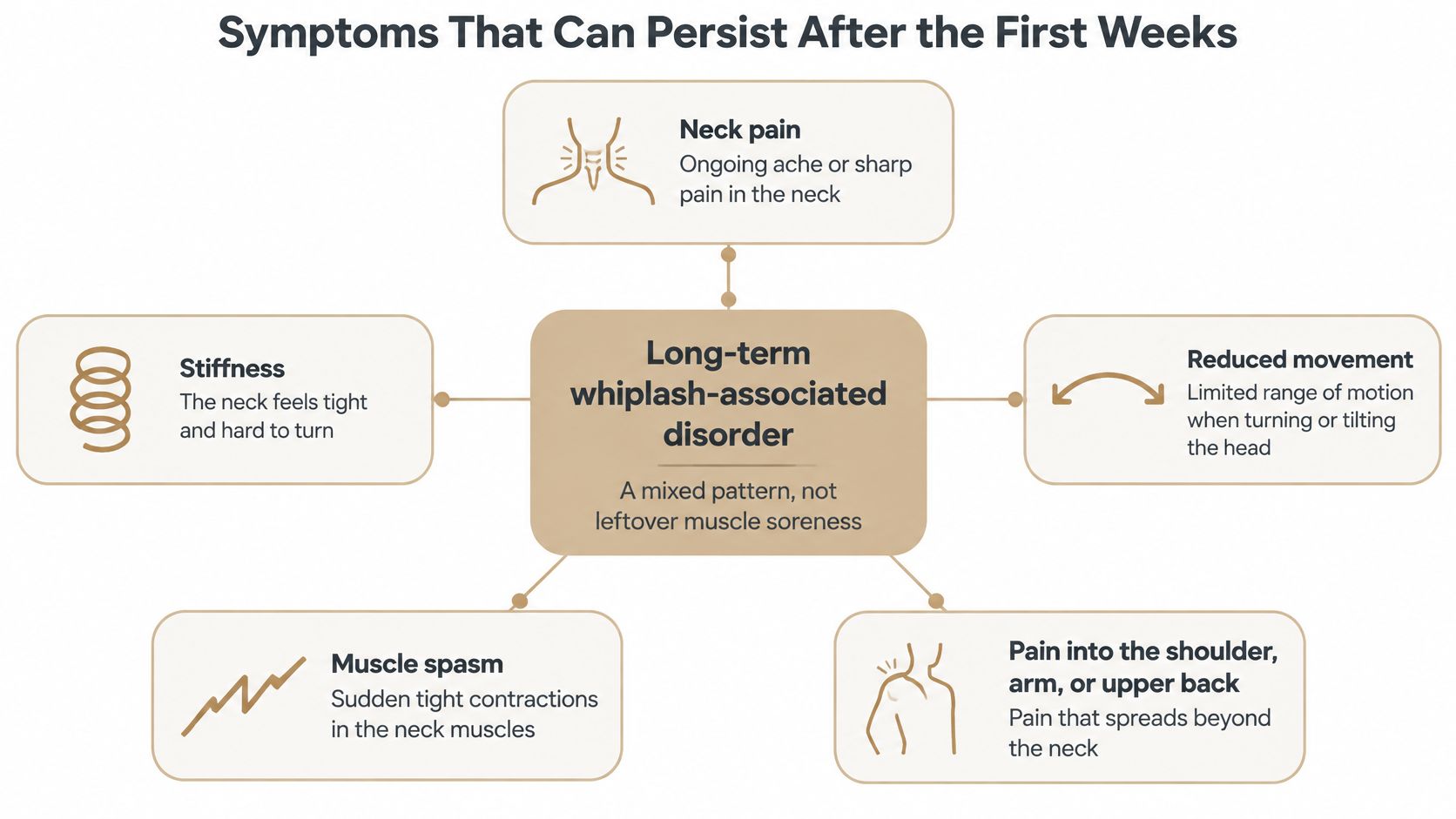
NHS inform's whiplash guidance explains that pain and stiffness can first appear 24 to 48 hours after injury. Its symptom list also includes pain toward the head, arm, or upper back, tinnitus, blurred vision, nausea, jaw pain, sleep disturbance, and difficulty concentrating.
Record both the collision date and when each symptom began. Feeling well at the scene doesn't make later symptoms irrelevant, although timing alone doesn't establish their cause.
Qualitative research on chronic whiplash-associated disorder describes sensory hypersensitivity and cognitive difficulties alongside neck and head pain. Light or sound sensitivity, broken sleep, and mental fatigue belong in the conversation, even when they seem less straightforward than stiffness.
| Cluster | Examples | What to track |
|---|---|---|
| Neck and movement | Pain, stiffness, spasm, less rotation or bending | Pain at rest and how far the neck turns |
| Head and sensory | Headache, dizziness, tinnitus, blurred vision, light or sound sensitivity | Headache days per week and what triggers dizziness |
| Arm and nerve-type | Shoulder or arm pain, tingling, spreading pain | Whether symptoms travel below the elbow or weaken the arm |
| Thinking, mood, and energy | Poor concentration, memory trouble, irritability, fatigue, poor sleep | Sleep hours and tasks that now take longer |
| Daily function | Limits on work, driving, lifting, or exercise | Activities stopped or shortened since the crash |
Think of this record as a dashboard. Neck motion is one gauge; sleep, concentration, headache frequency, and activity tolerance are others. Note which cluster limits work or driving, rather than checking every symptom you recognize.
Concussion, vestibular injury, medication effects, anxiety, and cervical injury can produce overlapping complaints after a crash. None should automatically be attributed to whiplash or dismissed because an X-ray is normal. For rehabilitation teams sorting through that overlap, Orange Neurosciences offers concussion recovery guidance for rehabilitation teams, which can support a coordinated conversation about appropriate evaluation.
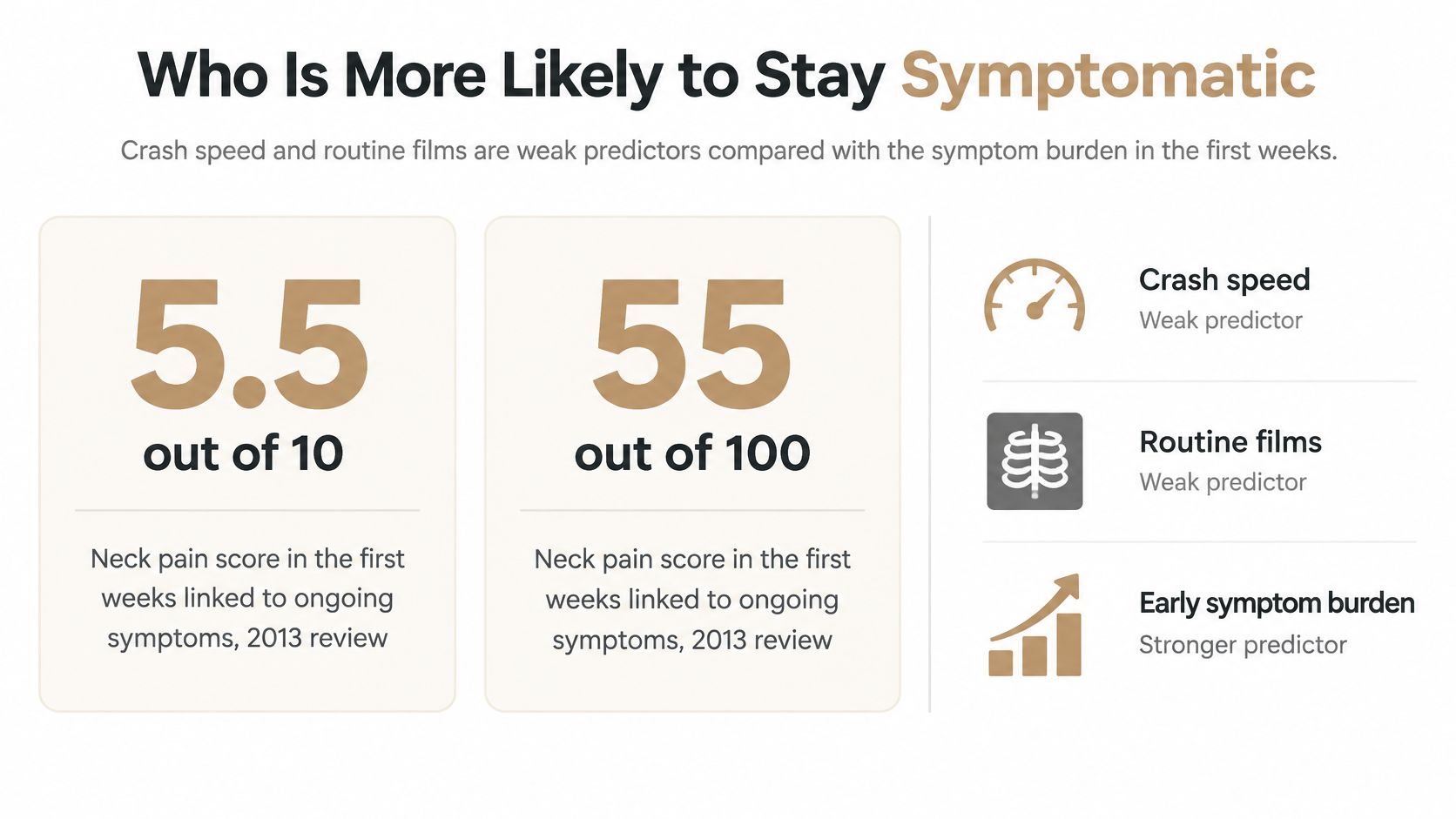
Early symptom burden is more useful for anticipating recovery than crash speed or routine films. Start with measurable findings rather than assumptions about how serious the collision looked.
The benchmarks below come principally from a 2013 systematic review and meta-analysis: baseline neck pain above 5.5/10 or 55/100 was associated with nearly sixfold higher odds of persistent pain or disability, with an odds ratio of 5.63 and 95% confidence interval of 3.76–8.43; an NDI above 14.5/50 was among the strongest predictors of failure to recover by at least six months.
| Early finding | Benchmark | Associated outcome |
|---|---|---|
| High neck pain | Above 5.5/10 or 55/100 | Nearly sixfold higher odds of persistent pain or disability |
| High disability | Neck Disability Index above 14.5/50 | Strong predictor of not recovering by 6 months |
| Many intense early symptoms | Pain plus headache, sensory, or arm symptoms | Slower and less complete recovery |
| Symptoms still limiting life | Substantial disability at 6 to 12 weeks | Higher risk of a prolonged course, not a minor delay |
| Psychosocial load | Fear of movement, catastrophizing, depression, or post-traumatic stress | More disability through guarding and avoided activity |
| Other clinical flags | Headache at onset, higher WAD grade, prior neck pain, or low-back pain | Reason for closer follow-up |
The Neck Disability Index, or NDI, is a questionnaire about how neck problems affect daily life. It adds information that a pain rating misses: someone may tolerate an ache while being unable to read, lift, or drive normally.
A recovery forecast resembles a weather forecast. A high early score changes the odds, but it doesn't determine what will happen to an individual. Nearly sixfold higher odds also doesn't mean someone is six times as likely to develop permanent disability.
In a 2025 longitudinal study of grade II whiplash-associated disorder, symptoms, disability, nerve mechanosensitivity, and upper-limb pain generally improved over six months, although only 32% described themselves as completely recovered. Inflammatory measures didn't clearly distinguish who recovered, reinforcing that a single biological test isn't a personal prognosis.
Fear of movement and pain catastrophizing, meaning persistent expectations of harm or the worst outcome, deserve support rather than blame. A person who braces constantly and avoids activity may need reassurance, graded practice, and psychological support alongside physical rehabilitation.
Understanding what causes whiplash in car accidents explains the injury mechanism, but the early visit should document pain score, headache pattern, neck motion, work limitations, and NDI. Repeat those measures so follow-up captures a trajectory rather than another entry saying that the neck still hurts.
If the MRI doesn't show a clear injury, why does your neck still hurt? A reassuring image doesn't measure every process that produces pain or limits movement.
A meta-review of systematic reviews on whiplash prognosis found persistent problems associated with post-injury pain, disability, cold hyperalgesia, anxiety, and catastrophizing. Imaging findings, collision characteristics, and several mechanical measures weren't consistently associated with ongoing symptoms.
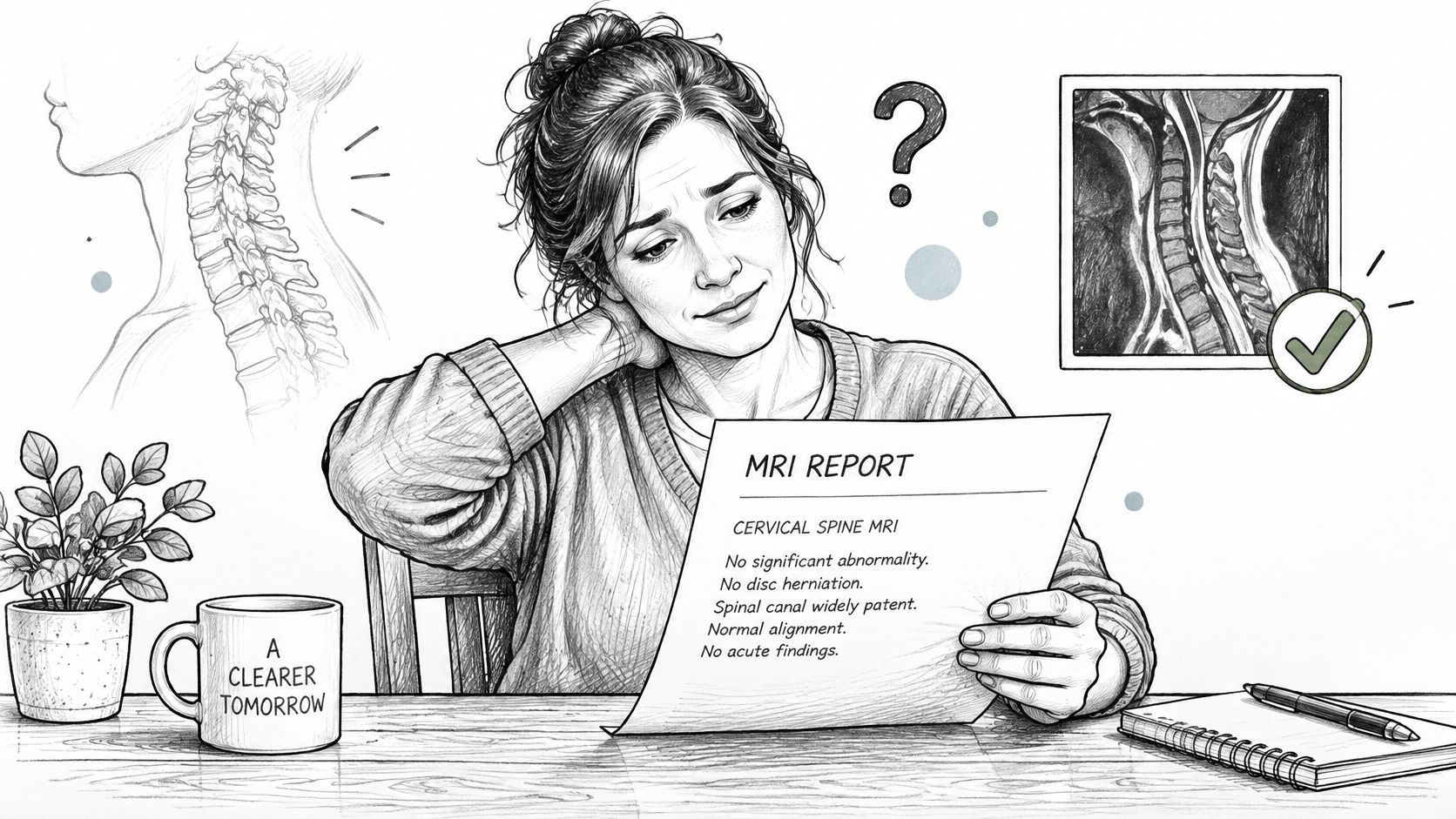
Illustration involving desk work. Say a driver remains uncomfortable months after a crash despite a normal MRI. They avoid looking over their shoulder and develop headaches during longer computer sessions. An examination may reveal restricted rotation and low activity tolerance even when imaging doesn't identify a lesion explaining those limitations.
Illustration involving arm symptoms. Another person has arm pain and tingling, but their scan is nonspecific. The clinician still needs to assess strength, sensation, symptom distribution, and whether particular movements provoke nerve-type symptoms. A vague report isn't permission to ignore a changing neurological examination.
These are illustrations, not diagnoses. The same complaint can require different management depending on the examination and its progression.
A normal scan can be reassuring about particular structural problems without being proof that your pain is imaginary.
Persistent WAD may involve altered pain processing, sensory hypersensitivity, and protective muscle bracing. Cold hyperalgesia, for example, means an unusually painful response to cold. These findings describe sensitivity, not a judgment about whether someone is trying hard enough.
A self-reinforcing pattern can develop: turning hurts, the person braces, movement feels threatening, and they turn less often. Avoiding every uncomfortable movement can then make ordinary tasks feel increasingly difficult. Addressing sleep, stress, and confidence in movement belongs in care because pain has physical and psychological influences, not because it's purely psychological.
Keep diagnosis and prognosis separate. A high pain score can suggest a slower recovery without proving a hidden fracture. Imaging remains useful when the examination raises concern about structural pathology, including suspected disc involvement, but it shouldn't become the only measure of recovery.
Useful follow-up measures include:
Urgent neurological symptoms and stalled recovery require different decisions. Don't place a new walking problem on the same waiting list as a neck that remains stiff at the end of the workday.
New or worsening neurological or visual symptoms need prompt medical assessment. Progressive weakness, trouble walking, bowel or bladder changes, severe unrelenting headache, fainting, or significant visual change can warrant emergency care rather than a routine musculoskeletal appointment.
Don't wait until later in the week if symptoms are sudden, severe, or progressing. The urgency depends on the symptom, not how much time has passed since the crash.
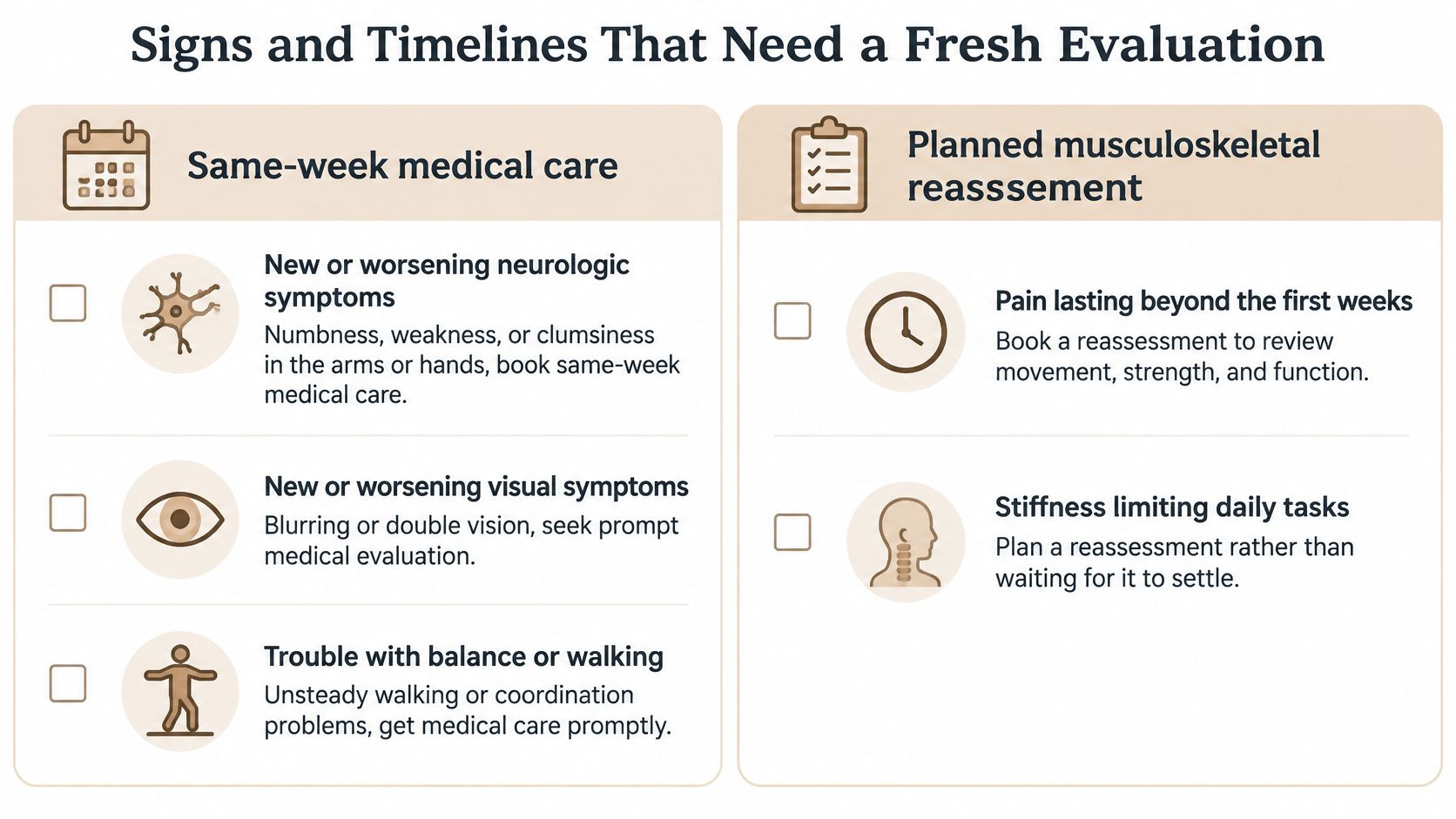
Without emergency signs, book a musculoskeletal reassessment when improvement hasn't begun within the expected early recovery window, ordinary tasks remain restricted, or severe pain continues rather than settling. You don't need to wait for symptoms to become unbearable before reviewing the plan.
That appointment should recheck neck motion, arm strength and sensation, headache pattern, dizziness, sleep, and activity tolerance. Concentration or balance problems may justify referral for concussion or vestibular assessment. Medication side effects and anxiety should be considered without using them to dismiss physical findings.
If symptoms emerge after an initially comfortable period, document them and arrange assessment rather than assuming the delay makes them harmless. New neck, arm, jaw, or concentration complaints need context and an examination.
Our guide to neck pain after a rear-end collision can help you prepare a clear account of what changed after the crash.
Bring a usable record: Include the crash date, symptom onset, activities you've shortened, and any changes in strength, sensation, balance, or vision.
Don't use a normal X-ray to decide that pain must be finished. Equally, don't label bowel, bladder, or walking changes as routine whiplash and continue with ordinary soft-tissue care.
Generic exercise advice isn't the same as individualized rehabilitation. A systematic review addressing exercise after chronic neck injury discusses evidence that general exercise programs didn't produce clinically meaningful medium- or long-term improvement over minimal intervention for WAD, alongside more specific targets involving coordinated eye, head, neck, and arm movement, whole-spine control, and functional muscle capacity.
That doesn't mean movement is useless. It means a program should match the limitation you're trying to change, with progression based on your response rather than a standard sheet handed to everyone.
| Finding or goal | Potential role in an individualized plan | What should guide continuation |
|---|---|---|
| Restricted movement and muscle guarding | Tolerance-based manual care and soft-tissue work | Easier movement and better task tolerance |
| Difficulty turning, lifting, or sustaining posture | Mobility practice and progressive rehabilitation exercise | Measurable gains in the target activity |
| Pain that prevents participation | An appropriate pain-modulating adjunct | Whether it helps you resume active rehabilitation |
| Suspected disc-related nerve involvement | Further assessment before considering decompression | Diagnosis, neurological findings, and treatment suitability |
Education comes first so you understand which movements are safe and which symptoms require review. Graded mobility and strengthening follow a tolerable baseline, while sleep and stress are addressed when they interfere with participation. Don't force an exercise that produces new weakness, spreading neurological symptoms, or a substantial deterioration.
For guarding and soft-tissue discomfort, massage therapy for whiplash may form part of a broader plan. Its role should be judged by whether you can move and function better afterward, not just whether the session feels relaxing.
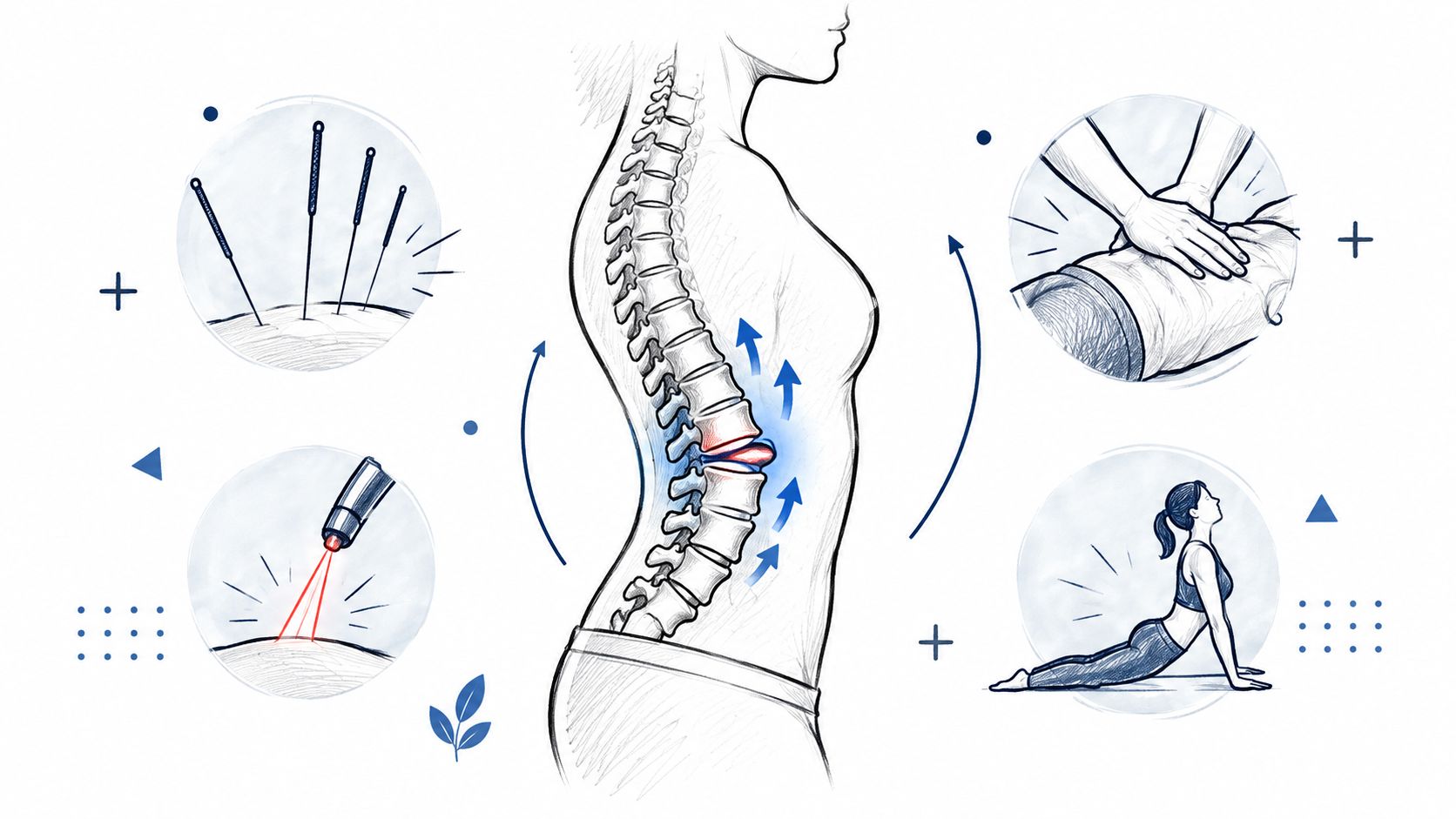
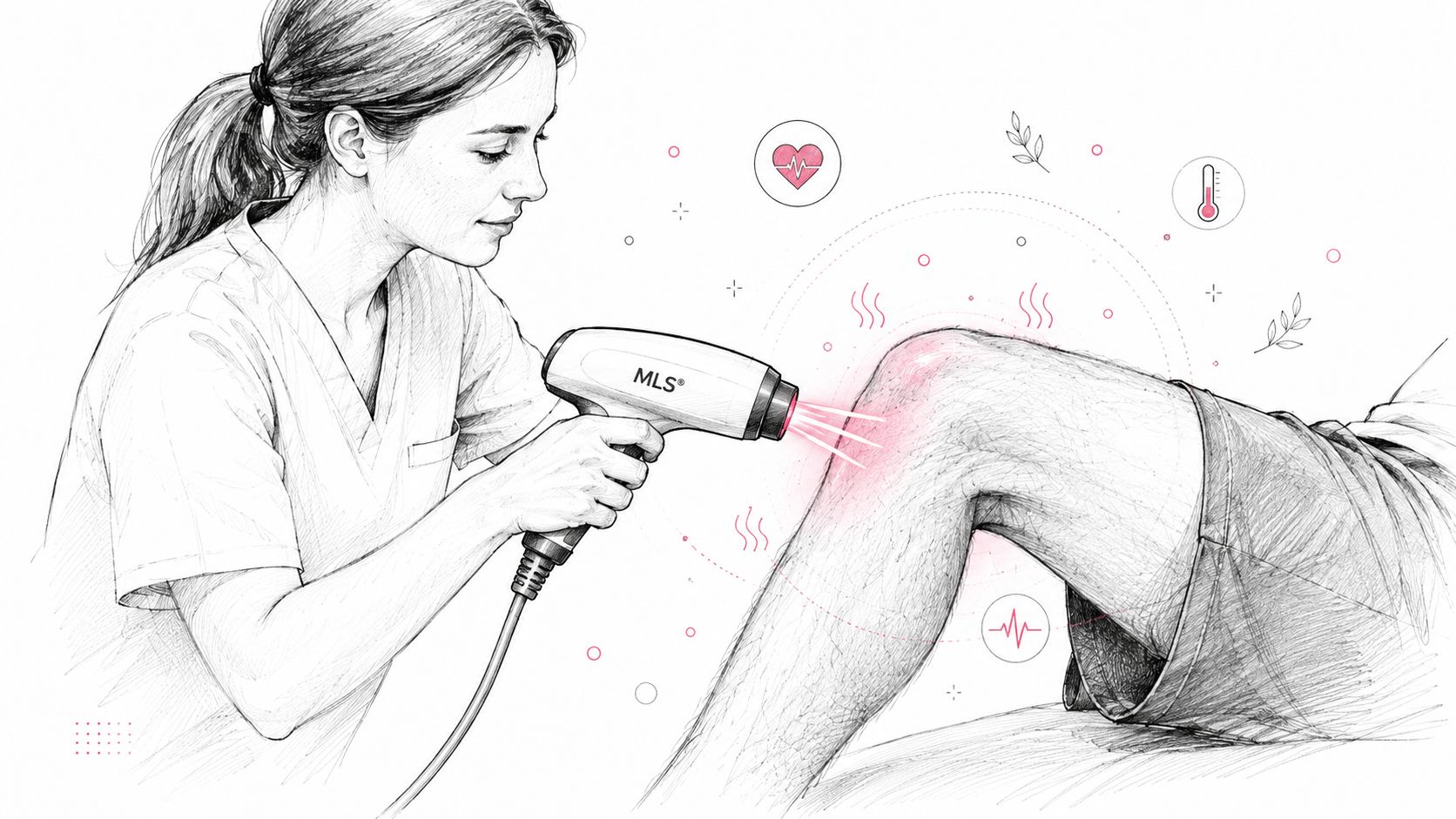
At Aspen Falls Wellness, we combine chiropractic manipulation, soft-tissue techniques, and therapeutic rehabilitation within an individualized approach. Depending on the diagnosis, our options include tolerance-based chiropractic adjustments, Massage Therapy, Mobility Therapy, Personal Exercise Plans, Rehabilitation Exercise, MLS Laser Therapy, SoftWave Therapy, and Acupuncture. Laser and SoftWave are offered for inflammation or tissue-recovery support, while acupuncture may be used for pain modulation; none should be presented as a guaranteed solution for chronic WAD.
Non-surgical Spinal Decompression with the DRX9000 is a disc-related treatment consideration, not a default for every sore neck. Arm symptoms require assessment, and the appropriate equipment and spinal region must match the diagnosis.
Chiropractic treatment often requires multiple visits, and we explain the recommended extent and duration. We evaluate progress with each adjustment and tailor treatment rather than repeating care unchanged.
Some patients notice flexibility changes early; chronic limitations may build more slowly. Continue by comparing movement, headache burden, work tolerance, and disability with the starting measurements. If meaningful progress isn't occurring, reconsider the diagnosis, treatment choice, or need for referral.
Book medical care promptly for new or worsening neurological or visual symptoms. Seek emergency assessment for progressive weakness, walking trouble, or bowel or bladder changes rather than starting routine conservative treatment.
If there are no emergency signs but recovery has stalled, arrange a musculoskeletal reassessment. You don't have to choose between waiting indefinitely and pursuing an invasive procedure. A careful examination can clarify what needs rehabilitation, what needs further testing, and what falls outside a musculoskeletal clinician's scope.
For adults around Salt Lake City or Sandy, we begin with an examination and diagnosis. X-ray or MRI referral is used when the findings call for it, not as a routine search for a picture that explains every ache. Car-accident assessment also includes documenting symptom timing and progress.
Our clinic's MLS Laser Therapy outcomes should be understood in their proper scope: many patients report noticeable improvement after the first few sessions, and 85–90% of our MLS Laser Therapy patients experience notable improvement. Those are clinic-wide patient outcomes, not whiplash-specific trial results or a promise about an individual's recovery; chronic conditions may require additional treatment and ongoing reassessment.
We participate with plans including Aetna, BCBS, Cigna, Humana, GEHA, and Motiv Health, with benefits verified before care. Ask for pain, motion, and disability to be measured at the first visit so you and your clinician can judge whether the plan is helping.
Aspen Falls Wellness offers coordinated, non-surgical car-accident care, including individualized chiropractic care, mobility rehabilitation, massage, and other therapies selected for your findings. If you're living with whiplash symptoms long term, visit Aspen Falls Wellness to arrange a reassessment in Salt Lake City or Sandy, and bring your crash timeline, symptom diary, and prior imaging so your next steps start with measurable goals.

Stay updated with the latest chiropractic news and exclusive offers.