Learn the common, rare, and serious MLS laser therapy side effects, who is at higher risk, and how Aspen Falls Wellness helps Salt Lake City patients stay safe.
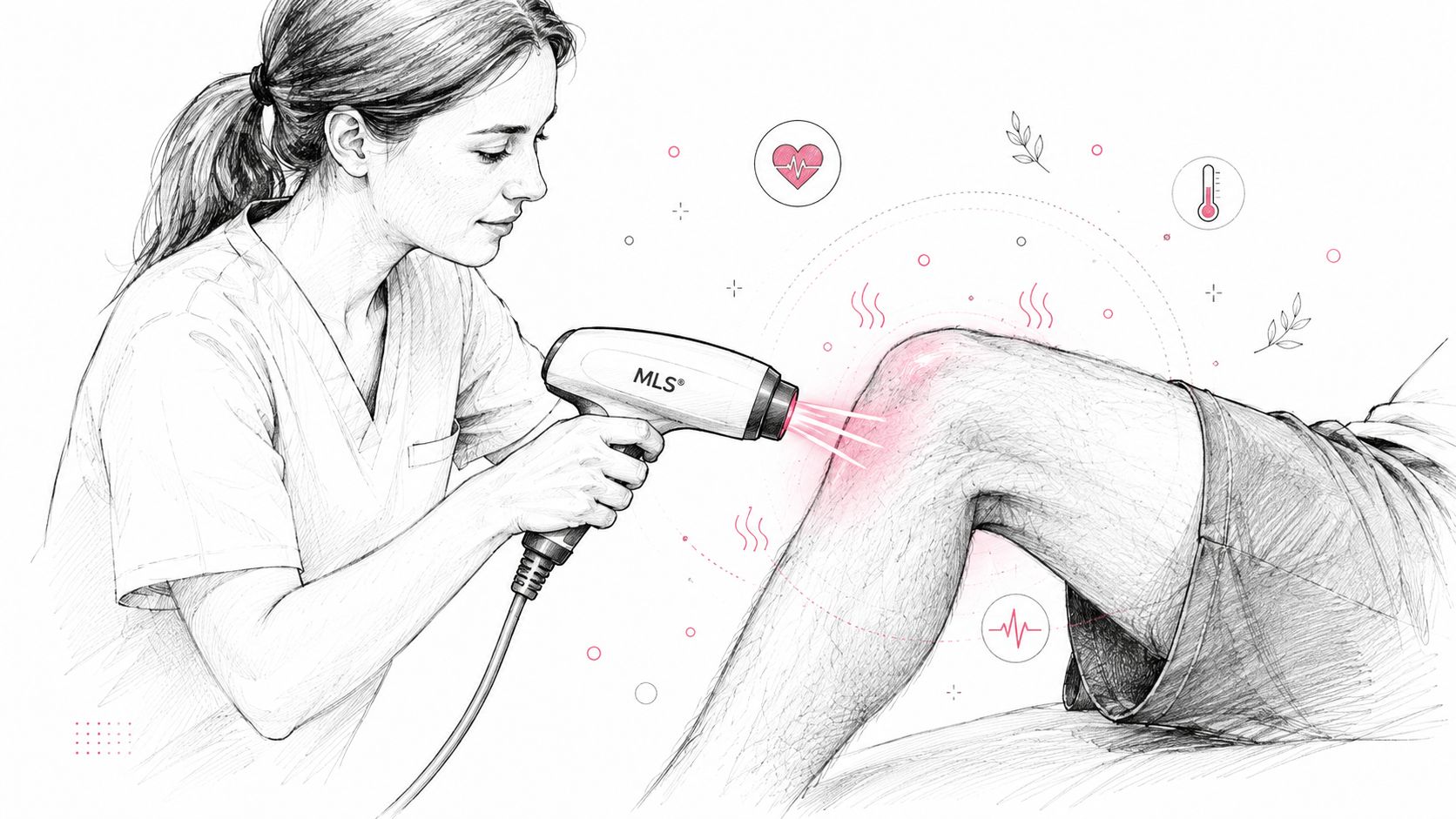



You're sitting in a Salt Lake City treatment room, watching a clinician position a handheld applicator over your painful knee, shoulder, or lower back. The device doesn't look like a needle or an injection, yet you may still wonder what you'll feel, whether the warmth is normal, and whether MLS laser therapy side effects are something you should worry about.
The honest answer is reassuring but not absolute. MLS Laser Therapy is generally considered a low-risk, noninvasive treatment when a trained clinician selects the patient carefully, uses appropriate settings, and protects the eyes. Mild reactions can occur, and rare complications deserve clear attention. Understanding the difference helps you participate in treatment without dismissing symptoms that need a clinical review.
Before treatment, the clinician reviews the painful area and your medical history. Questions may cover skin sensitivity, medications, recent sun exposure, pregnancy, implanted devices, and conditions that could affect light-based treatment. The applicator then passes over intact skin, so the session does not involve a needle, incision, or deliberate removal of surface tissue.
MLS stands for Multiwave Locked System. It is a Class IV, FDA-cleared laser therapy that delivers 808 nm and 905 nm wavelengths in a synchronized pattern. The goal is to direct therapeutic light toward painful or inflamed tissue without ablating the skin. The FDA clearance document records the device's regulatory history and intended use.
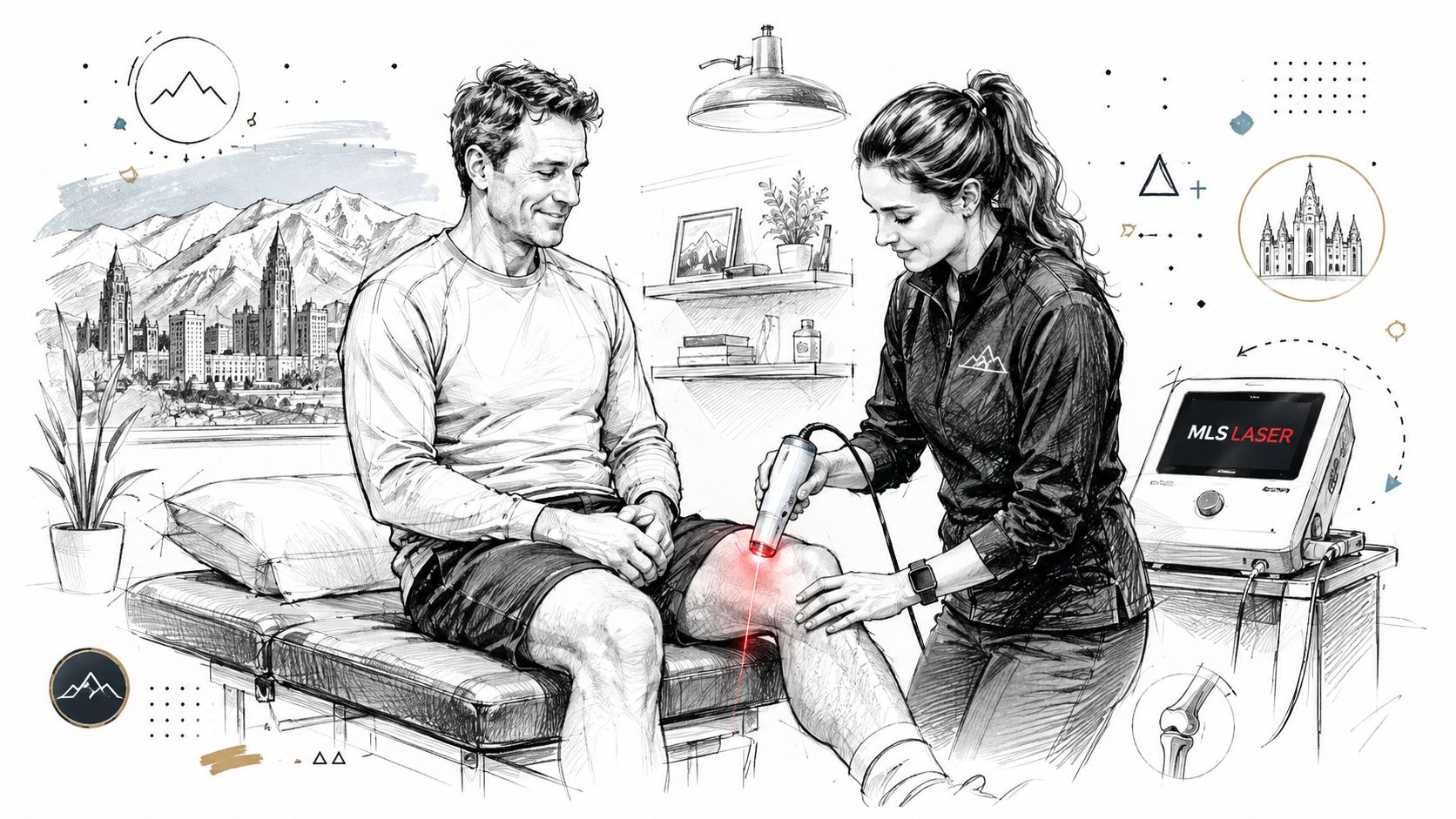
A single-wavelength cold laser uses one light range. MLS combines two wavelengths and uses higher peak power to reach musculoskeletal tissue while remaining nonthermal at therapeutic settings. The distinction matters: controlled light delivery is the intended method, although incorrect settings or poor technique could create unwanted heat.
Clinicians may consider MLS for tendinopathies, arthritic joints, post-surgical pain, and persistent soft-tissue inflammation. At Aspen Falls Wellness in Salt Lake City, it may accompany exercise, mobility work, massage, acupuncture, or other conservative care. It is not a universal treatment for every diagnosis.
Patients commonly notice little sensation or gentle warmth as the applicator moves. A session is usually brief, while the treatment plan depends on the body area, diagnosis, and response. For context on broader red and low-level light approaches, read the Sunridge Medical red light therapy guide, then review our detailed guide to MLS Laser Therapy procedures.
MLS works through photobiomodulation, meaning cells respond to specific light energy. A simple analogy is sunlight reaching a solar panel. The panel doesn't store sunlight as a picture. It absorbs light and converts it into usable energy. In a similar way, photons from the 808 nm and 905 nm wavelengths can pass through the skin and interact with cellular structures beneath it.
Inside the mitochondria, a light-sensitive enzyme called cytochrome c oxidase helps receive that energy. The result is increased production of adenosine triphosphate, or ATP, which cells use as fuel for repair and normal activity. The process isn't a mechanical “repair beam.” It's a stimulus that may influence how local cells manage energy, inflammation, circulation, and pain signaling.
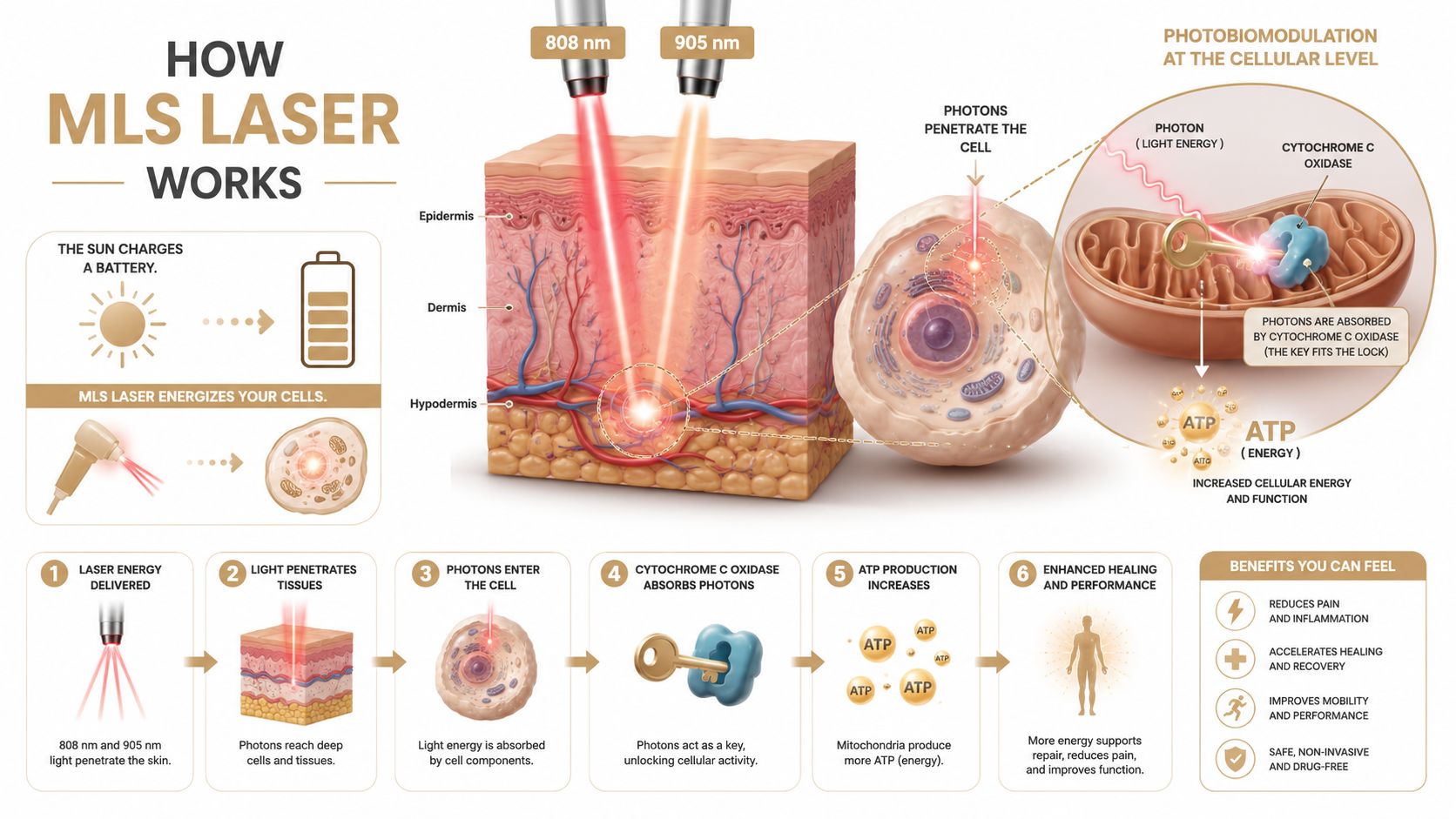
The biological sequence is easier to understand in steps:
That vascular response explains why the skin may feel warm or look temporarily pink. Gentle warmth isn't the same as a burn. Burning pain, blistering, or worsening skin damage suggests a different problem and shouldn't be waved away.
MLS is different from cosmetic laser treatment, where the purpose and tissue target may be entirely different. If you want to understand the clinical question of effectiveness in more detail, see does MLS Laser Therapy work.
MLS laser therapy is usually well tolerated, but a first session can still produce sensations that feel unfamiliar. During or shortly after treatment, the area may feel warm, look mildly pink, or tingle briefly. These responses are generally temporary. A safety review summarized by the Canadian Physiotherapy Association describes erythema, or skin redness, as a common, self-limiting response.
The key distinction is how the sensation changes. A mild feeling that settles is different from pain that keeps building. Short-lived burning, increased soreness, or sensitivity has been reported, although the frequency is difficult to estimate because many studies are small and adverse effects are uncommon. A systematic review in PLOS ONE notes that certainty around adverse-effect estimates remains low.
For background on how inflammation and treatment response relate, see this guide to MLS laser therapy for inflammation.
| Side Effect | Approx. Incidence | Typical Duration |
|---|---|---|
| Temporary warmth | Not consistently quantified in MLS-specific studies | Brief and usually self-limited |
| Localized redness or erythema | Commonly described, but not consistently quantified across MLS studies | Often resolves without intervention |
| Tingling or brief sensitivity | Rare or inconsistently reported | Short-lived |
| Mild headache or fatigue | Infrequently reported | Usually temporary |
| Pain flare or burning sensation | Reported occasionally, with frequency uncertain | Monitor if it persists or worsens |
| Skin irritation | A low-level laser safety review reported effects in 29 patients, or 29.3%, including eczema at 4.0%, pruritus at 3.0%, and acne at 1.0% | Most resolved within 2 weeks a safety review from Valerie Krossin |
Warmth or pinkness may reflect increased local blood flow. Tingling can occur as irritated tissues and nerves respond, but severe numbness or new neurological symptoms need assessment. If you can see a reaction, photograph it in good lighting and record when it began. Contact the clinic if it intensifies, spreads, or lasts beyond the expected short recovery period.
Serious complications aren't the routine experience, but “rare” doesn't mean impossible. Reviews of broader nonablative laser and energy-device treatments found that adverse events were generally uncommon and mild, while higher skin phototypes and greater total energy delivery were associated with more pigmentation risk. The meta-analysis of 43 studies and 1,654 patients reported postinflammatory hyperpigmentation in 8.1% and prolonged erythema in 0.6% across the broader treatment category. Those figures shouldn't be treated as MLS-specific rates.
A thermal burn can result from excessive energy, prolonged stationary contact, poor applicator movement, or inadequate attention to heat absorption. A darker tattoo, permanent makeup, or dark clothing beneath the beam can absorb more energy than surrounding tissue. Blistering, intense pain, or skin that looks injured rather than mildly pink requires prompt clinical attention.
Dyschromia, meaning a change in skin color, may appear as darker or lighter patches. Risk can rise with darker skin types, recent tanning, excessive energy, or inadequate screening. A color change may not appear immediately, so patients shouldn't assume that a delayed pigment change is unrelated to treatment.
A compromised skin barrier can also raise infection concerns. Photosensitivity reactions are possible when a patient uses a medication that increases light sensitivity, which is why medication review belongs before treatment, not after a rash appears. Direct beam exposure to the eye is a separate and urgent hazard. Independent laser safety guidance identifies eye exposure as an absolute contraindication because retinal or corneal injury can be permanent. Clinical eye-safety guidance explains why protective eyewear is essential.
| Rare MLS Laser Reaction | Typical Cause | Warning Sign |
|---|---|---|
| Thermal burn | Excessive dose, stationary application, or poor technique | Blistering, severe pain, damaged-looking skin |
| Dyschromia | Higher pigment sensitivity, tanning, or excess energy | Darkening or lightening that persists or spreads |
| Infection | Treatment over compromised skin | Fever, drainage, increasing tenderness |
| Photosensitivity reaction | Sensitizing medication or unreported light sensitivity | Expanding rash, marked irritation |
| Ocular injury | Direct exposure or absent eye protection | Vision changes, eye pain, new visual disturbance |
Don't wait for a routine follow-up if you develop vision changes, blistering, an expanding rash, fever, drainage, or pain that continues beyond 48 hours. Contact the treating clinic promptly, and seek urgent medical care for significant eye symptoms, severe burns, or rapidly worsening neurological changes.
Screening should separate situations where treatment should be avoided from factors that call for modification or medical clearance. Laser therapy guidance commonly advises against treatment over the eyes, known or suspected malignancy, a pregnant low back or abdominal region, actively bleeding tissue, and areas affected by thrombophlebitis or deep vein thrombosis. A classic contraindication review also discusses retina exposure, epilepsy, thyroid-region treatment in hyperthyroidism, and abdominal exposure during pregnancy.
Pregnancy is especially important to disclose. Clinical safety guidance repeatedly cautions against treatment over the abdominal, pelvic, low-back, or uterine region, while other body areas still require a clinician's judgment. A review of laser therapy contraindications also discusses active bleeding, neoplasms, photosensitizing drugs, and some electronic-implant considerations.
| Condition or Factor | Classification | Recommended Action |
|---|---|---|
| Active malignancy in the treatment field | Avoid treatment in the field | Defer and obtain appropriate medical guidance |
| Pregnancy involving abdominal, pelvic, or low-back treatment | Avoid treatment in the area | Disclose pregnancy before booking or treatment |
| Direct irradiation of the eyes | Absolute safety concern | Never permit direct exposure, use approved eye protection |
| Thrombophlebitis or deep vein thrombosis | Avoid treatment over the affected region | Seek medical evaluation first |
| Epilepsy triggered by light | Relative concern | Discuss seizure history and treatment alternatives |
| Photosensitizing medication, including some antibiotics, retinoids, or diuretics | Relative concern | Review every medication with the clinician |
| Pacemaker or other electronic implant near the treatment path | Requires individualized review | Tell the provider where the device is located |
| Tattoo or permanent makeup in the beam path | Technique and absorption concern | Map the area and consider avoiding direct treatment |
| Recent sunburn or compromised skin | Relative concern | Wait until the skin barrier recovers |
| Fragile skin, autoimmune flare, or extremes of age | Higher-risk profile | Use conservative screening and individualized settings |
Darker skin tones, particularly higher Fitzpatrick phototypes, deserve careful parameter selection because pigment changes can be more consequential. Children, older adults with fragile skin, and people experiencing an active autoimmune flare also need individualized assessment rather than automatic approval.
Aftercare doesn't replace safe treatment technique, but it helps you notice a problem early and avoid unnecessary irritation. Most patients can return to ordinary activity, yet the treated area may respond better when you keep the first day calm and observe how your body reacts.
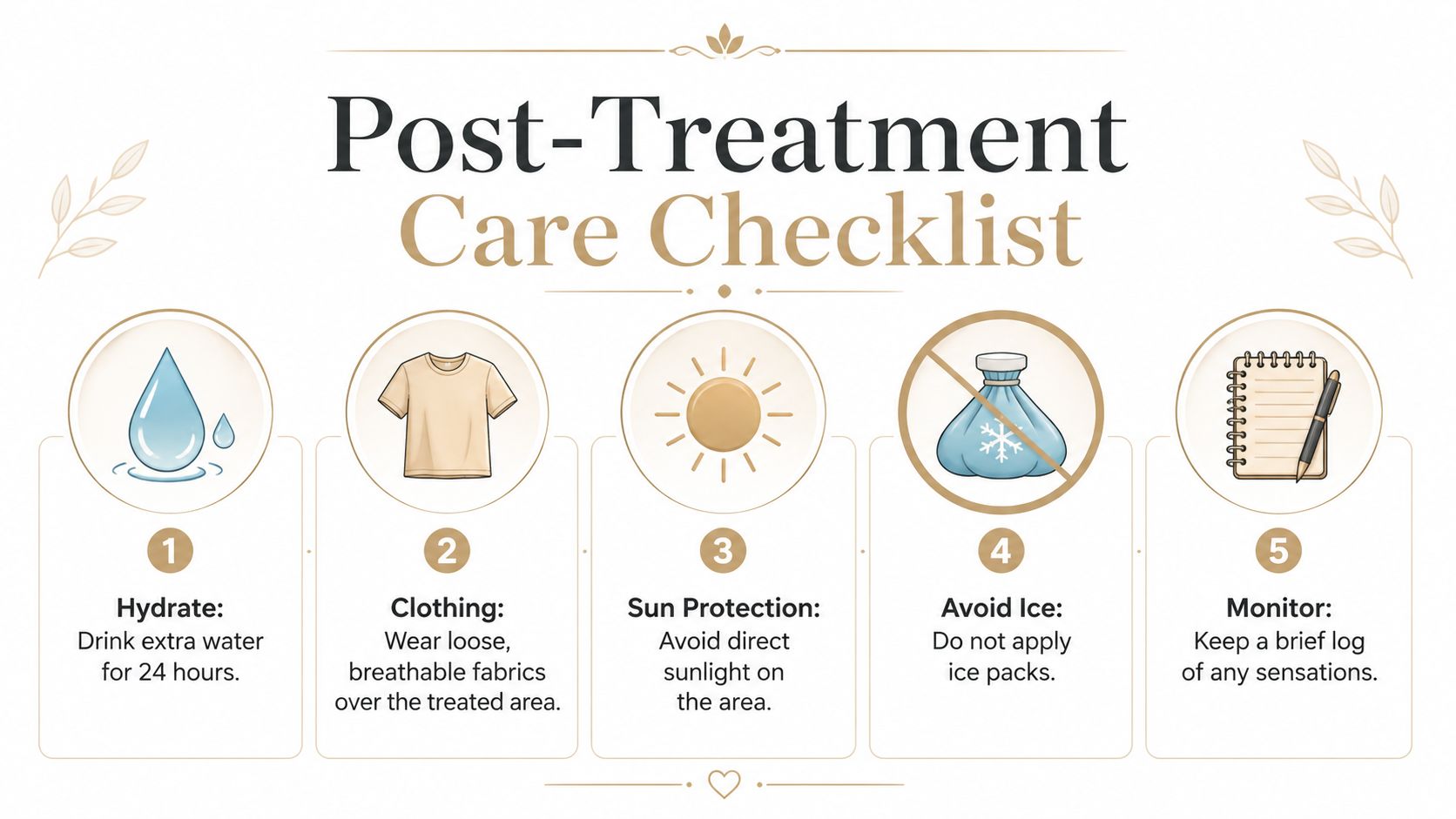
Call the clinic if redness is increasing after 24 hours, or if you notice blistering, fever, drainage, or new neurological symptoms. The clinician may adjust the next session's dose, movement pattern, treatment area, or timing. Early communication can prevent a mild reaction from repeating.
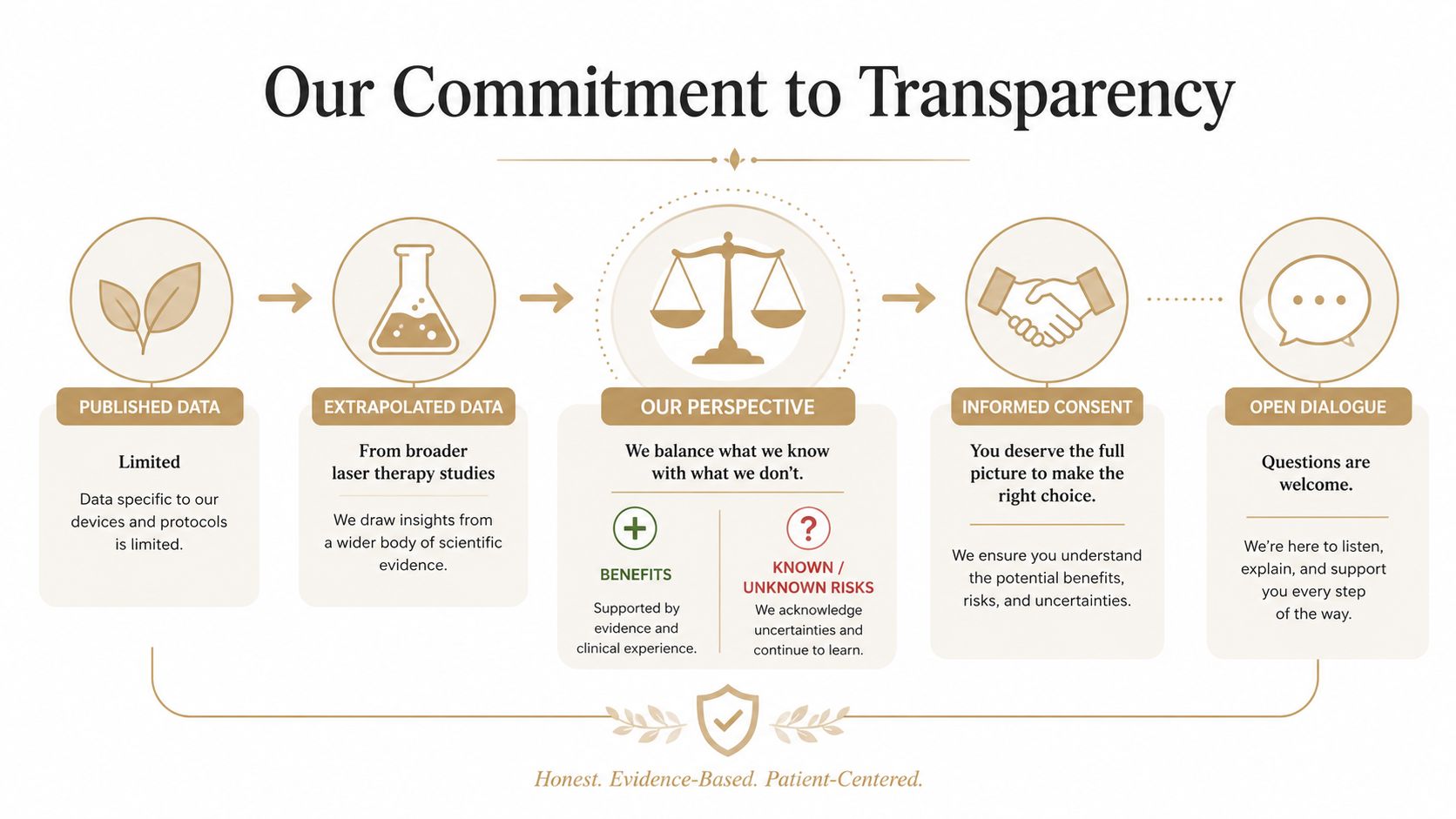
You arrive expecting a gentle session, then notice warmth or pinkness near the treated area. Knowing what that response can mean is more useful than hearing that treatment has no risks. MLS-specific safety evidence remains limited, because much of the discussion draws from broader low-level laser, nonablative laser, or related energy-device research rather than a large MLS adverse-event registry. A contemporary review of high-intensity and Class IV laser therapy found no serious adverse events across 105 studies, involving 2,710 treated participants and 2,925 controls. The review's published findings support a low overall signal for serious events, while still leaving room for individual screening and unexpected reactions.
Clear risk communication supports informed consent. A patient who expects “no side effects” may overlook persistent redness, dismiss a delayed pigment change, or forget to report a medication that increases light sensitivity. A calm explanation of uncommon but possible reactions gives patients a practical reason to follow eye-protection and aftercare instructions.
A careful intake should cover:
These details help identify people who may need modified settings, a different treatment area, closer observation, or postponement. They also give the clinician a baseline for recognizing a reaction that differs from the patient's usual response.
Aspen Falls Wellness uses individualized screening for Salt Lake City and Sandy patients considering MLS Laser Therapy. Depending on the evaluation, the clinic's broader care model may include chiropractic adjustment, massage therapy, acupuncture, mobility therapy, rehabilitation exercise, nutrition counseling, and non-surgical spinal decompression with the DRX 9000.
Practical rule: Honest risk discussion helps patients distinguish expected sensations from warning signs, report changes early, and decide whether treatment fits their own history.
Yes. Warmth or mild pinkness may appear during or soon after treatment, while irritation or pigment changes can be delayed. A delayed change deserves documentation and a call to the clinic, particularly if it spreads or becomes more pronounced.
A brief session doesn't guarantee that a complication is impossible. Risk depends on the treatment area, dose, skin response, technique, eye protection, medications, and medical history. Excessive energy or prolonged stationary application can create a problem even when the appointment itself feels quick.
Mild warmth and transient erythema are generally self-limited. They should trend toward improvement rather than intensify. Persistent pain, blistering, expanding redness, drainage, or a skin reaction that concerns you warrants a clinical call.
The clinician should inspect and map tattoos, permanent makeup, and recently sun-exposed skin before treatment. Pigment and irritated skin can respond differently to light, so direct treatment over a tattoo or sunburn may need to be avoided or postponed.
Pregnant patients, people with active malignancy in the treatment field, and patients taking medications such as isotretinoin or other photosensitizing drugs should disclose that information before treatment. Treatment may need to wait for physician clearance or a different plan.
Call the clinic for increasing redness beyond 24 hours, persistent pain, delayed color change, blistering, fever, drainage, or an expanding rash. Seek urgent care for severe symptoms, significant neurological changes, or any vision change after possible eye exposure.
A useful message is: “The treatment was at [body area] on [day and time]. I noticed [symptom] at [time]. It is [improving, stable, or worsening], and I have [relevant medication, tattoo, sunburn, or medical history].” That gives the clinician the details needed to advise you without guessing.
Aspen Falls Wellness offers individualized MLS Laser Therapy consultations along with chiropractic care, spinal decompression with the DRX 9000, massage, acupuncture, mobility therapy, rehabilitation exercise, and pain-relief planning. Visit Aspen Falls Wellness to discuss your symptoms, medical history, and whether a screened, conservative treatment plan is appropriate.

Stay updated with the latest chiropractic news and exclusive offers.