Yoga for stomach fat loss combines core-focused flows with mindful eating. Discover routines to boost metabolism and support sustainable changes.




Yoga for stomach fat loss sounds simple until you look at what changes body composition. The most common mistake is treating yoga like a spot-removal tool for belly fat, when the better question is whether it helps you build a body that stores less fat over time. Used well, yoga can support core strength, stress control, and adherence, but it usually works best as part of a broader plan, not as the whole plan.
The biggest myth in this space is that a few yoga classes will melt belly fat on their own. The evidence does not support that. A 2023 systematic review and meta-analysis found yoga reduced waist circumference versus control by a mean difference of -0.84 cm with a wide confidence interval, and it found no clear difference in body weight, BMI, or body fat percentage in that comparison, while also concluding the evidence quality was very low to moderate and overall inconclusive (PubMed).
That does not make yoga useless. It means yoga works best as one part of a fat-loss plan, not as the whole plan. In practice, the people who see the most change usually pair a steady yoga routine with nutrition changes, more total daily movement, and better recovery. If the core issue includes sleep disruption, stress eating, or midlife hormone shifts, yoga can help the system settle, but it will not erase abdominal fat on its own. For a closer look at that side of the problem, hormones and belly fat after 50 is a useful companion read.
A 12-week randomized trial in women with abdominal obesity found yoga reduced waist circumference versus a waiting-list control, and the same trial also tracked changes in other body-composition markers such as waist-hip ratio, body fat percentage, and muscle mass (PMC). That matters because central adiposity is usually better judged by waist measures and broader body composition than by body weight alone.
Still, that kind of trial does not turn yoga into a stand-alone fix. It shows that a structured program can shift abdominal measurements when people stick with it, but the result sits inside the larger pattern of eating, activity, stress, and sleep. In clinic, I see the same thing over and over. Patients who use yoga to improve consistency do better than patients who expect the mat to do all the work.
Practical rule: if the goal is a smaller waist, use yoga to support adherence, mobility, and stress control, then let the rest of the plan create the calorie deficit.
Yoga affects body composition through several pathways, and none of them works in isolation. The physical work matters first. More active styles ask the large muscle groups to keep moving, which raises energy use during the session, and that is part of why flow-based practices feel harder than slow stretching.
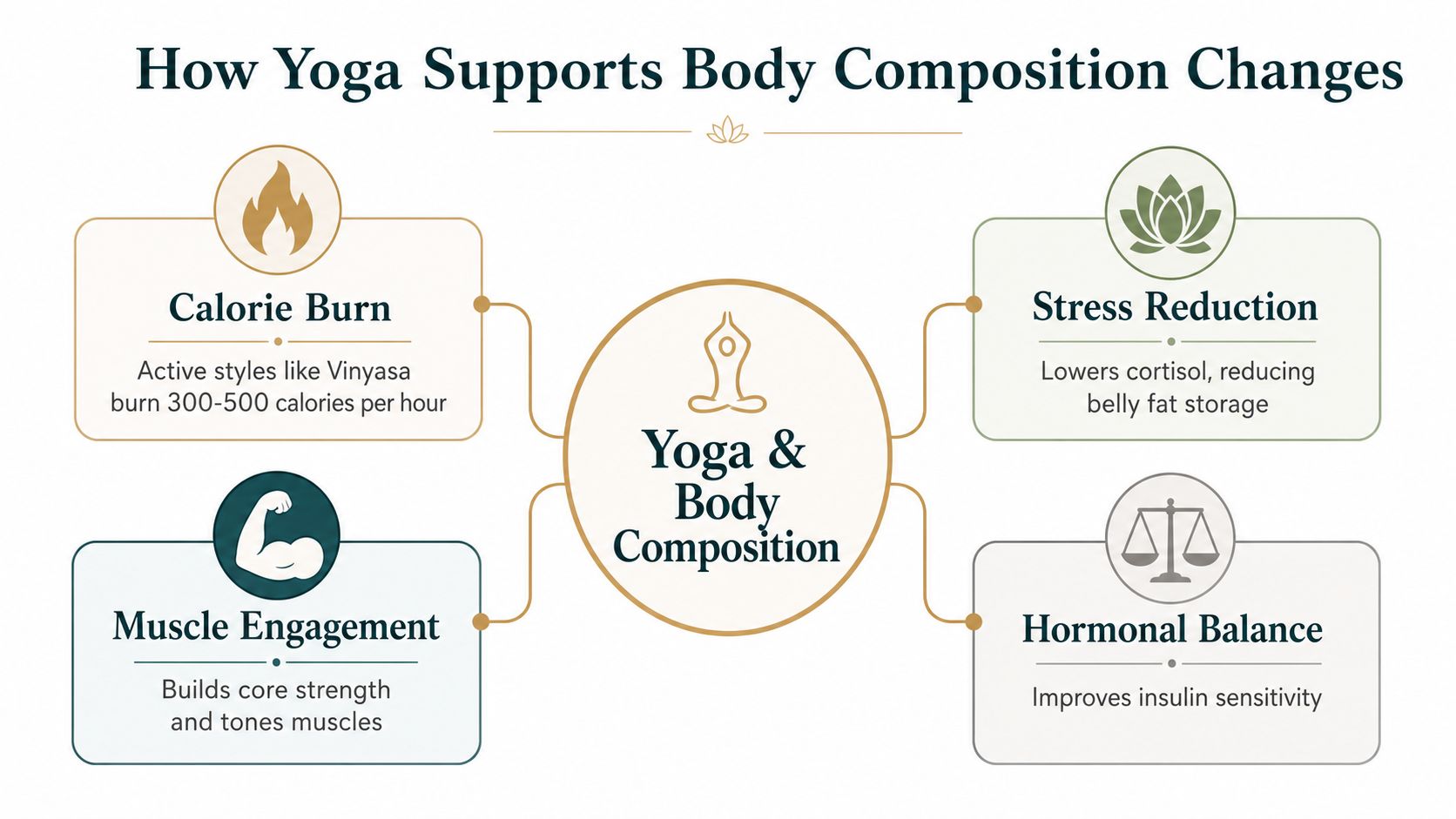
Yoga also changes stress physiology. When someone stays wound up, comfort eating tends to rise, movement tends to drop, and the body often settles into habits that favor abdominal fat retention. A regular practice gives the nervous system a chance to downshift, and that matters as much as the movement itself for people whose midsection concerns are tied to stress, poor sleep, and inconsistent routines.
Core engagement is the other piece. Poses such as planks, side planks, twists, and controlled transitions make the trunk stabilize against gravity, which builds the muscles that support posture and the midsection. That does not burn fat from the belly in a local way, because spot reduction is not how fat loss works. It does create a firmer base while overall body fat is coming down.
Clinical takeaway: a flatter-looking stomach usually comes from lower central adiposity plus better core tone, not from endless ab work.
The earlier trial is useful here because it did more than track scale weight. It found improvements in waist-hip ratio, body fat percentage, and muscle mass percentage, which is the kind of pattern I pay attention to in practice. Those changes matter because body composition tells a better story than body weight alone when the goal is a smaller, stronger midsection.
Yoga also works best when it sits inside a broader plan. A patient who uses it to stay consistent with movement, reduce stress eating, and recover better will usually do better than someone who expects the mat to handle every part of fat loss. If you want a useful comparison point for aerobic exercise, running for a flatter stomach shows why calorie burn and total energy balance still matter. Yoga can support the same goal, but it usually works best as one part of a multicomponent routine that also includes nutrition, walking, and, when needed, clinical support for spine or joint limitations.
For people whose bodies do not tolerate standard flows well, therapeutic exercise guidance from Aspen Falls Wellness can help frame the right level of modification. That is often the difference between a plan someone can sustain and a plan that stalls because pain, stiffness, or fear of movement gets in the way.
Start with a plan you can repeat. A short, repeatable sequence beats a heroic class you only do once, because body composition responds to patterns, not dramatic one-offs. The easiest way to build momentum is to move from stable basics to more demanding flows only after your form stays clean.
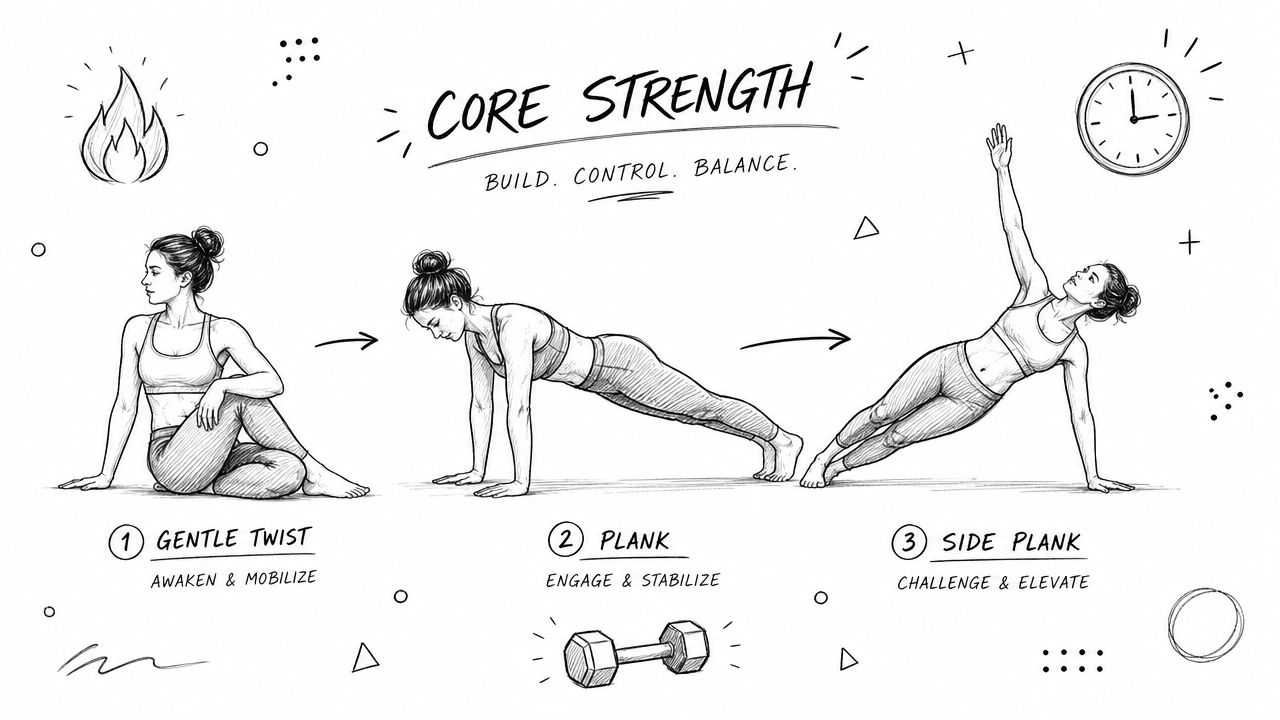
Begin with breathing, then add simple standing work. Five slow rounds of breath through the nose can lower the urge to rush, and then a sequence of mountain pose, chair pose, low lunge, and gentle twist teaches the body to brace without gripping. If the abdomen feels weak, keep the knees bent and shorten the range of motion.
A good beginner set is this:
Once that feels stable, link the poses into a continuous flow. Move from chair to forward fold to plank to cobra or upward dog, then back to downward dog, then step through again. The point is not speed for its own sake, it's maintaining control while the heart rate rises and the core has to keep organizing the body.
If you've got a history of back pain, don't chase depth. Keep twists gentle, avoid forcing spinal flexion, and stop any pose that creates sharp pain or leg symptoms. For people with knee irritation, shorten lunge stance and use the hands on blocks so the front knee isn't driven forward under load.
You can compare your yoga approach with a broader rehab lens by reviewing therapeutic exercise basics. That kind of movement framework is helpful when you want the practice to strengthen the core without irritating the spine or hips.
Higher-output practice comes from longer holds and smoother transitions, not from panic-speed movement. Add side plank, boat pose, lunging transitions, and repeated standing sequences if your joints tolerate them. If your shoulders or wrists are cranky, reduce load by staying on forearms or using a wall for support.
The line I use with patients is simple.
If a pose makes you brace harder because of pain, it's not helping your waistline. It's adding noise to the system.
Yoga works best as one part of a larger fat-loss plan. The research points in that direction too. Reviews of yoga programs show better weight-related outcomes when the practice is done more often, kept going at home, and paired with postures, breathing, meditation, and yogic diet guidance, while single-format yoga tends to be less effective on its own.
Food structure is the piece many people miss. Yoga can improve appetite awareness, routine, and stress control, but body fat changes still depend on total intake across the day and the week. If intake does not support a deficit, the practice may improve mobility without changing abdominal fat much.
That is why nutrition guidance belongs in the same conversation as yoga. If you want a practical way to shape meals without turning every bite into a calculation, find a sustainable deficit plan is a useful place to start with structure instead of restriction.
Cardio and strength training fill the gap that yoga usually leaves. Cardio raises total energy use, and strength work helps preserve lean mass while body fat comes down. That matters because a smaller waist tends to function better when the trunk is supported by stronger hips, back, and shoulders.
In clinic, I often pair yoga with:
For readers who want the nutritional side of that plan, nutrition services fit naturally with a body-composition goal because they address the part of the process yoga cannot replace.
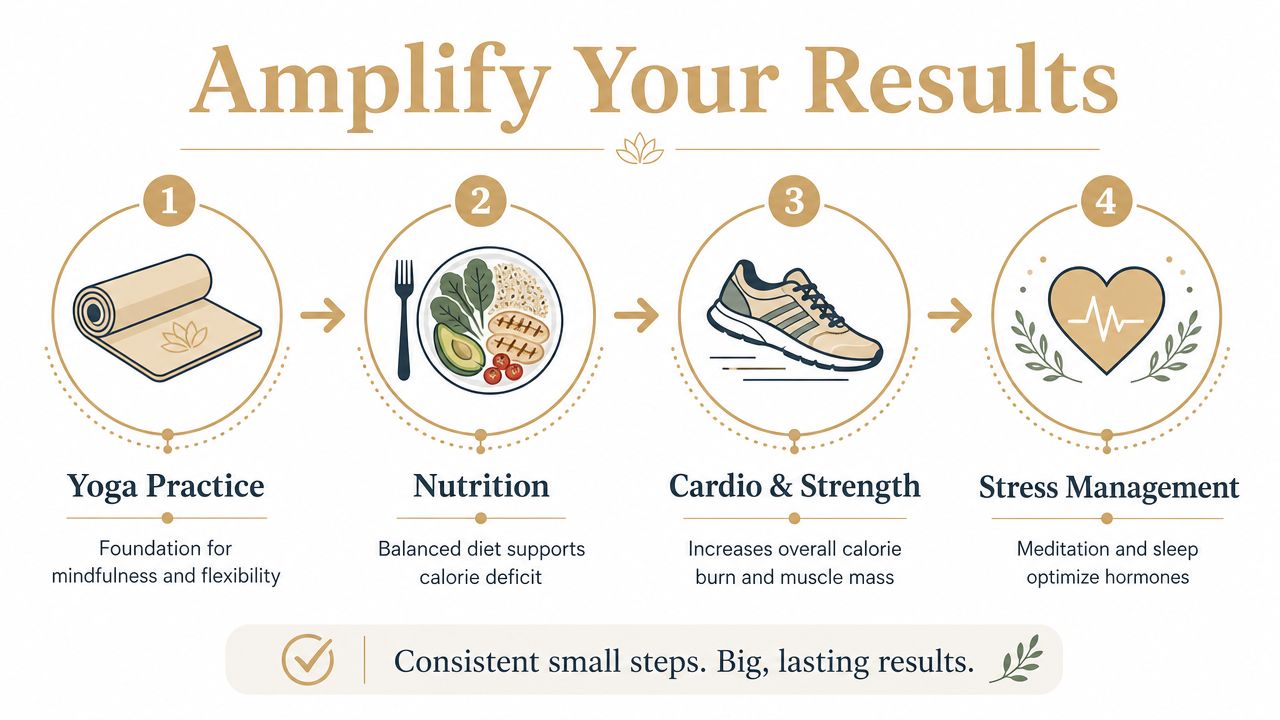
The goal is not to pile on everything at once. The goal is to reduce friction. Yoga handles stress and movement quality, nutrition handles intake, and regular conditioning handles calorie output. Put those together, and the waistline usually responds better than it does to isolated yoga sessions.
For stomach fat loss, frequency matters more than intensity alone. A once-in-a-while class can feel good, but the body composition changes people want usually come from a routine that can be repeated week after week. The most practical setup is a steady 8- to 12-week run with multiple weekly sessions plus home practice, because short isolated blocks are less likely to change abdominal adiposity in a measurable way, as noted in the synthesis of 55 studies.
Start with three sessions per week if you're already active. If you're new, two sessions is a better entry point, especially if you're rebuilding after pain, long breaks, or joint stiffness. Keep one session lighter and make the other one or two more active, so your body gets practice without getting overwhelmed.
Use this simple rule:
People with back or knee problems often push through positions that are not ready yet. That is the fastest way to make yoga inconsistent. For sensitive knees, reduce squat depth and pad the floor. For irritated backs, avoid aggressive forward folds and deep twisting under load, and keep the spine long instead of rounded.
If pain is lingering, recurring, or tied to a known disc problem, get professional eyes on it before you keep building intensity. How to speed up recovery is a useful reminder that movement can help healing, but only when it is dosed correctly.
Safety rule: discomfort from effort is different from pain that changes your mechanics. If you start protecting a joint, scale back immediately.
Chiropractic care, decompression, acupuncture, and other clinically supervised support can matter here. They do not replace the work, but they can make it possible to keep moving when stiffness or pain would otherwise knock you off track. Yoga should support your plan, not compete with it.
A busy professional with desk stiffness usually needs the simplest path. Two active yoga sessions, one short home flow, a daily walk, and a basic nutrition structure can make more difference than an ambitious plan that collapses in week two. The win is consistency, not perfection.
A postpartum parent often needs a different approach. Core work has to respect healing tissue, sleep is fragmented, and stress is already high, so the best yoga plan is usually gentler at first, with careful progression into planks, lunges, and longer standing sequences. That person may see better results when yoga is paired with mobility work and nutrition support rather than with aggressive exercise volume.
An athlete or recreational lifter often uses yoga for a different reason. They're not looking for yoga to do everything, they're using it to restore trunk control, improve movement quality, and keep training volume sustainable while body fat trends down. In that case, yoga is the glue that keeps the larger plan intact.
The next step is simple. Pick a realistic weekly rhythm, choose one or two poses or flows you can repeat, and pair that with food structure and enough non-yoga movement to create change. If your back, neck, hips, or knees keep limiting progress, get that evaluated early instead of waiting until the plan falls apart.
Aspen Falls Wellness offers integrative chiropractic and musculoskeletal care that can support your fat-loss routine when pain, stiffness, or mobility limits keep you from staying consistent. If yoga for stomach fat loss is part of your plan, visit Aspen Falls Wellness to explore personalized care that helps you move better, recover smarter, and build a routine you can maintain.

Stay updated with the latest chiropractic news and exclusive offers.