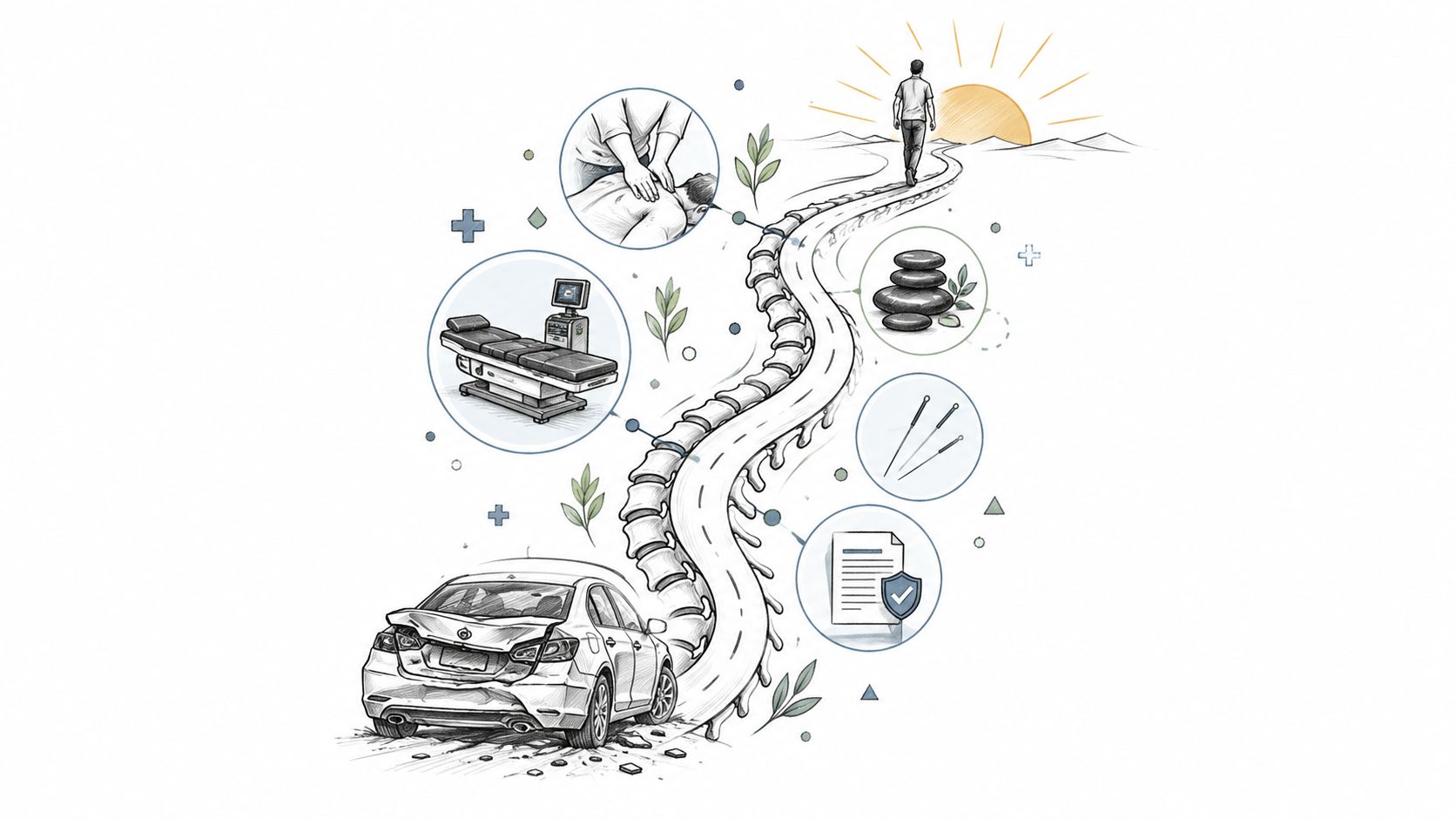
Acupuncture for musculoskeletal pain: what the research shows, how a session works, and how it fits with chiropractic, massage and rehab care.

A 2025 systematic review of acupuncture for neck pain pooled 26 randomized trials involving 3,520 adults, and only 50% of those trials were judged to have a low risk of bias, according to the review indexed in PubMed. That pairing tells you most of what you need to know about acupuncture for musculoskeletal pain. There's a lot of research, patients do get measurable relief, and the certainty behind those results is uneven enough that honest expectations matter more than enthusiasm.
So the useful question isn't whether acupuncture "works." It's how much relief you can reasonably expect, for which condition, over what time frame, and how you'll know if it's helping you specifically. Those are answerable questions, and the answers come with numbers attached.
Acupuncture produces a modest, mostly short-term reduction in pain and improvement in function for some musculoskeletal conditions. It is not a cure, and it does not correct structure. Here are the pooled results before any interpretation.
Acupuncture effect sizes and response rates in musculoskeletal pain
| Study or guideline | Comparison and outcome | Result |
|---|---|---|
| 2016 meta-analysis, 59 trials for pain and 31 for disability | Sham, pain and disability | Pain: SMD -0.61 (95% CI -0.76 to -0.47), about 12 points on a 100-mm scale. Disability: SMD -0.77 (95% CI -1.05 to -0.49) |
| 2012 individual-patient-data analysis, 17,922 patients | Sham and no acupuncture, back and neck pain | Sham: SMD 0.23 (95% CI 0.13 to 0.33). No acupuncture: SMD 0.55 (95% CI 0.51 to 0.58) |
| Knee osteoarthritis review | Sham, pain at end of treatment and response about two months later | Pain: SMD -0.38 (95% CI -0.66 to -0.10). Response: RR 1.61 (95% CI 1.27 to 2.04) |
| WHO chronic low back pain guideline | Pain and function, short term | Small benefit, conditional recommendation, low-certainty evidence |
| BackInAction trial, 2025 | Standard acupuncture and electroacupuncture, disability at 6 months | Standard: 39.1% achieved at least 30% improvement. Electroacupuncture: 43.8% achieved at least 30% improvement |
A standardized mean difference of 0.23 against sham and 0.55 against no acupuncture for the same conditions is not a contradiction. The two numbers answer different questions. The sham comparison asks what needling itself adds once the surrounding experience is accounted for. The no-treatment comparison asks what happens when a real patient gets real care in a real clinic. You live in the second comparison, so both figures matter when you set expectations, and neither one supports the extremes of "it's just placebo" or "it's proven."
The knee osteoarthritis response ratio of 1.61 at roughly two months means more patients crossed a meaningful improvement threshold, not that everyone improved by that proportion. Response ratios count people, not degrees of relief.
Function often moves more than pain intensity does. Notice that the disability effect size in the table is larger than the pain effect size, and the BackInAction trial measured success as 30% improvement in disability rather than pain relief alone. That pattern gives you a practical benchmark. If roughly four in ten patients in a large trial reached that threshold at six months, expecting total pain elimination in a few sessions is unrealistic, but expecting measurable change in what you can do is not. Track what you can lift, walk or sit through, and judge treatment against those concrete anchors rather than a pain score in isolation.
Expectations should also shift with the diagnosis and with what else you are doing. If your pain has a mechanical driver, understanding what causes chronic joint pain comes before adding any passive treatment. Daily habits count too, and these heat therapy habits for remote workers are a sensible companion to desk-bound back and neck stiffness.
Think of a sensitized nervous system as a smoke alarm with the sensitivity dial turned up. The toast isn't a fire, but the alarm still screams. Acupuncture may help nudge that dial down, so the same movement or load triggers less alarm. That's an analogy for pain modulation, not a description of tissue repair.

Evidence summarized by the National Center for Complementary and Integrative Health points to two plausible pathways. Human and animal studies, including brain-imaging work, indicate that acupuncture can affect nervous-system function. Needling may also produce direct effects in the tissues where needles sit, including connective tissue.
That source is careful about one thing worth repeating: effects are generally larger against no treatment than against sham, which suggests needling-specific and nonspecific factors both contribute. Expectation, touch, time spent with a practitioner and the sheer oddity of the procedure aren't nothing. They're part of the effect, and they're also why blinding is so hard.
Durability varies by condition. In an analysis of 20 studies involving 6,376 people with painful conditions described by that same NCCIH overview, benefits continued for up to one year after treatment ended for every evaluated condition except neck pain. Neck pain, in other words, is the one where you shouldn't assume a course of treatment buys you months of quiet.
The mechanism isn't fully established. Anyone who tells you exactly which molecule fixes your disc is selling certainty that the biology doesn't support.
The practical implication is narrow and useful. Acupuncture is best treated as a way to lower pain enough that movement, loading and rehabilitation can proceed. It doesn't rebuild cartilage, retract a herniation or lengthen a shortened muscle. The remodeling comes from what you do while the pain is quieter.
Most first-visit anxiety comes from not knowing the sequence. Here's the order a well-run appointment follows, and the reason for each part.

Afterward, mild soreness at needle sites or a stretch of fatigue for a few hours is common and unremarkable. Bruising happens occasionally. What isn't typical is escalating pain, spreading redness or new numbness, and those get reported rather than waited out.
Before your first visit: eat something light, wear loose clothing that rolls above the knee and elbow, and bring your medication list. Our guide on how to prepare for acupuncture walks through the rest.
Needling rarely earns its keep on its own. It works best as one step in a sequenced plan, where each therapy handles a different part of the problem and the order is chosen on purpose.
How acupuncture pairs with other musculoskeletal therapies
| Therapy | What it targets | How it pairs with acupuncture |
|---|---|---|
| Massage therapy | Muscles and soft tissue | Loosens guarded tissue so needling and exercise start from a calmer baseline |
| Chiropractic adjustment | Motion of the spine and joints | Restored motion can make needling sessions and exercise easier to tolerate |
| MLS laser therapy | Inflammation and recovery support | Sequenced with needling in one plan, with timing set by the clinician |
| Rehabilitation exercise and mobility therapy | Strength and range of motion | Acupuncture lowers pain enough for graded exercise to proceed |
| Take-home exercise plan | Ongoing movement and load tolerance | Carries the lasting gains once in-clinic pain control is in place |
Massage focuses on muscles and tissues, while chiropractic adjustments restore motion to the spine and joints. Those are different jobs, and doing them in a sensible order changes how well the next step lands. A patient whose neck is locked in protective spasm often tolerates needling and exercise better after soft-tissue work and an adjustment than before it.
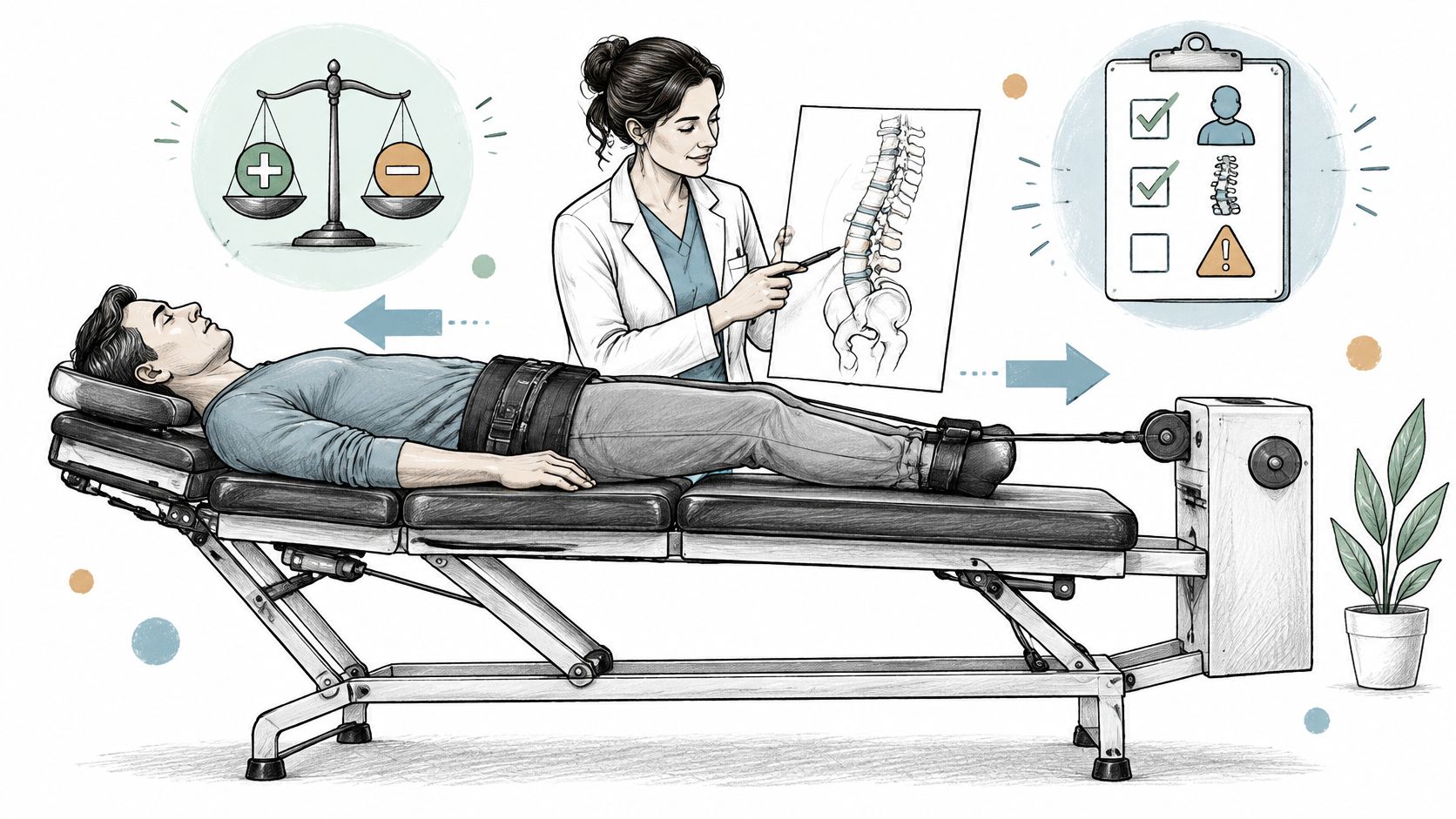
Device-based options sit alongside needling rather than replacing it. Spinal decompression with the DRX 9000 is a focus option within a coordinated plan for disc-related complaints, and the clinician times it against acupuncture sessions so that pain relief doesn't mask changes the team needs to track. If your leg symptoms are shifting, that shift needs to be visible, not smoothed over by a good analgesic day.
Two sequencing examples make this concrete:
Our chiropractors, massage therapists, mobility specialists, acupuncturists, pain management specialists and nutritional coaches design these plans together, which is the whole point of a multidisciplinary approach to pain management. Nutrition and load management belong in the same conversation, and this overview of ways to support joint comfort and mobility from NexiHerb is useful background for patients building those habits.
The plan gets reviewed as your response changes. If exercise is progressing, passive care should be tapering, not accumulating.
The claim that acupuncture is completely risk-free deserves scrutiny because it stops patients from asking the questions that protect them. A 2025 evidence map covered by this review in PMC reported that 69 systematic reviews assessed adverse events and found no major adverse-event signal. That is reassuring, but a map with no major signal still doesn't mean zero risk.
The same evidence is more useful when the small risks are named plainly. A randomized trial of 168 adults with nonspecific chronic low-back pain, described in this review in PMC, reported minor effects including bruising, local pain and skin irritation that generally resolved on their own, with no meaningful difference in adverse events between real and sham procedures. Needles are a controlled skin intervention, like a small puncture used for a purpose. Sterile, single-use, very fine needles and careful site selection reduce avoidable problems, while screening decides whether needling belongs in the plan at all.

Screening situations and the next action
| Situation | Why it matters | Next action |
|---|---|---|
| Taking blood thinners or has a bleeding disorder | Higher chance of bruising or hematoma | Disclose before the first needle and let the practitioner decide |
| Pregnancy | Treatment must be reviewed for the individual case | Disclose before treatment starts |
| Impaired sensation or skin infection at the needle site | Needling may be unsuitable there | Defer treatment until assessed |
| Implanted device or immune compromise | Changes infection and device risk | Clear with the treating clinician first |
| Progressive weakness, bowel or bladder change, fever or unexplained weight loss | Needs urgent diagnostic evaluation | Seek medical assessment before any conservative care |
| Suspected fracture, infection or major trauma | Imaging and diagnosis come first | Do not delay diagnosis for acupuncture |
Some symptoms outrank every conservative therapy on offer. Progressive weakness, new bowel or bladder changes, fever, unexplained weight loss, major trauma, or suspected fracture or infection call for medical assessment first. Acupuncture must never become the reason a diagnosis gets postponed.
Informed consent should name the specifics: bruising, localized soreness, dizziness, minor bleeding, and rare technical problems such as a retained or difficult-to-remove needle. Agree on stop rules before starting a package, so a bad response is judged against a clear plan rather than a vague impression.
Pain intensity alone is a poor scoreboard. It swings with sleep, stress and weather, and it can improve while your life stays exactly as limited as before. Guideline writers disagree for related reasons: a 2025 review of 17 clinical-practice guidelines for chronic musculoskeletal pain, published in PMC, found 60% of recommendations supported acupuncture but only 5.7% were strong, while 17.1% recommended against it. Part of that spread comes from sham controls that aren't inert, since superficial or off-point needling still produces sensation and context.
The fix is to track several measures at once, starting with a baseline recorded before your first session.
What to track and when to review it
| Measure | What to record | When to review |
|---|---|---|
| Pain intensity | Your 0-10 score at rest and during the task that provokes it | Each review visit, alongside the other measures |
| Function and disability | Specific tasks such as sitting, lifting or stairs | Each review visit |
| Activity tolerance | Minutes walked or exercise completed without flare | Weekly |
| Sleep | Hours slept and night-time wake-ups | Weekly |
| Medication use | Doses taken per week | Monthly |
| Response threshold | At least 30% improvement in disability from baseline | At about six months, or the agreed trial end |
That 30% disability improvement threshold is the benchmark used in the BackInAction trial, and it gives you a yardstick instead of a vibe. Write your baseline down in concrete units: minutes of sitting before you shift, flights of stairs, nights woken by pain, doses per week.
Say a runner with knee pain logs walking distance and stair tolerance. Two weeks in, her pain score has barely moved but she's walking further without a flare and sleeping through the night. That's a response worth continuing. If neither function nor sleep nor medication use has shifted by the agreed trial end, the plan changes rather than continuing by default.
Continue when function, sleep or medication use improve. Modify when they don't. Stop when a stop rule applies.

Book an initial screening examination to decide whether acupuncture belongs in your plan, and what it should sit alongside.
Acupuncture is offered at both the downtown Salt Lake City clinic and the Sandy clinic, and it can be booked as a stand-alone service or as part of a chiropractic treatment plan. Conditions treated include lower back pain, neck pain, nerve pain, sports injuries, migraine and headache, and shoulder, hip, knee, and foot or ankle pain.
Arrive with four things and the visit gets far more useful:
Then ask the questions that separate a plan from a package. Which outcomes will be tracked, and against what baseline? How many visits are planned before the first review? What are the stop rules? Does the plan include home exercise? Ask about the cost per visit too, and ask that the planned visit count and stop rules be stated in writing before treatment begins, so you're not guessing at the endpoint halfway through.
A screening consult should be able to end with "acupuncture isn't the right fit for this," and that answer is a good outcome rather than a failed appointment. A practitioner willing to say no is showing you how the yes cases are decided: on findings, not enthusiasm. That's the same standard you applied to the tracking framework in the earlier sections, where the numbers either justify continuing or they don't.
Aspen Falls Wellness provides acupuncture alongside chiropractic care, massage, mobility therapy and rehabilitation exercise at the Salt Lake City and Sandy clinics, with each plan built around tracked function rather than pain scores alone. Visit Aspen Falls Wellness to schedule an initial screening examination and find out whether acupuncture fits your case.

Stay updated with the latest chiropractic news and exclusive offers.