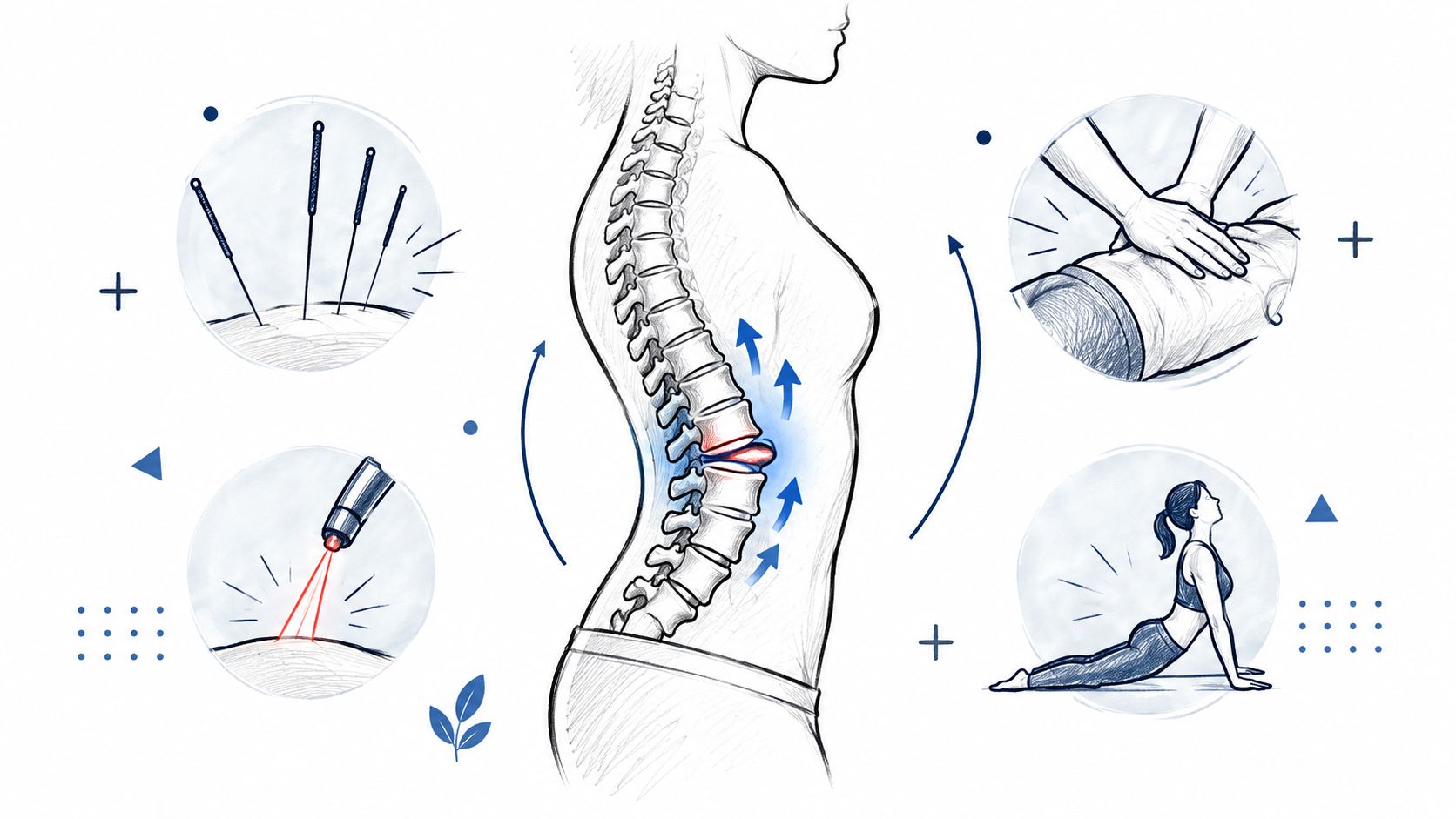
Discover evidence-based car accident chiropractic treatment options including DRX9000 decompression, SoftWave, and MRI protocols to speed your recovery
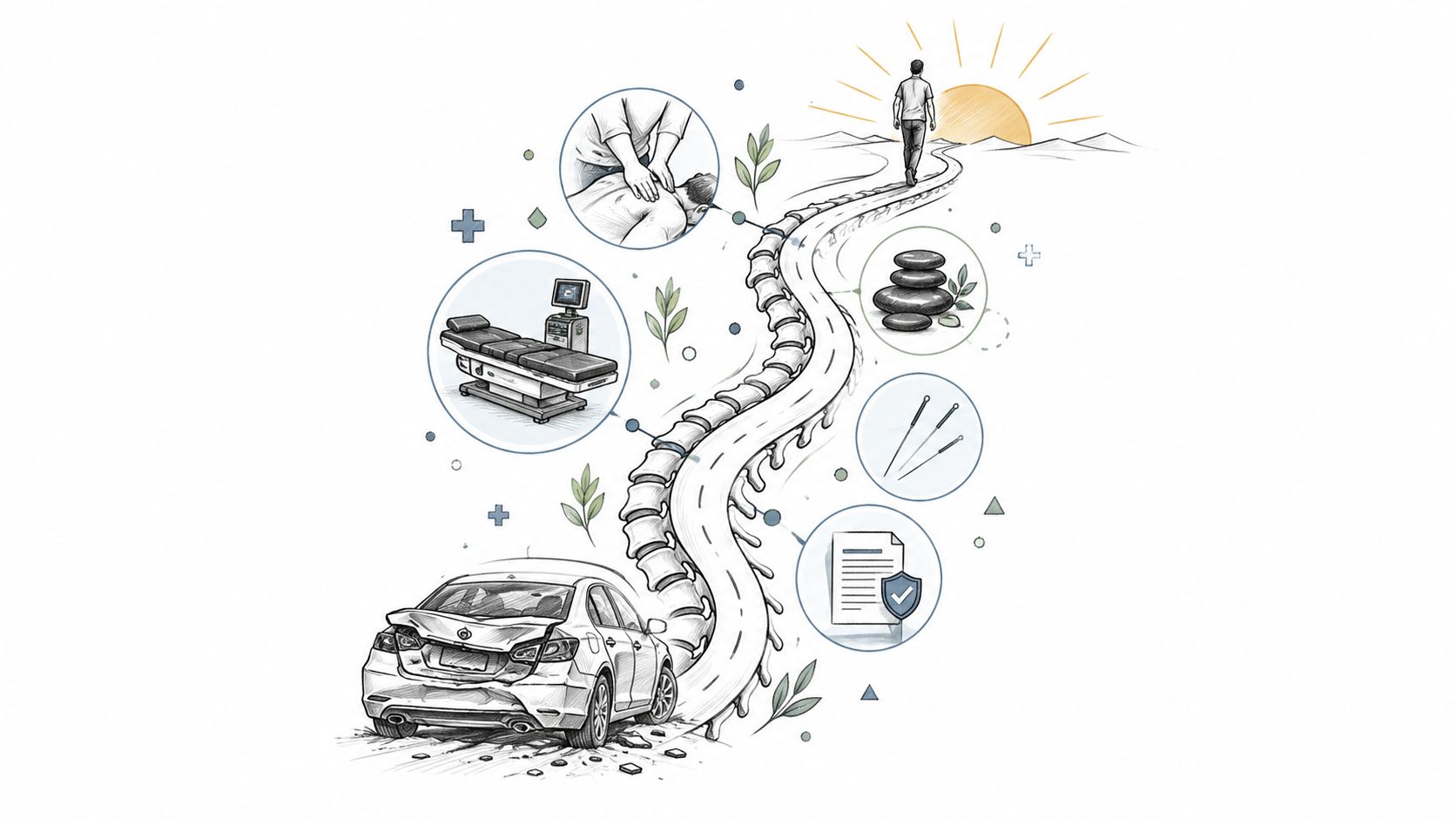
You're standing beside a damaged car, answering questions, exchanging insurance details, and trying to decide whether the tightness in your neck is serious. You may feel shaken but not injured. That uncertainty is common after a collision, especially when pain hasn't fully appeared yet.
Car accident chiropractic treatment should be more than a quick adjustment. A responsible recovery plan begins with screening for serious injury, documenting how your symptoms affect daily life, and matching care to your changing needs. That may include chiropractic adjustment, mobility therapy, massage, rehabilitation exercise, and carefully selected technologies, with referral when your condition requires medical or specialist care.
Right after a collision, your body enters an emergency state. Your attention narrows to getting out of the vehicle, speaking with first responders, and making sure everyone is safe. Stress hormones can temporarily dull pain signals, while tense muscles hold your body rigid. Once that surge settles, soreness, headaches, stiffness, or radiating pain may become easier to notice.
Consider someone who feels fine at the roadside but wakes the next morning with a restricted neck and a headache. That doesn't mean the symptoms are imaginary or that the injury began overnight. The impact may have strained muscles, ligaments, joints, discs, or nerve-sensitive tissues, while the body's immediate stress response temporarily hid the warning signs.

Early assessment doesn't mean assuming the worst. It means creating a sensible starting point. A clinician can check your movement, neurological function, tenderness, and symptoms, then identify whether you need imaging or medical evaluation before hands-on care.
A retrospective study of 149 motor-vehicle-accident patients treated by one chiropractor reported an average of 14.2 treatments per patient, while 40.2% required ongoing care to relieve persistent pain. The same study reported that delaying treatment reduced improvement, which supports prompt assessment rather than waiting for symptoms to become entrenched. Read the retrospective study on delayed treatment and persistent pain.
Practical rule: Feeling well immediately after a crash is a reason to monitor yourself carefully, not proof that no injury occurred.
Seek urgent medical attention for symptoms such as worsening weakness, significant numbness, confusion, fainting, severe headache, chest pain, difficulty breathing, or loss of bladder or bowel control. For a broader explanation of warning signs and timing, review this guide on when to see a doctor after collision from Olson & Sons. You can also learn more about symptom patterns in neck pain after a rear-end collision.
The first visit should answer three questions. What happened? What has changed? What care is safe right now? A professional evaluation isn't limited to pressing on a sore area and asking whether it hurts.
The clinician records the collision details, including the direction of impact, your position, whether your head moved suddenly, and whether you struck anything. They'll ask about previous injuries, current symptoms, medication, work demands, sleep, and activities you can no longer perform comfortably.
This history gives context to the examination. Neck stiffness in a person who was symptom-free before a rear impact means something different from longstanding neck pain that worsened after the crash.
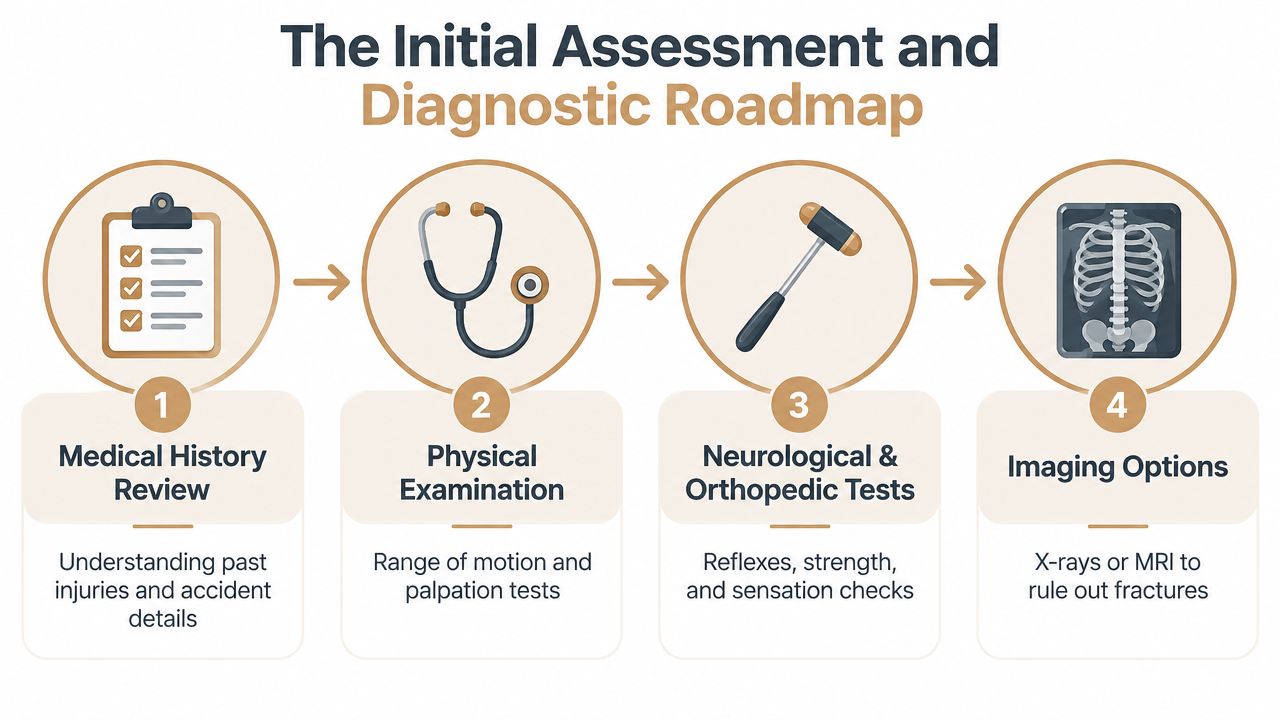
The physical examination may include posture observation, palpation, range-of-motion testing, and movement analysis. Orthopedic tests help identify whether particular tissues or joints reproduce your symptoms. Neurological checks may assess reflexes, strength, sensation, coordination, and signs of nerve irritation.
The purpose isn't to make you prove that you're hurt. It's to understand the difference between ordinary soreness, restricted movement, nerve involvement, and symptoms that warrant another level of care.
X-rays can help evaluate bone alignment and identify certain fractures or other structural concerns. MRI provides a different view and may help assess discs, spinal cord-related structures, and soft tissues when the clinical picture justifies it. Imaging isn't automatically needed for every ache, but it becomes important when examination findings, trauma details, or neurological symptoms raise concern.
A plain-language explanation of the different roles of these tests is available in MRI versus X-ray for back pain. If a chiropractor suspects a problem outside the clinic's scope, appropriate care includes referral rather than forcing a routine adjustment plan.
Advanced modalities can support a treatment plan, but they shouldn't replace diagnosis, active rehabilitation, or clinical judgment. The key question isn't whether a machine sounds impressive. It's whether the treatment fits the injury, the person's tolerance, and the progress being measured.
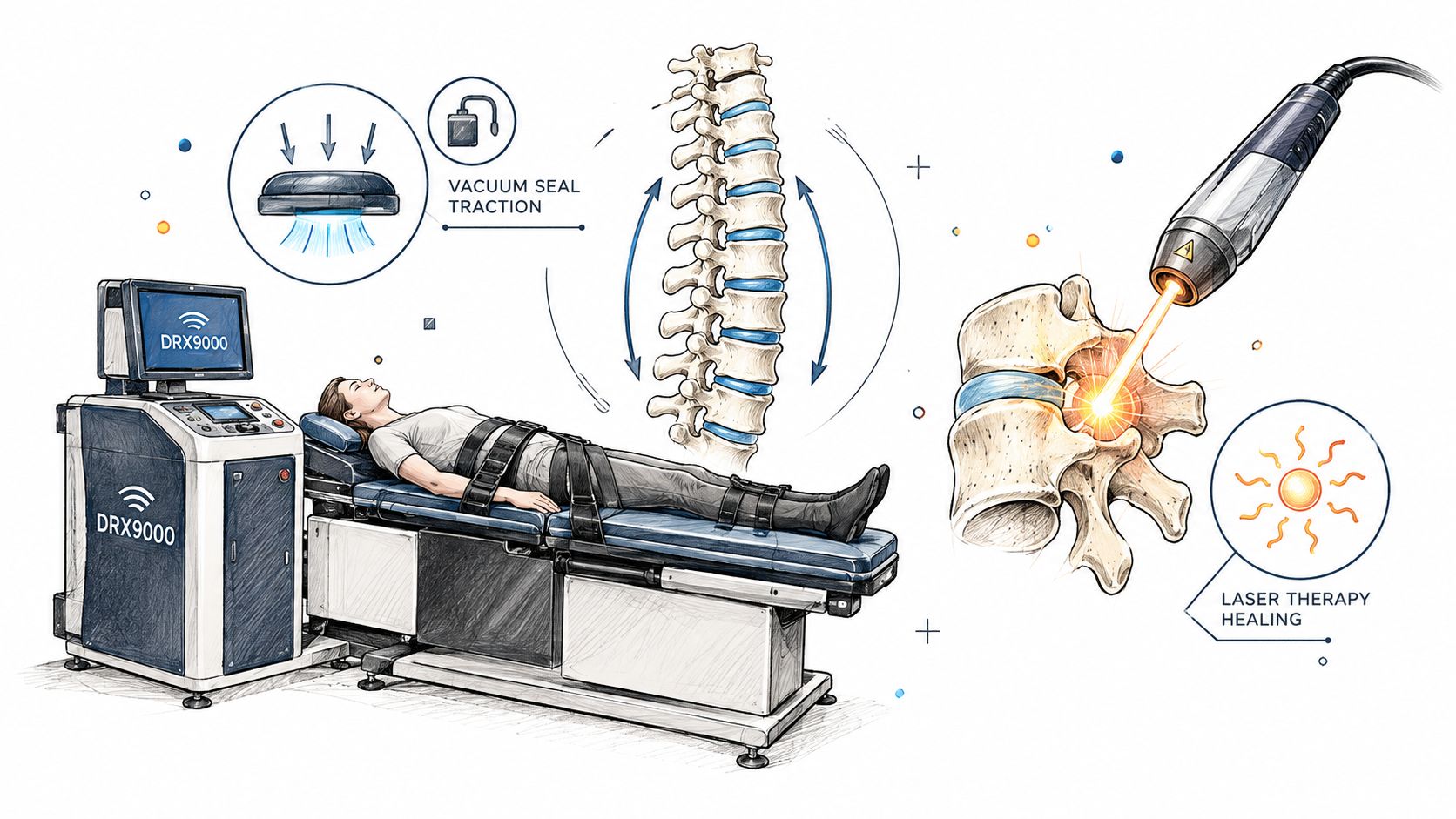
Spinal decompression uses a motorized table to apply carefully controlled traction to a selected spinal region. The DRX 9000 is designed to deliver that type of non-surgical decompression for appropriate disc-related presentations.
Think of a compressed disc as a cushion that has been squeezed unevenly. Decompression aims to create a gentle unloading environment, somewhat like easing pressure off a soft sponge so it has room to recover its shape. That analogy helps explain the intended mechanical goal, but it doesn't guarantee that every disc problem responds the same way.
A careful provider will first consider symptoms, neurological findings, imaging when indicated, and contraindications. The plan may also include adjustment, mobility therapy, muscle stimulation, and exercise because a less irritated area still needs support from the surrounding muscles and movement patterns.
Evidence should shape expectations. A review of non-surgical spinal decompression found very limited evidence, including only one small randomized controlled trial and several lower-level studies. It also reported that decompression hadn't been compared with exercise, spinal manipulation, standard medical care, or other well-studied conservative treatments. Review the evidence on non-surgical spinal decompression.
MLS Laser Therapy uses specified light wavelengths as a non-invasive modality intended to support pain management, reduce inflammation, and encourage tissue recovery. It doesn't physically remove a disc bulge or repair a torn ligament by itself. Its role is more comparable to adjusting the environment around an irritated area so movement and rehabilitation become more tolerable.
SoftWave Therapy is another tissue-stimulation option offered in integrative care. A clinician may consider it for localized soft-tissue discomfort, sensitivity, or restricted movement, but the treatment should remain part of a broader plan rather than a substitute for assessment.
A useful expectation: Technology may help create a better window for movement. Your long-term result still depends on diagnosis, graded activity, reassessment, and participation in the home plan.
For a fuller explanation of how decompression may fit alongside other conservative approaches, see spinal decompression therapy.
An adjustment can influence joint motion, but a collision can also leave muscles guarding, ligaments irritated, and movement habits altered. If the surrounding tissues remain tense, the body may keep protecting the area even after the initial joint restriction improves.
That's why a coordinated plan often combines several therapies. Each one addresses a different part of the recovery problem.
| Therapy | Main role | How it supports the plan |
|---|---|---|
| Chiropractic adjustment | Improves selected joint movement | Helps restore motion when examination findings support it |
| Massage therapy | Addresses muscle tension and soft-tissue sensitivity | May make stretching and movement practice more comfortable |
| Acupuncture | Supports pain modulation and function | Can be considered when sensitivity or muscle guarding limits participation |
| SoftWave Therapy | Provides tissue stimulation | May complement hands-on care for localized soft-tissue complaints |
| Mobility therapy | Restores controlled range of motion | Helps replace guarded movement with confident movement |
| Rehabilitation exercise | Builds strength, coordination, and endurance | Moves recovery from passive support toward active function |
Early care should be gentle enough to respect irritability without turning rest into the entire treatment plan. Expert guidance for recent-onset neck pain and whiplash-associated disorders recommends multimodal care, including manual therapy, self-management advice, home exercise, early range-of-motion work, and graded strengthening when symptoms persist. Review the guideline discussion of multimodal whiplash care.
A personal exercise plan might begin with comfortable neck rotation, posture changes, walking, breathing control, or shoulder movement. Later, it may include resistance work, balance, lifting mechanics, or job-specific tasks. The progression should follow symptoms and function, not a rigid calendar.
Massage, laser, acupuncture, and other modalities can be useful tools, especially when pain makes movement difficult. They shouldn't become the only way you feel better. Contemporary guidance favors active range of motion and self-management after serious injury has been ruled out, while prolonged collar use and unnecessary rest are less favored because immobilization can worsen recovery.
A clinician should reassess pain, range of motion, strength, sleep, work tolerance, and daily activities. That information determines whether care should continue, change, or involve referral.
The administrative side of an accident can feel almost as exhausting as the injury. Good documentation helps connect your symptoms, examination findings, treatment, and functional limitations without exaggerating or minimizing what happened.
Start with a simple personal file. Keep the collision date, claim information, photographs, medical appointments, prescriptions, work limitations, and symptom changes together. Save invoices, explanations of benefits, referral paperwork, and messages from insurers or attorneys.
At each visit, tell the clinician what has changed in practical terms. “My neck hurts” is useful, but “I can't turn far enough to check traffic,” “I wake when I roll over,” or “I stopped lifting at work” gives a clearer picture of function.
A clinic's records may include:
Whiplash guidance emphasizes objective outcome tracking and discharge after maximal clinical improvement, described in one care pathway as no clinical improvement for about 2 months using standardized outcomes such as the Neck Disability Index and pain scales. Review the whiplash practice guide on outcome tracking and escalation.
Insurance coverage depends on your policy, location, liability, and claim circumstances. A clinic can help organize records and verify benefits where applicable, but it can't promise approval or determine legal compensation.
For general background on how settlement discussions may address neck injuries, you can review this resource on Texas car accident whiplash settlement from SMB Law, PC. Treat legal guidance as separate from medical advice, and ask a qualified professional about the rules that apply to your case.
A thoughtful clinic doesn't measure success by the number of services delivered. It asks whether your pain, motion, strength, confidence, and daily function are improving. It also recognizes when the original plan isn't working.
Look for a care model that includes:
The NSW SIRA guideline recommends reviews at 7 days, 3 weeks, 6 weeks, and 3 months for acute whiplash-associated disorders after a motor-vehicle collision, and states that the guidance applies during the first 12 weeks after the crash. Read the SIRA whiplash review schedule. The exact schedule in your clinic may differ, but the principle is valuable: recovery deserves checkpoints, not an open-ended promise of care.
Aspen Falls Wellness offers car accident assessment and treatment planning alongside chiropractic adjustment, massage therapy, acupuncture, mobility therapy, rehabilitation exercise, nutrition counseling, SoftWave Therapy, MLS Laser Therapy, and spinal decompression with the DRX 9000. That integrated structure gives patients a way to move from evaluation and symptom relief toward measurable, active recovery.
A good plan should leave you knowing what the team found, why each treatment is being used, what you can do at home, and when progress will be reviewed.
If you've been in a collision, Aspen Falls Wellness can provide a full evaluation and an individualized plan that may include chiropractic care, decompression, laser or SoftWave therapy, massage, acupuncture, and rehabilitation exercise. Contact the clinic to discuss your symptoms, arrange an assessment, and take the next safe step toward returning to the activities that matter to you.

Stay updated with the latest chiropractic news and exclusive offers.