Explore how acupuncture for sciatica pain works, what the latest research says, what a typical course of care looks like, and how it fits
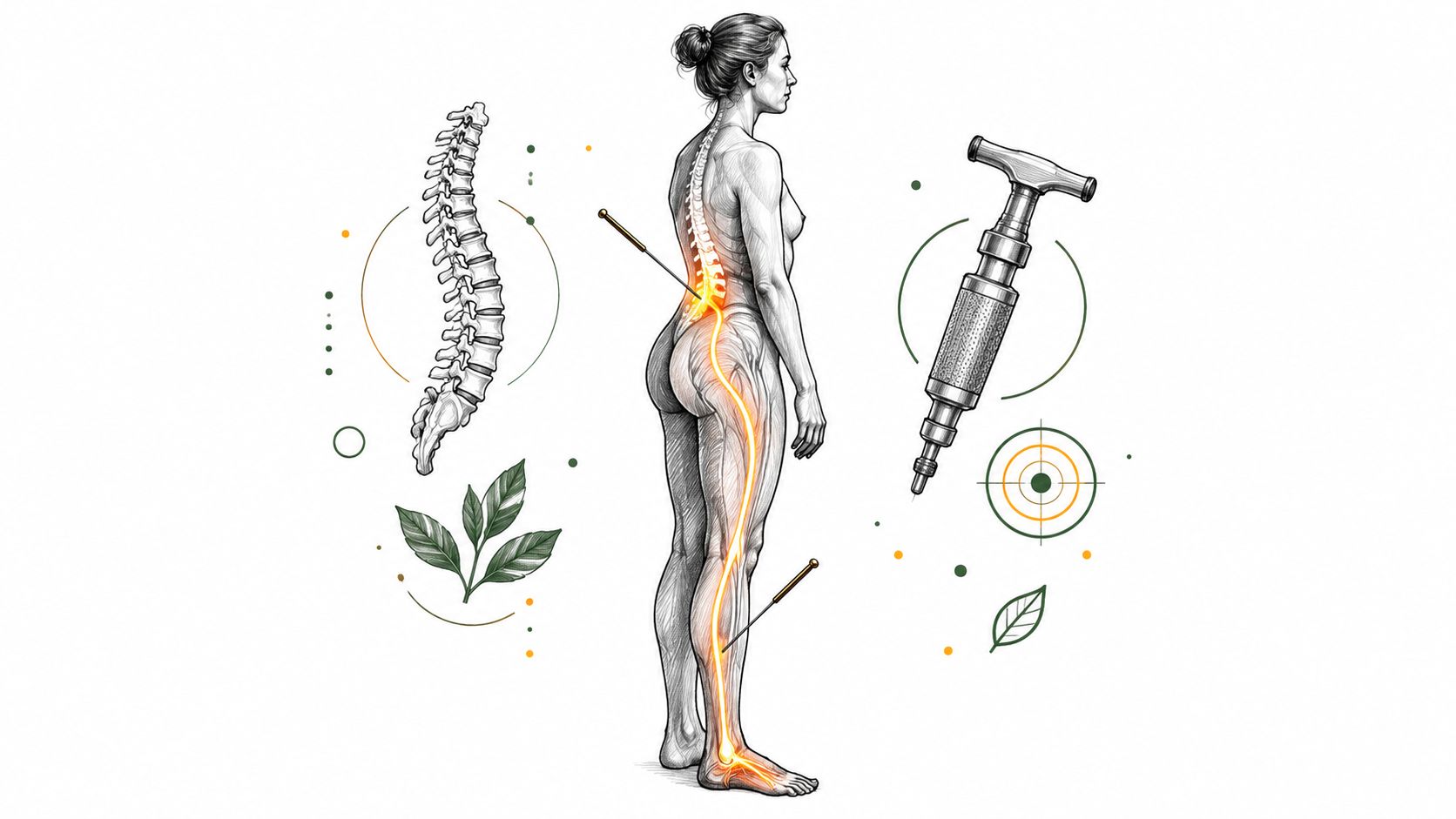
You wake up with a familiar ache in your lower back, but this time it runs through your buttock and down your leg. Sitting at your desk becomes a negotiation. Driving, sleeping, bending, and even putting on your shoes can trigger burning, tingling, numbness, or an electric jolt. You may be wondering whether acupuncture for sciatica pain can calm the symptoms, how many visits you'll need, and whether it can work alongside chiropractic care or spinal decompression.
Those are practical questions, and the evidence gives a more useful answer than a simple yes or no. Acupuncture can reduce pain and improve function for some people, including people with disc-related sciatica, but it doesn't remove a herniated disc or correct every mechanical cause. The most sensible role is usually as one layer of a coordinated plan that also addresses nerve irritation, movement, strength, and the underlying spinal problem.
Maria starts her morning by rolling toward the edge of the bed before standing. A sharp line of pain runs from her low back into one buttock and down the back of her thigh. By the time she reaches the car, her calf feels tight and her foot tingles. Sitting through a work meeting is harder than walking, and she keeps shifting position to avoid the sudden flare that travels down her leg.
That pattern is typical of sciatica, but sciatica isn't a single disease. It's a symptom pattern caused by irritation of the sciatic nerve or one of its nerve roots. A herniated lumbar disc, spinal stenosis, and piriformis-related irritation can create similar symptoms, even though the tissues and mechanics differ. A clear explanation of the broader treatment choices is available in this guide to sciatica treatment options.
A disc-related problem may irritate a lumbar nerve root as it exits the spine. Stenosis may narrow the space available for the nerve, while piriformis syndrome involves irritation farther downstream near the buttock. Symptoms can overlap, so a clinician needs to consider the history, neurological findings, movement pattern, and, when appropriate, imaging or specialist input.
Acupuncture can fit into each of these situations, but its job is mainly pain modulation and functional support. Needles may help reduce the nervous system's overreaction to an irritated nerve, relax protective muscle guarding, and make movement more tolerable. They don't physically reposition a disc, widen a narrowed spinal canal, or replace an evaluation for progressive neurological loss.
Clinical perspective: Think of acupuncture as turning down the alarm while other care addresses why the alarm keeps activating.
That distinction matters. If pain prevents you from walking, sleeping, or participating in rehabilitation, symptom relief may help you tolerate corrective exercise or carefully selected manual care. In that setting, acupuncture isn't competing with chiropractic adjustment, decompression, massage, or rehabilitation. It's helping create a window in which those approaches can be used more effectively.
The right question isn't only, “Can acupuncture help sciatica?” It's also, “What is driving my symptoms, and where can acupuncture contribute without delaying care that addresses the driver?”
An irritated nerve can behave like a stuck fire alarm. The original trigger may be a disc bulge, local inflammation, muscle spasm, or pressure around the nerve root. Even when that trigger begins to settle, the nervous system can stay highly responsive, sending pain signals from relatively small movements or prolonged sitting.
Acupuncture may influence that alarm through several overlapping pathways. The exact biological picture is still being mapped, but the clinical model is straightforward.
A practitioner places very fine needles at selected local and distal points. Local lumbar or sacral points are chosen near the spinal segments associated with the irritated nerve. Distal points may be placed along the buttock, thigh, calf, ankle, or foot, depending on where symptoms travel.
This gives the nervous system a new, controlled stream of sensory input. Some theories describe this as modulation of pain transmission in the spinal cord, often called spinal gating. In plain language, competing sensory signals may reduce how strongly the brain receives incoming pain messages.
Needling can stimulate the release of natural substances involved in pain regulation, including endorphins and adenosine. It may also influence descending inhibitory pathways, the body's internal system for reducing the intensity of pain signals.
Electroacupuncture adds a gentle electrical pulse between selected needles. Clinicians may consider it when pain radiates down the leg or when muscle guarding is prominent. The goal isn't to force the nerve to heal. It's to give the nervous system a repeated, measurable input that may reduce sensitivity and improve tolerance for movement.
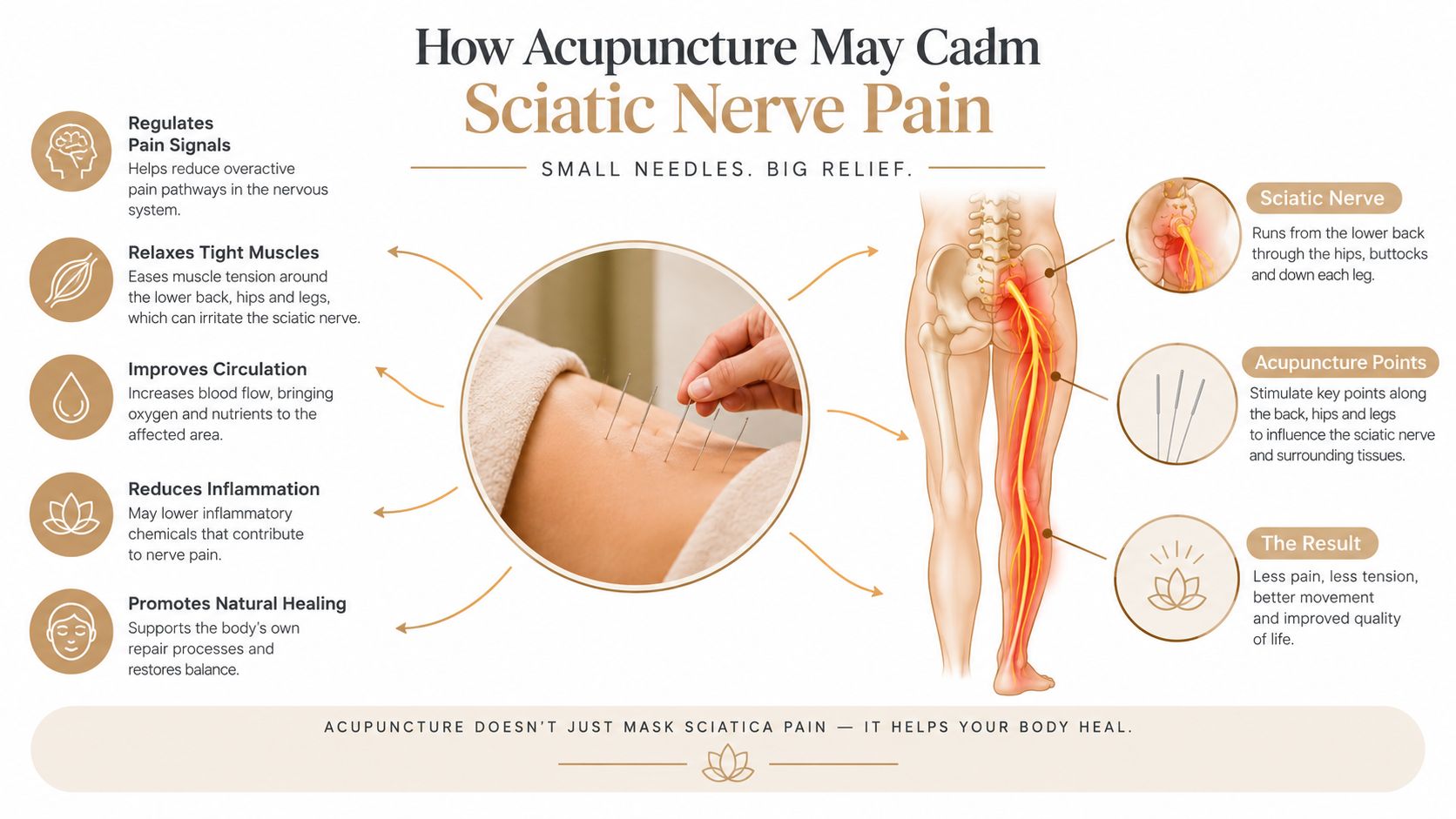
Needling around the low back, gluteal region, or leg may affect muscle tone and local microcirculation. That can matter when protective spasm is adding pressure or restricting movement around an already irritated nerve. It's better to describe this as support for a calmer pain environment than as a guaranteed reduction of nerve-root inflammation.
Patients interested in the traditional framework behind point selection may find this 5 elements Chinese medicine guide useful for background. In a modern sciatica visit, however, a responsible practitioner should also connect the treatment to your symptoms, neurological status, movement tolerance, and medical history.
The practical result varies. Some people notice a temporary reduction in pain after a session. Others notice that sitting, walking, or sleeping becomes easier over a series of visits. Neither response proves that the structural cause has disappeared, so symptom change should be tracked alongside function.
A person with disc-related sciatica may finish a four-week course wondering whether the improvement will last. Current research offers a useful answer, though not a promise. The strongest recent evidence is more encouraging than older small studies, but it still does not support promising a cure.
A 2024 randomized clinical trial enrolled 216 adults with chronic sciatica from a herniated disc and assigned them evenly to real or sham acupuncture. Participants received 10 sessions over 4 weeks. At week 4, the acupuncture group reported less leg pain and better function, with benefits persisting through week 52, according to the trial report in JAMA Internal Medicine.
The follow-up matters. Pain relief was not measured only at the end of the final appointment, so the results suggest that some patients may retain benefits after treatment stops. The study does not show that everyone with a herniated disc will improve, or that acupuncture repairs the disc. A quieter pain signal can last even while the underlying structure remains unchanged.
A 2026 systematic review and meta-analysis pooled 11 randomized controlled trials involving 868 people. Compared with controls, acupuncture reduced leg pain on the visual analogue scale, with a standardized mean difference of -1.08, and improved disability on the Oswestry Disability Index, with a standardized mean difference of -0.57. The review also reported an advantage in total effective rate, with a relative risk of 1.23. These pooled findings suggest a moderate-to-large pain effect and a smaller functional effect, while also inheriting the weaknesses of the included studies. For a broader look at how needling is used beyond sciatica, see our guide to acupuncture for chronic pain. The full findings are available in the 2026 systematic review and meta-analysis.
For a patient, an effect around one point on a 0-to-10 pain scale generally means meaningful improvement, not complete resolution. Moving from pain that prevents sitting to pain that permits a short drive can matter greatly, even if numbness or weakness still requires separate evaluation.
| Study | Design | Sample Size | Protocol | Comparator | Main Result |
|---|---|---|---|---|---|
| 2024 clinical trial | Randomized sham-controlled trial | 216 adults | 10 sessions over 4 weeks | Sham acupuncture | Less leg pain and better function at week 4, with benefits persisting through week 52 |
| 2019 chronic discogenic sciatica study | Randomized sham-controlled study | 46 patients | 12 sessions | Sham acupuncture | Between-group leg-pain difference of -7.28 mm on a 100 mm VAS, exceeding the 5 mm minimum clinically important difference; reported adverse events were mild and transient (study report) |
| 2023 systematic review and meta-analysis | Pooled randomized trials | 28 RCTs, 2,707 participants | Protocols varied | Analgesics and other controls | Total effective rate RR 1.20 and VAS pain MD -1.78 (review) |
| 2015 systematic review | Review of randomized trials | 11 RCTs, 962 participants | Protocols varied | Drugs or comparison care | Acupuncture may help alone or enhance drug effects, but rigorous evidence was limited (review) |
The evidence has limits that affect treatment decisions. Studies use different points, visit schedules, electrical stimulation methods, practitioner techniques, and comparison treatments. Some follow patients for only a short time, and evidence specific to disc-related sciatica remains narrower than evidence for sciatica in general.
A 2025 overview found promising effects but cautioned that overlapping studies, reporting quality, publication bias, and other methodological limitations require careful interpretation. Its pooled findings included an effectiveness relative risk of 1.23 and a pain-intensity standardized mean difference of -1.05, as reported in the overview of systematic reviews.
The practical conclusion is balanced. Acupuncture may provide lasting symptom relief for some people, especially when it supports rehabilitation and other active care. It is not a structural fix, and disc-related sciatica rarely makes sense as a condition managed with acupuncture alone.
A useful course begins with an assessment, not a needle. The practitioner should ask where pain travels, whether numbness or weakness is present, what positions aggravate it, how sleep and sitting are affected, and what previous care has changed. If the pattern suggests significant nerve compromise or a condition outside acupuncture's scope, imaging or medical referral may come first.
Point selection then follows both the symptom pattern and the suspected driver. A person with disc-related leg pain may receive local lumbar or sacral points combined with points in the buttock and lower limb. Someone with strong muscle guarding may receive a different emphasis. Electroacupuncture may be added when radiating pain remains prominent, but it shouldn't be treated as mandatory.
Many clinics begin with twice-weekly visits for three to four weeks, followed by reassessment. The 2024 sham-controlled trial used 10 sessions over 4 weeks, providing a clinically relevant reference for treatment planning, although an individual plan may differ based on symptom duration, neurological findings, and response (trial details).
A fair trial should measure more than the pain score at the end of an appointment. Track:
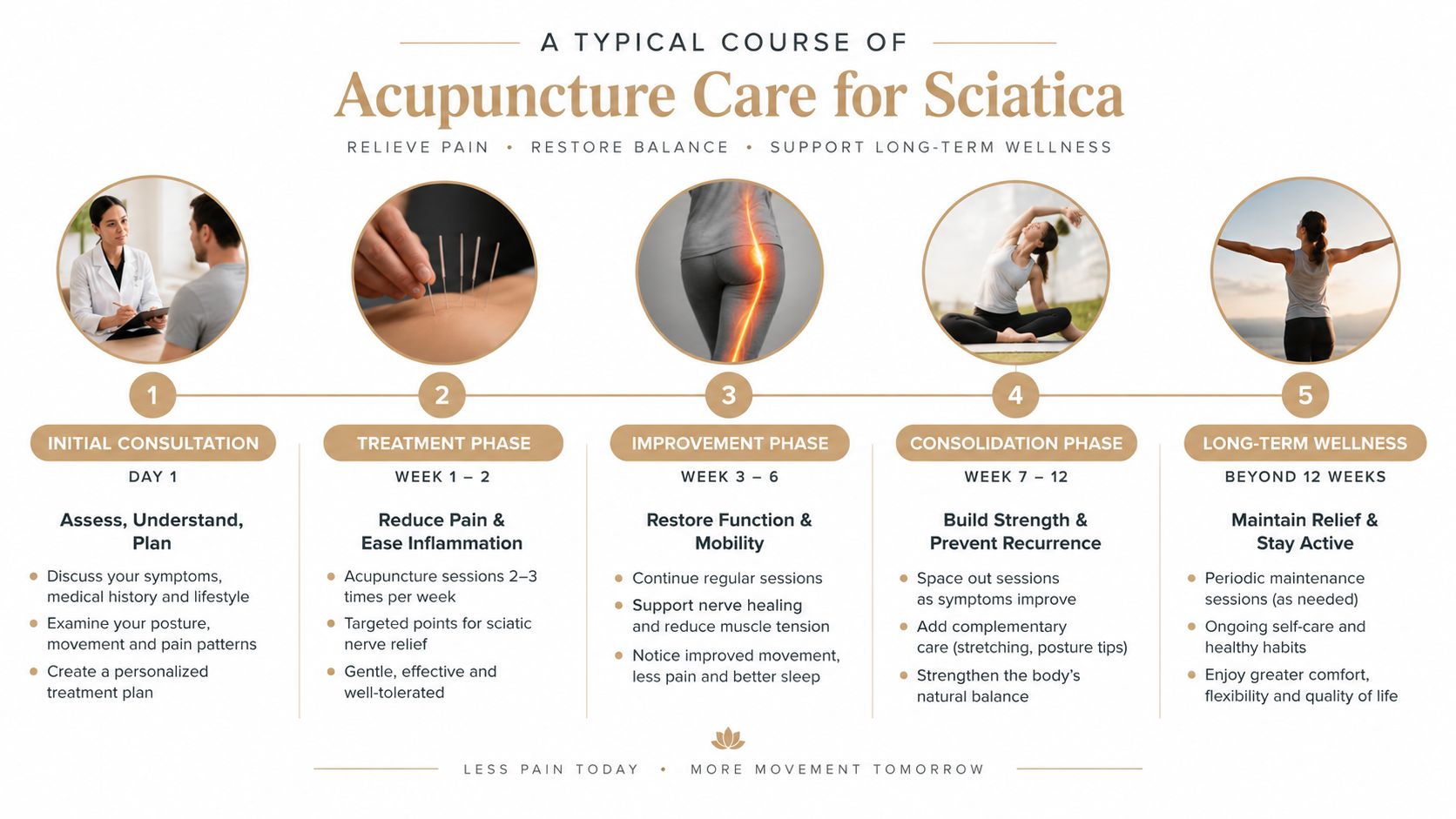
A clinician may continue if pain is becoming less intense, symptoms are retreating toward the back, sleep is improving, or movement is easier. The plan may be adjusted if relief lasts only a few hours, if one area remains highly reactive, or if progress stops despite repeated treatment.
Maintenance care is individualized. Some people stop after a successful course and continue with exercise. Others choose occasional visits when symptoms recur. Long-term durability remains uncertain: a 2025 review found short-term improvements by week 4, but effects at weeks 16, 28, and 52 were inconsistent, as described in this review of sham-controlled trials. That uncertainty is a reason to reassess, not a reason to promise indefinite treatment.
Acupuncture, chiropractic adjustment, spinal decompression, massage, and rehabilitation address different parts of the same problem. A disc-related flare may involve mechanical irritation, protective muscle tension, heightened nerve sensitivity, reduced movement confidence, and weakness that keeps loading the area. One therapy rarely covers every layer.
A common sequencing logic is to first improve the mechanical and movement environment, then settle the irritated nerve, then build capacity. In practice, that might mean carefully selected Chiropractic Adjustment or Spinal Decompression with the DRX 9000, followed by acupuncture to reduce guarding, then mobility work and rehabilitation exercise. The exact order should depend on examination findings and tolerance, not a fixed recipe.
| Therapy | Primary Goal | Best Role in Combined Care | Typical Sessions | Sequencing With Acupuncture |
|---|---|---|---|---|
| Acupuncture | Modulate pain and reduce protective guarding | Make movement and rehabilitation more tolerable | A short initial series followed by reassessment | Use when nerve sensitivity or guarding limits progress |
| Spinal Decompression | Apply a non-surgical mechanical approach for selected disc-related problems | Support a plan focused on disc-related loading and symptom reduction | Determined by examination and response | May precede acupuncture when mechanical irritation dominates |
| Chiropractic Adjustment | Improve joint motion and address selected movement restrictions | Restore tolerable mobility without forcing painful ranges | Individualized | Use only when the technique matches the person's findings and tolerance |
| Massage Therapy | Reduce soft-tissue tension and improve comfort | Address gluteal, hip, and lumbar muscle guarding | Adjusted to irritability | Often useful before or between active rehabilitation sessions |
| Rehabilitation Exercise | Build strength, control, and confidence | Preserve gains and reduce dependence on passive care | Progressive home and in-clinic work | Add as soon as symptoms allow, with modifications during flares |
| Mobility Therapy | Improve usable range of motion | Prepare the body for daily activity and exercise | Individualized | Pair with acupuncture when stiffness limits movement |
A broader discussion of how manual care may fit into nerve-pain management appears in this guide on whether a chiropractor can help sciatic nerve pain.
If leg pain spikes with compression-sensitive positions, the plan may emphasize decompression, movement modification, and symptom calming. If the main limitation is stiff hips and guarded muscles, massage, mobility therapy, acupuncture, and gradual exercise may have a larger role. If weakness or neurological loss is progressing, the priority becomes medical evaluation rather than adding more passive treatment.
Other supportive services may include SoftWave Therapy, MLS Laser Therapy, Muscle Stimulation, Pain Relief strategies, Personal Exercise Plans, Realignment, Nutrition and Nutrition Counseling, and Rehabilitation Exercise. These services should support a defined clinical goal, such as improving movement tolerance or helping someone participate in an exercise plan, rather than creating an endless menu of treatments.
A qualified practitioner using sterile, single-use needles should make acupuncture a low-risk treatment for many people. Expected effects are usually local: temporary soreness, mild bleeding, or bruising. The 2019 sham-controlled discogenic sciatica study cited earlier reported acupuncture-related adverse events in 4.3% of participants. Those events were mild and transient.
Serious complications are uncommon, but safe care depends on a proper health history. Tell the practitioner about an infection near a possible needle site, a bleeding disorder, medicines that affect clotting, pregnancy, an implanted electrical device, severe immune suppression, or a history of fainting during needling. Anticoagulant use may require individualized medical judgment rather than an automatic approval or refusal.
Acupuncture may reduce pain sensitivity, muscle guarding, and the distress that makes movement difficult. It does not guarantee that a disc will retract, correct spinal stenosis, restore lost strength, or address every cause of pain traveling into the leg. For disc-related sciatica, it may function more like turning down an alarm than repairing the structure that triggered it.
The placebo question needs precision. Sham-controlled trials suggest acupuncture can outperform sham treatment in some people with sciatica, including the large 2024 trial discussed earlier. That finding does not make every needle placement effective, and results may differ according to the cause, nerve irritation, treatment plan, and duration of symptoms.
Pregnancy does not automatically rule out acupuncture, but the practitioner should be trained to adjust point selection and positioning. Ask how pregnancy, medications, and medical conditions will change the plan.
Stop treatment and seek prompt medical assessment for progressive leg weakness, new foot drop, loss of bowel or bladder control, saddle-area numbness, fever with severe back pain, or major trauma. These warning signs may require urgent evaluation. Acupuncture, chiropractic care, and decompression should never delay it.
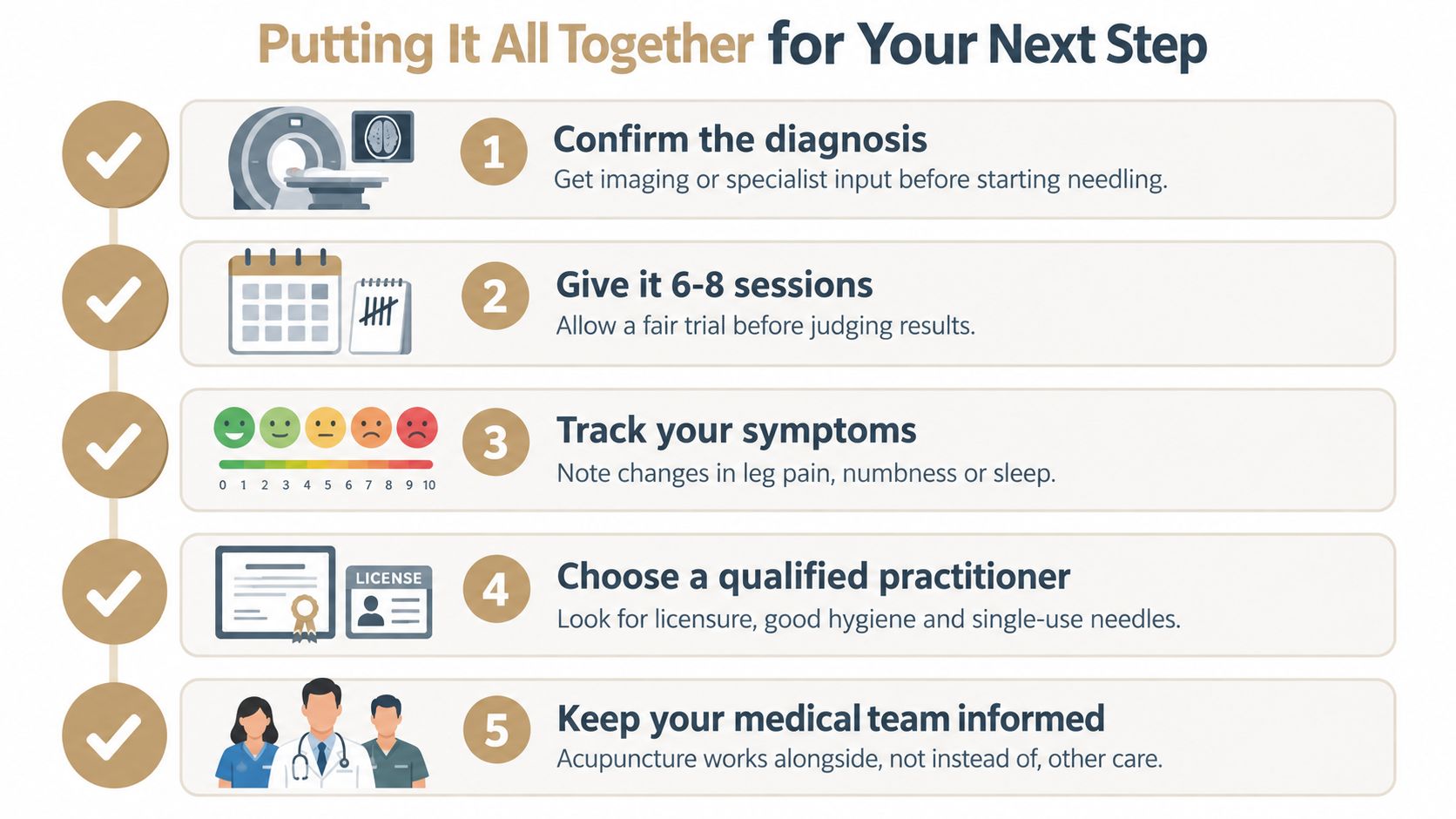
Acupuncture makes the most sense when you treat it as a measured trial inside a larger recovery plan. Before beginning, confirm that the symptoms fit sciatica and ask whether examination, imaging, or specialist input is needed. The cause matters because disc-related nerve-root irritation, stenosis, and piriformis-related symptoms shouldn't automatically receive the same plan.
Use these five principles:

Today, write down your main symptoms, the farthest point the pain reaches, your sitting tolerance, sleep disruption, and any numbness or weakness. Gather previous imaging reports and medication information.
During the first week, contact a licensed acupuncturist or integrative clinic that coordinates with your chiropractor or medical team. Ask who will evaluate the cause, which points may be used, whether electroacupuncture is appropriate, how progress will be measured, and when the first reassessment will occur.
During the second week, schedule a baseline functional assessment and begin only the agreed plan. Keep a brief daily record. If pain improves but walking, strength, or sensation does not, report that distinction rather than assuming the treatment is solving the whole problem.
Sciatica can be stubborn, but a clear diagnosis and coordinated plan make the next decision easier. Aspen Falls Wellness offers Acupuncture, Chiropractic Care, Spinal Decompression with the DRX 9000, Massage Therapy, MLS Laser Therapy, Mobility Therapy, and rehabilitation-focused care in Salt Lake City and Sandy. Visit Aspen Falls Wellness to discuss a coordinated, non-surgical approach for sciatica and determine which services fit your evaluation.

Stay updated with the latest chiropractic news and exclusive offers.