See how a chiropractor for piriformis syndrome examines, rules out other causes, builds a conservative care plan, and spots red flags.
Stretching harder isn't always the answer to deep buttock pain. If the sciatic nerve is irritated, forceful stretching or deep pressure may aggravate symptoms instead of helping. The useful question isn't whether your piriformis feels tight, but whether the examination points to it as the source.
Seeing a chiropractor for piriformis syndrome should start with that distinction. A thoughtful evaluation builds a working diagnosis, matches treatment to the findings, and defines what improvement should look like in daily life.
No single test confirms piriformis syndrome. A review of piriformis syndrome reports estimates of approximately 0.3%–0.6% of low-back or posterior-thigh pain presentations, with broader clinical series reporting estimates up to 6%, depending on the referral population and diagnostic criteria. That's why the examination must consider other causes before supporting this diagnosis.
The history comes first. Your chiropractor asks whether pain stays in the buttock or travels down the thigh, how long you can sit before it starts, and whether walking, stairs, or a recent activity change provokes it. Describe burning, tingling, or numbness separately from an ache, because those details affect the next checks.
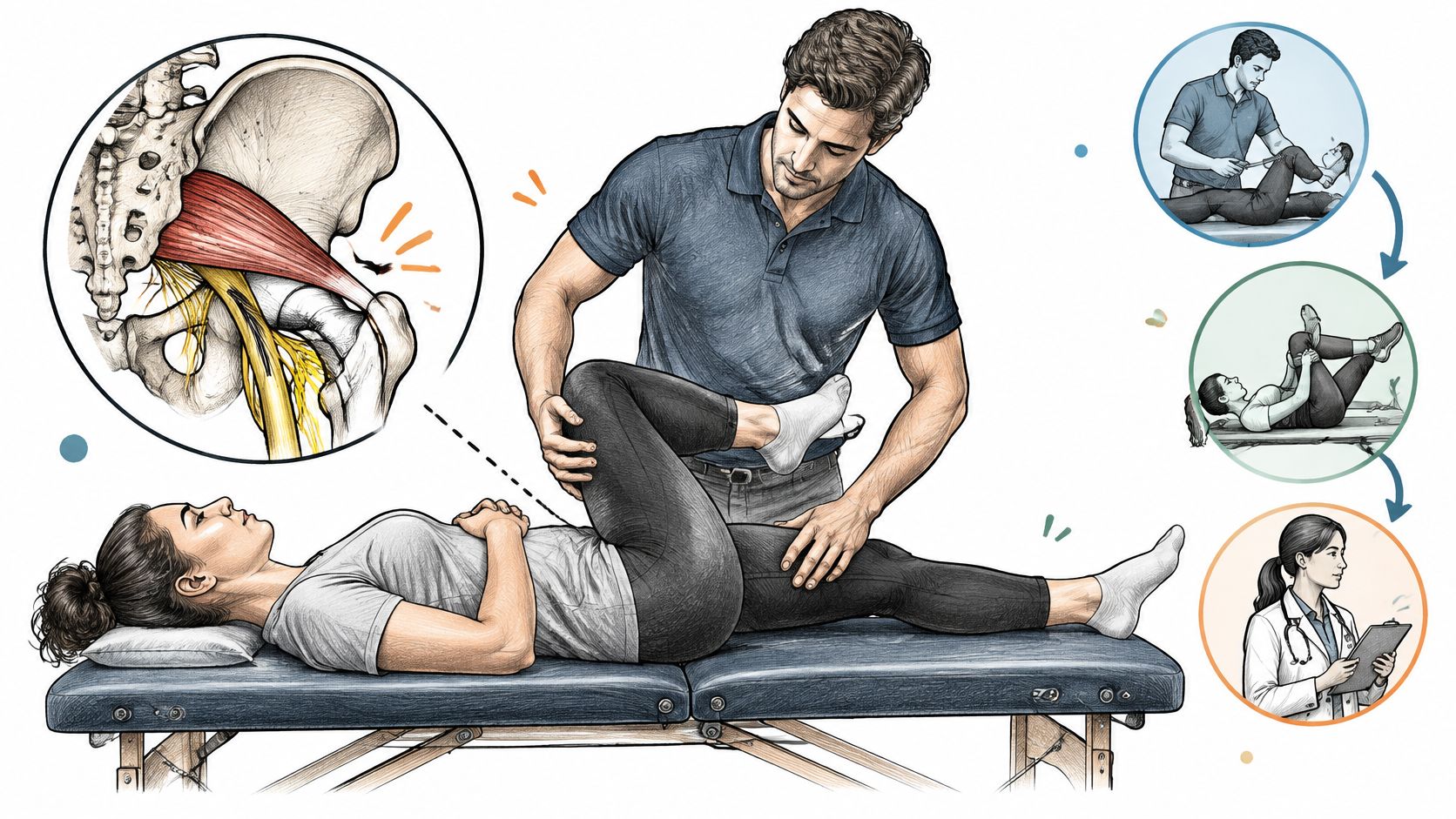
The clinician palpates near the greater sciatic notch, looking for tenderness that reproduces your familiar symptoms rather than discomfort from pressure alone. Next, hip flexion, adduction, and internal rotation place the deep gluteal tissues under tension. Resisted outward hip rotation checks whether muscle loading reproduces pain and whether strength remains intact.
Lumbar and hip range-of-motion testing follows. The clinician looks for movements that reproduce, ease, or change the location of symptoms, rather than assuming every painful hip movement implicates the piriformis.
A neurologic screen assesses reflexes, sensation, muscle strength, and gait. Normal findings can fit a piriformis-related presentation, but they don't prove it; deficits increase concern for a lumbar or other nerve disorder.
Piriformis exam checks and what a positive finding suggests
| Exam check | What it assesses | Finding that points toward piriformis |
|---|---|---|
| Sitting tolerance history | How long sitting is possible before symptoms start | Pain that worsens with prolonged sitting |
| Greater sciatic notch palpation | Tenderness over the notch | Localized tenderness reproduced by firm pressure |
| Hip flexion-adduction-internal rotation | Piriformis tension in the deep gluteal space | Buttock pain reproduced by the maneuver |
| Resisted external hip rotation | Piriformis strength and provocation | Pain on resisted rotation with preserved strength |
| Neurologic screen | Reflexes, sensation, muscle strength and gait | Normal findings; deficits suggest a lumbar or other cause |
The systematic review of clinical features identified four recurring findings: buttock pain, worsening while sitting, tenderness over the greater sciatic notch, and increased pain during piriformis-tension maneuvers. The meaningful result is a consistent pattern, not an isolated positive test.
At Aspen Falls Wellness, each patient receives a thorough chiropractic evaluation with our doctors to identify the root cause of their concerns, followed by a customized treatment plan based on the diagnosis. Our guide to what to expect at your first chiropractic visit explains the appointment process. You should leave with a documented baseline that makes later comparisons possible.
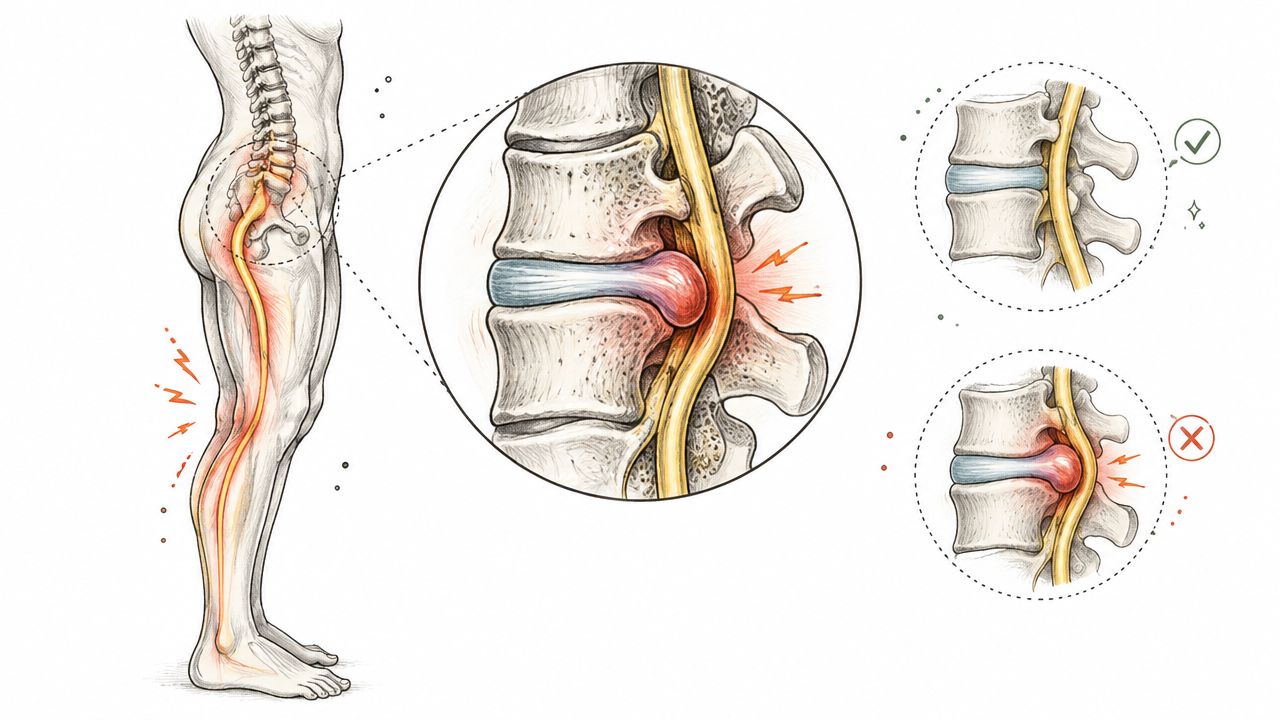
Buttock-to-leg pain describes a symptom pattern, not its origin. The source may be in the lumbar spine, sacroiliac region, hamstring tendon, hip joint, or deep gluteal tissues.
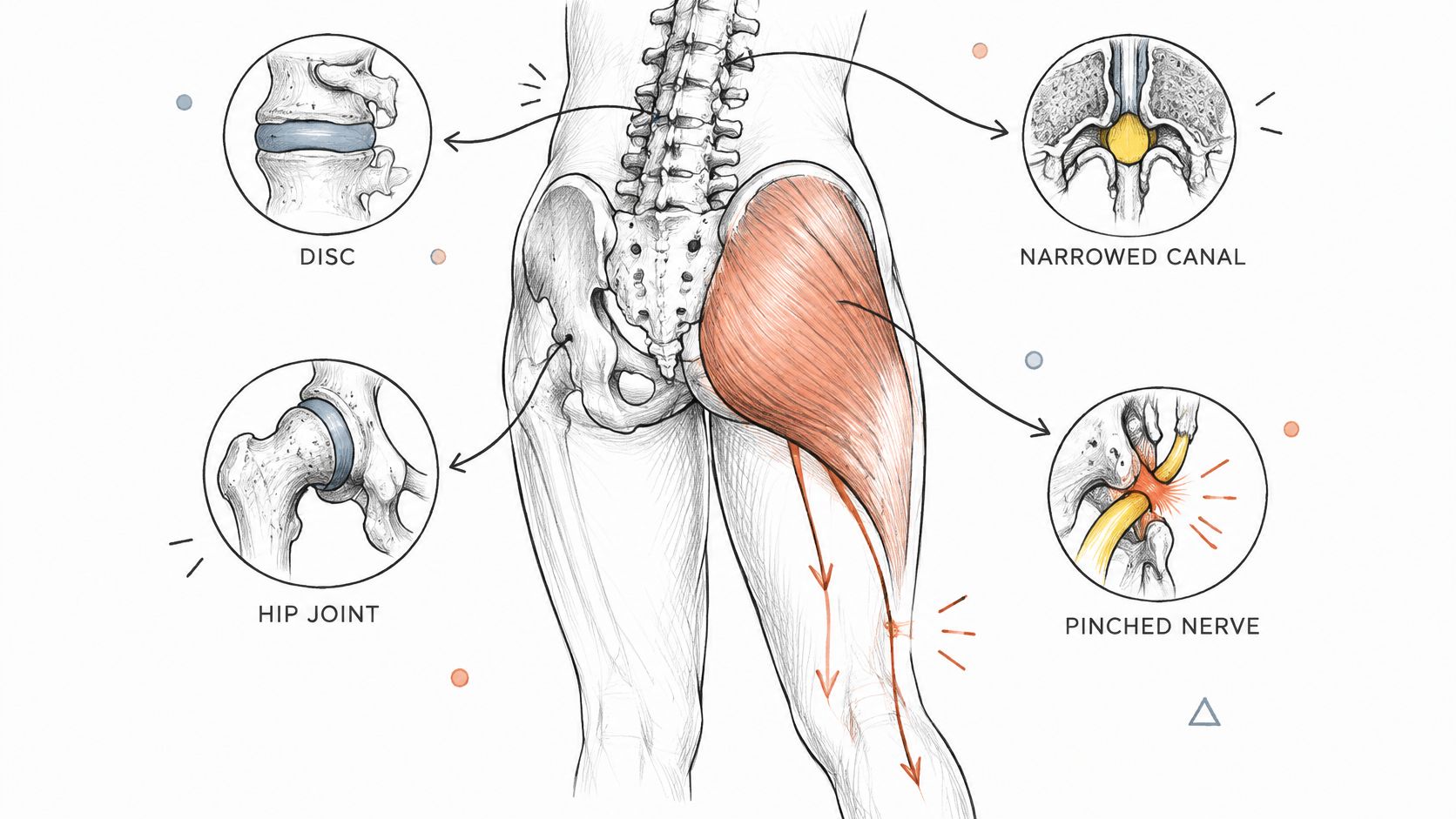
Lumbar disc herniation and spinal stenosis deserve particular attention. Back pain, leg symptoms that change with bending or standing, and neurologic changes can point toward a spinal source, although no symptom is exclusive to it. Our explanation of whether a chiropractor can help sciatic nerve pain discusses why identifying the source matters.
Other clues shift the examination elsewhere:
Consider a hypothetical 45-year-old office worker whose buttock pain flares after long drives. Sitting is painful, pressure near the sciatic notch reproduces familiar symptoms, and reflexes are normal. Those findings support investigating the piriformis, but the clinician still screens the hip and sacroiliac region before beginning targeted treatment.
A history of trauma or difficulty walking adds context, but neither establishes the diagnosis alone. Likewise, a patient can have tenderness in the piriformis region while another structure is driving the leg symptoms.
Pregnancy changes the practical discussion because positioning and comfort need individual consideration. Lake City Physical Therapy's resource on positions that ease pregnancy hip pain offers positioning ideas to discuss with the clinician overseeing your pregnancy-related care.
Practical rule: Treat piriformis syndrome as a working hypothesis. Keep it only while the examination findings and response to care continue to support it.
New bladder or bowel dysfunction, saddle-area numbness, or rapidly worsening leg weakness requires urgent medical attention, not another adjustment. Bladder or bowel changes with saddle numbness can indicate cauda equina syndrome. Seek emergency care immediately rather than waiting for a routine appointment.
Other warning signs require medical evaluation before continuing conservative treatment. These include fever, unexplained weight loss, a history of cancer, and night pain that doesn't ease when you change position.
A chiropractor should document neurologic status before treatment so that later changes are recognizable. The clinical review of deep gluteal syndrome explains that electrodiagnostic testing may help exclude lumbar radiculopathy or other neuropathies, while MRI or MR neurography may help evaluate atypical or persistent symptoms, neurologic deficits, or competing pathology.
That competing pathology may include disc disease, a hamstring injury, a mass, or hip disease. Imaging isn't a routine requirement for every tender buttock, and an imaging finding still needs to match the clinical presentation.
Red flags and the right next step
| Red flag | Why it matters | Next step |
|---|---|---|
| Bladder, bowel or saddle-area numbness | Possible cauda equina syndrome | Emergency care the same day, without delay |
| Progressive leg weakness or foot drop | Possible nerve root compression | Urgent medical or spine specialist review |
| Fever, night pain or unexplained weight loss | Possible infection or malignancy | Medical evaluation before further treatment |
| Pain below the knee with numbness | Possible lumbar radiculopathy | Clinical reassessment, with imaging and spine referral when indicated |
| No meaningful change after a hypothetical 4–6-week structured trial | Possible alternative or non-mechanical cause | Reconsider the diagnosis and consider MRI or specialist referral |
The last row is an illustrative reassessment checkpoint, not a universal waiting period. For example, if a planned course reaches that point without functional improvement, requesting a fresh examination is more useful than automatically extending treatment.
Don't wait for a scheduled checkpoint if weakness, spreading numbness, or other concerning changes appear. Conversely, pain below the knee isn't automatically an emergency or proof of a disc problem. Its onset, progression, associated neurologic findings, and examination determine the appropriate urgency.
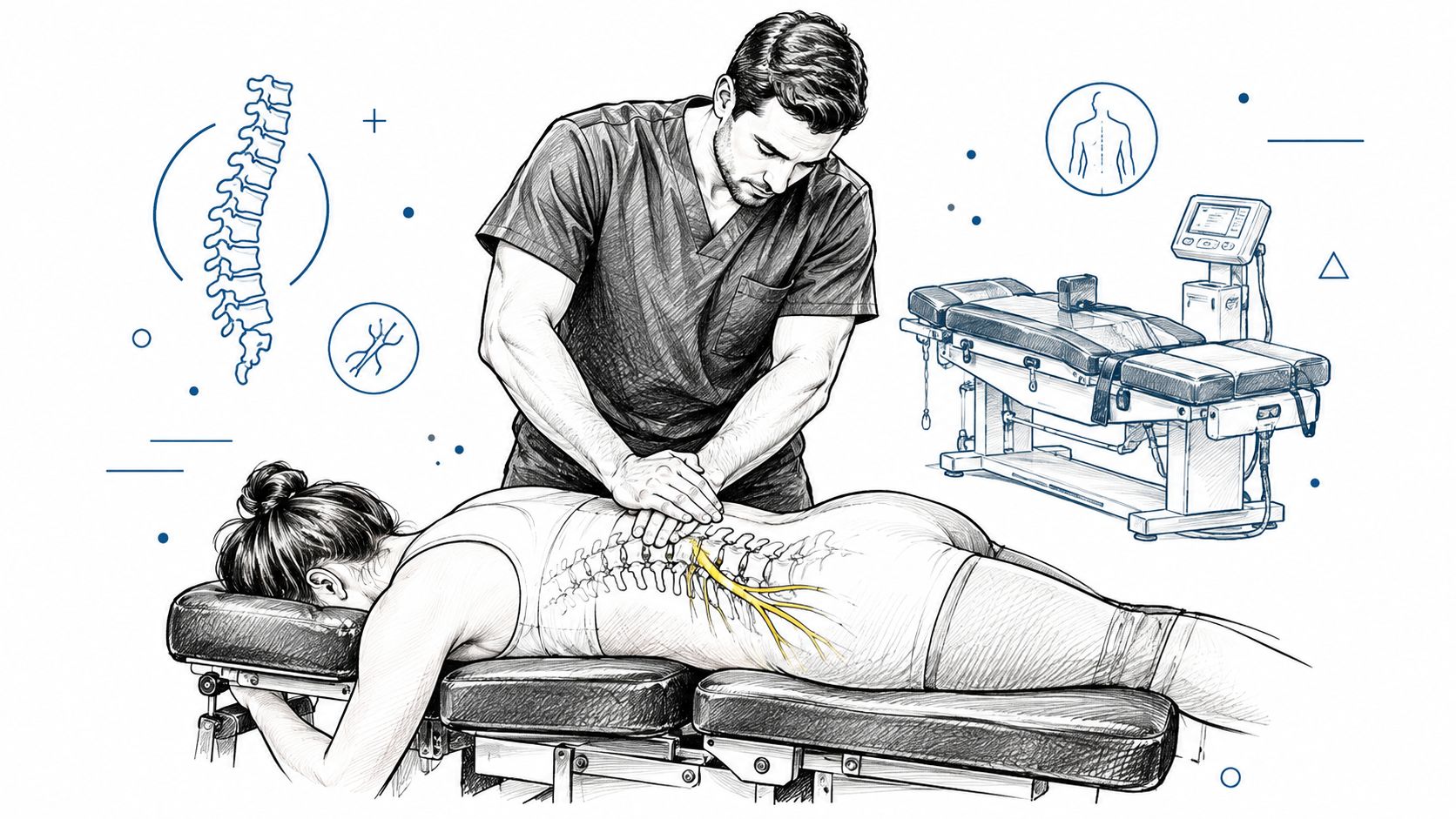
A useful plan gives each technique one job. Pain relief helps you participate; mobility work restores usable movement; rehabilitation exercise builds the capacity to keep doing it. An adjustment isn't automatically necessary because the diagnosis includes the word piriformis.
The conservative-care literature includes stretching, rehabilitation, and manual approaches, but a review of diagnostic and treatment challenges emphasizes uncertainty surrounding diagnosis. Treat that uncertainty as a reason to match each tool to a specific finding. It is a working hypothesis, assembled from the exam, the symptom pattern, and the response to early care.
Techniques used in piriformis-focused care and what each targets
| Technique | What it targets | Where it fits |
|---|---|---|
| Chiropractic adjustment | Restricted hip or lumbar movement | Motion-restoration phase, only if tolerated |
| Deep-tissue massage and soft-tissue work | Gluteal muscle tension near the greater sciatic notch | Flare-management and motion-restoration phases |
| Mobility therapy and personal exercise plan | Hip and lumbar range of motion, then hip and trunk strength | Motion-restoration and capacity-building phases |
| MLS laser therapy, SoftWave therapy, muscle stimulation | Local pain and tissue-healing support as adjunctive goals | Early phases, alongside movement and exercise |
| Spinal decompression with the DRX 9000 | Lumbar disc or radicular component, not the piriformis itself | When the differential points to the spine |
| Acupuncture | Pain modulation as an optional adjunct | Any phase, alongside the exercise plan |
Each row has a different purpose. A chiropractic adjustment aims to restore motion where the exam finds restricted hip or lumbar movement. Deep-tissue work should stay within tolerance over an irritated nerve, with pressure guided by symptoms rather than force. Mobility therapy works like opening a gate in stages: first range of motion, then controlled loading through a personal exercise plan.
MLS Laser Therapy, SoftWave Therapy, and muscle stimulation can be used as adjuncts for pain relief and tissue-healing goals. The reviewed evidence does not establish that each device heals piriformis-related nerve irritation, so these tools should support movement and exercise, not replace them. Acupuncture can be considered for pain modulation, while the plan continues to address strength, mobility, and any diagnosis that no longer fits.
Spinal decompression has a narrower role. The DRX 9000 is used when the differential points to a lumbar disc or radicular component, rather than treating the piriformis itself. Injections or surgery belong to selected persistent cases under specialist management, not an automatic first course of chiropractic care.
A phased plan should respond to your symptoms, not force you through a calendar. StatPearls' clinical overview describes no more than 48 hours of short-term rest, followed by physical therapy approaches including stretching, hip range-of-motion exercise, and deep-tissue massage. Rest means reducing aggravating activity, not remaining inactive indefinitely.
Anatomy also argues against a universal routine. A systematic review discussing a 240-dissection cadaver study reports that the sciatic nerve passed below the piriformis in 90% of cases, branches passed through and beneath the muscle in 7%, and the nerve itself was divided in 2%. These variations help explain why identical stretches don't suit everyone.
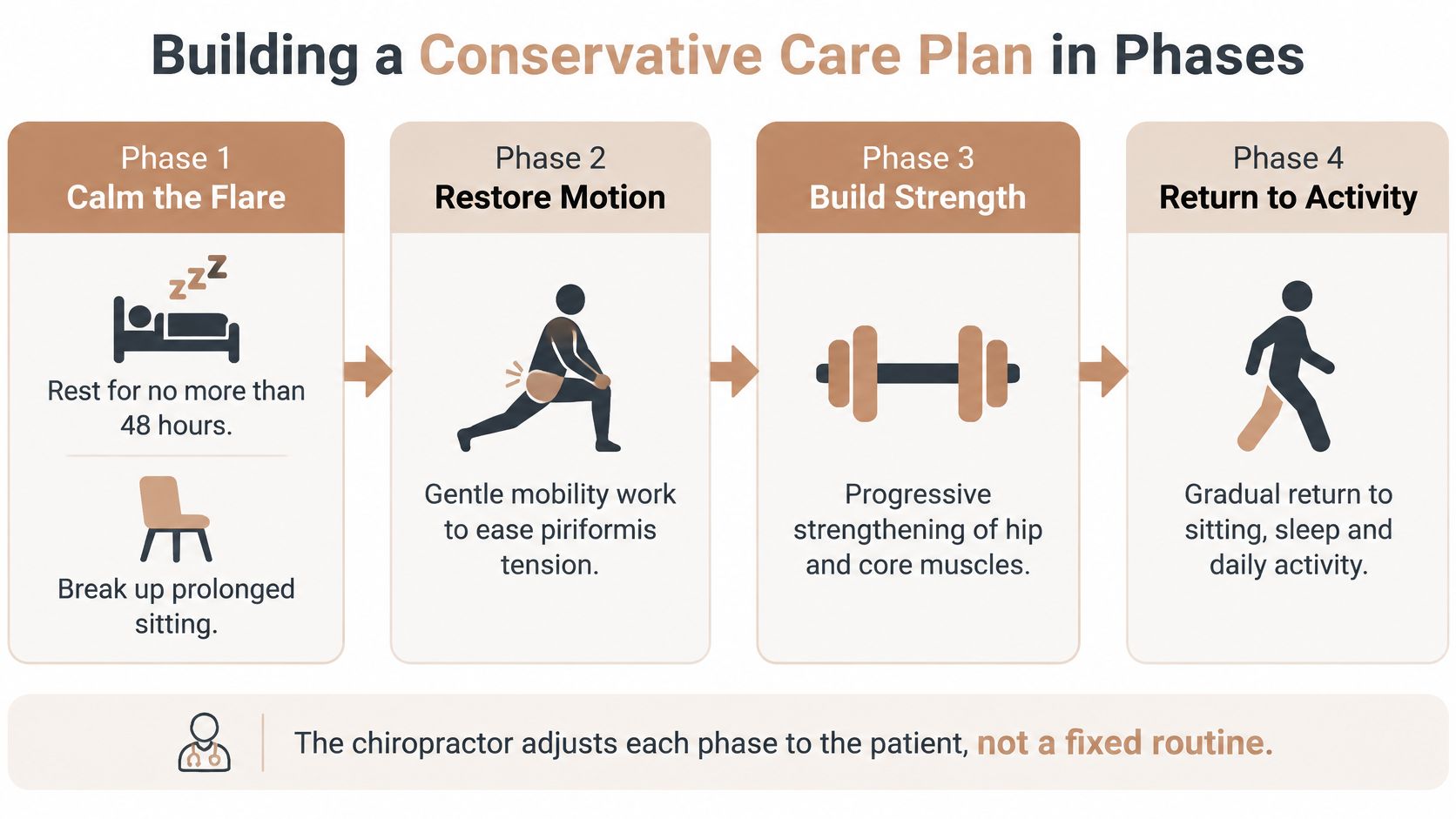
The timing below is a hypothetical planning example, not a validated recovery schedule. Progression requires tolerable symptoms, improving function, and stable neurologic findings.
Conservative care phases, timing and goals
| Phase | Timing | Goal | Core tools |
|---|---|---|---|
| 1. Calm the irritation | Illustrative days 1–2 | Reduce the flare and limit prolonged sitting | Relative rest, position changes, comfortable hip movement |
| 2. Restore motion | Illustrative weeks 1–3 | Regain hip and lumbar range of motion | Mobility work, deep-tissue massage, adjustment only if tolerated |
| 3. Build capacity | Illustrative weeks 3–8 | Improve strength and tolerance for sitting and walking | Progressive hip and trunk exercise, graded walking, individualized home mobility |
| 4. Return to load | When functional milestones are met | Restore full function for work, sport and driving | Graded loading, written relapse plan |
During flare management, break up sitting before symptoms build. For example, an individualized trial might use posture changes every 30–45 minutes, but someone whose pain starts sooner needs a shorter interval.
Motion restoration uses comfortable hip and lumbar movement, with manual treatment only when it helps that process. At the boundary, reassess whether movement is easier without increasing radiating symptoms.
Strength work progresses hip rotators, gluteal muscles, and trunk control alongside walking and sitting practice. A hypothetical home prescription might begin with gentle stretches held 20–30 seconds, repeated two or three times, but only if the examination supports stretching and it doesn't provoke leg symptoms. Our explanation of therapeutic exercise describes the role of targeted movement.
At Aspen Falls Wellness, a diagnosis-based customized plan may include chiropractic adjustments, DRX9000 Decompression, and/or MLS Laser Therapy. Their inclusion depends on the condition identified, not merely the location of pain.
Before returning to lifting, sport, or long-distance driving, test smaller exposures first. An illustrative plan might schedule formal reviews every two to four weeks, with reassessment at each phase boundary and earlier review after deterioration. Multiple visits may be appropriate, but advancement should depend on demonstrated progress.
Progress means doing more with a stable symptom pattern between visits. Track how long you can sit, how far you can walk, and whether treatment leaves leg symptoms settled or aggravated. Immediate relief is useful information, but lasting changes in these activities give the trial of care a clearer direction.
The clinical review of conservative management describes limited high-level evidence and inconsistent diagnostic criteria. Piriformis syndrome therefore remains a working explanation to reassess as care proceeds, rather than a label that justifies repeating the same treatment indefinitely.
A symptom log works like a progress chart: comparable entries make changes easier to recognize. Use similar conditions at each check.
A pain score adds context. For example, reduced tenderness alongside unchanged sitting tolerance suggests that symptom relief has not yet translated into the activity you need.
Bring these measures to the formal reviews described in the phased care plan, and compare them at phase boundaries.
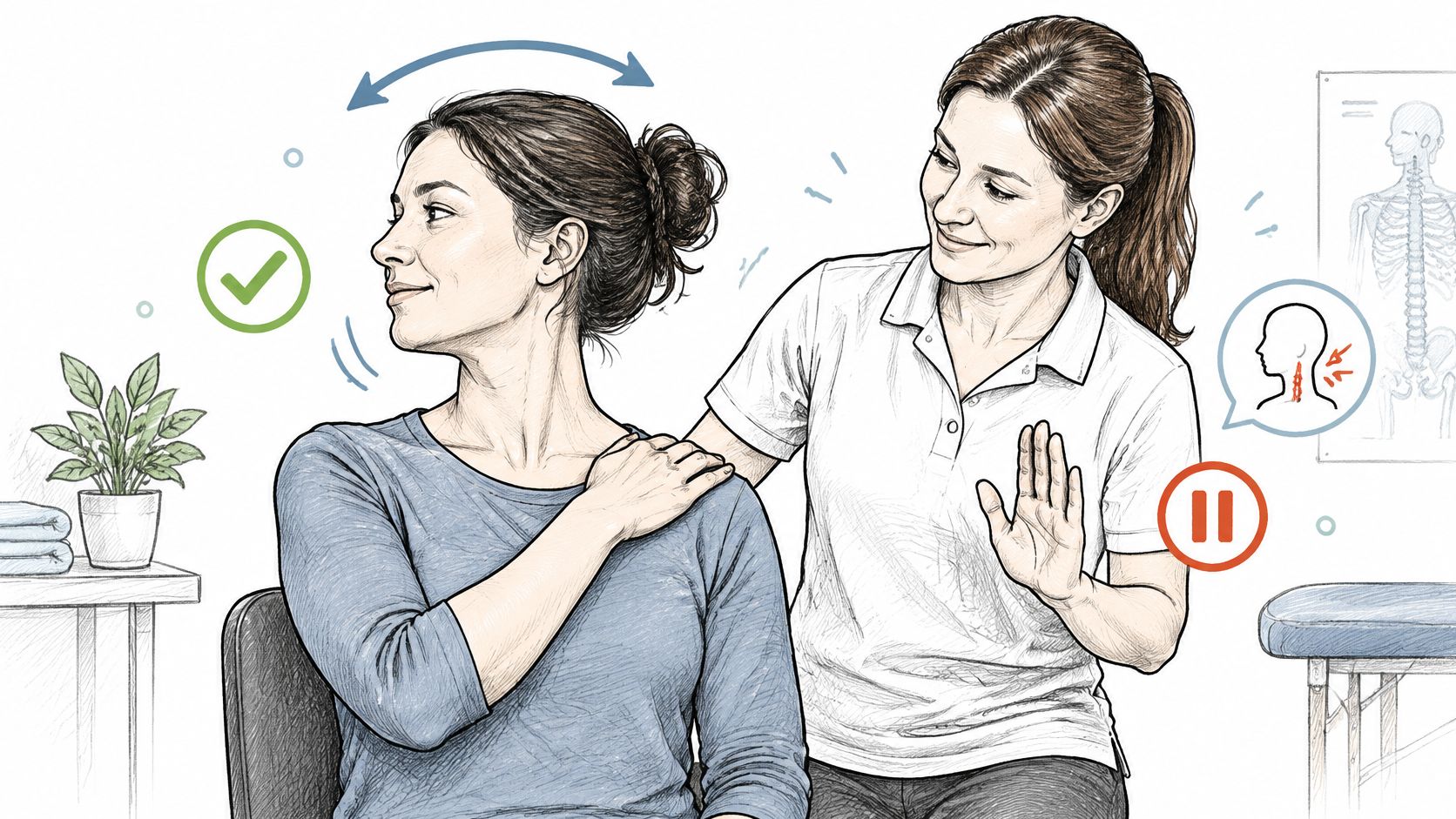
If symptoms move farther down the leg, pause the provoking technique and reassess. That change alone does not identify the source. It does give the clinician a reason to reconsider stretching, deep pressure, or repeated outward hip rotation.
Follow the earlier red-flag guidance if warning signs develop rather than waiting for a scheduled progress review.
An individualized monitoring agreement might use pain that stays sharply worse for more than 24–48 hours after an adjustment as a trigger to contact the clinician and review treatment intensity. Another example is no change in sitting tolerance after two to four visits, prompting an early review. These are hypothetical decision rules to agree on with your clinician, not diagnostic thresholds.
Match the change to the response: pause provoking pressure or stretching, consider gentler mobilization, or adjust exercise movement and resistance. Recheck whether the original diagnosis still explains the pattern.
A plateau deserves a decision. Depending on reassessment findings, that may mean changing care, further evaluation, or referral. Increasing sitting and walking tolerance with stable neurologic findings provides a clearer basis for continuing.

Book an evaluation when buttock or leg pain persists for more than a few weeks, interrupts sitting or sleep, or hasn't improved with sensible self-care. A consultation is most useful when you need the source clarified, not just another stretch to try. Choose urgent medical care instead when emergency neurologic symptoms or systemic warning signs are present.
At our Salt Lake City and Sandy locations, the evaluation begins with a full history and neurologic, hip, and lumbar checks. The clinician develops a working diagnosis, then explains which findings support it and which would argue against it. Dr. Jeremy Kaier specializes in treating herniated discs, stenosis, and sciatica, which is relevant when a spinal condition may resemble piriformis pain.
A short symptom log is more helpful than trying to remember every flare. Bring a two-week log if you already have one, but don't delay a necessary evaluation to create it.
Ask which findings support piriformis involvement over a spinal cause, since the examination should distinguish between them rather than assume one. Request a written outline of proposed visit frequency, expected duration, functional measures, and the point at which the diagnosis will be reconsidered if progress stalls.
Also ask what would prompt imaging or a specialist opinion. Those questions help distinguish a defined trial of care from an open-ended commitment.
The first visit should begin a measured process, not an indefinite series of appointments. You should leave knowing what will be rechecked at the next visit, which numbers (sitting time, walking distance) count as improvement, and what result would change the recommendation.
Aspen Falls Wellness offers thorough chiropractic evaluations and individualized, non-surgical care for buttock pain, sciatica, and related spine and hip conditions. Visit Aspen Falls Wellness to book an evaluation in Salt Lake City or Sandy and begin with a working diagnosis, functional goals, and a clear reassessment plan.

Stay updated with the latest chiropractic news and exclusive offers.