Does a TENS unit really work? Trials support short-term pain relief, not a cure for discs, sciatica, or long-term disability.
Yes, TENS can reduce pain during or immediately after use. A 2022 review found a standardized mean difference of −0.96, with moderate-certainty evidence. That short-term change in pain does not establish lasting recovery or reliably resolve chronic disability or the source of pain.
For a home unit, judge the effect by what you can do, not by tingling alone. A lower pain score while the pads are attached may help you move more comfortably. Check whether that relief also helps with walking, sleep, or exercise; a change in pain does not show that an irritated nerve, injured disc, or restricted joint has recovered.
So, does a TENS unit really work? It can offer immediate comfort, while its value in daily life depends on whether that comfort supports meaningful activity.
TENS can provide genuine short-term pain relief. The evidence is much less persuasive when the question becomes whether it produces lasting recovery or reliably restores daily function.
The 2022 meta-TENS review in BMJ Open synthesized 381 randomized controlled trials involving 24,532 participants with acute or chronic pain; its direct placebo comparison included 91 trials and 4,841 participants, with a standardized mean difference of −0.96, a 95% confidence interval from −1.14 to −0.78, and moderate-certainty evidence for lower pain during or immediately after treatment.
A standardized mean difference lets reviewers combine studies that used different pain scales. It isn't a change in points on your personal pain scale, and it doesn't tell you how long your relief will last. The result supports an immediate analgesic effect, not a repaired spine.
| Situation | What evidence supports | What it does not prove |
|---|---|---|
| During or right after a session | Lower pain versus placebo, with moderate certainty | A lasting repair of the pain source |
| Hours after the unit is off | Relief can fade after stimulation stops | Reliable all-day pain control |
| Chronic low-back pain intensity | Conflicting results across higher-quality trials | A dependable stand-alone treatment |
| Back-pain disability | No clear gain in function in key trials | Better walking, work, or daily ability |
| Chronic primary pain | No clinically important benefit in NICE guidance | Appropriate first-line care |
| Radiating or suspected disc pain | Possible brief comfort only | Decompression of a nerve or disc repair |
The practical distinction is between changing a symptom and changing the condition that produces it. TENS may soften the experience of pain without opening a narrowed spinal canal, repairing a herniated disc, or realigning a joint. That doesn't make the relief imaginary, but it does limit what you can reasonably claim from a successful session.
Practical rule: Count easier movement as a useful outcome. Don't count tingling itself as evidence of treatment success.
Choose something specific: standing to prepare dinner, taking a comfortable walk, or completing prescribed exercises. If stimulation makes that activity easier without encouraging you to exceed your rehabilitation limits, the unit may have a useful supporting role.
Response still rests on the diagnosis, pad placement, settings, and a strong but comfortable intensity. A disappointing result with poorly positioned pads isn't the same as a fair test, but repeatedly adjusting a unit without gaining activity isn't progress either.
The same distinction matters when comparing devices. Our explanation of whether MLS laser therapy works addresses a different treatment approach, not an interchangeable version of TENS.
A useful win is easier walking, sleep preparation, or exercise that day. A miss is pain returning unchanged after the unit is off, with no improvement in what you can do.
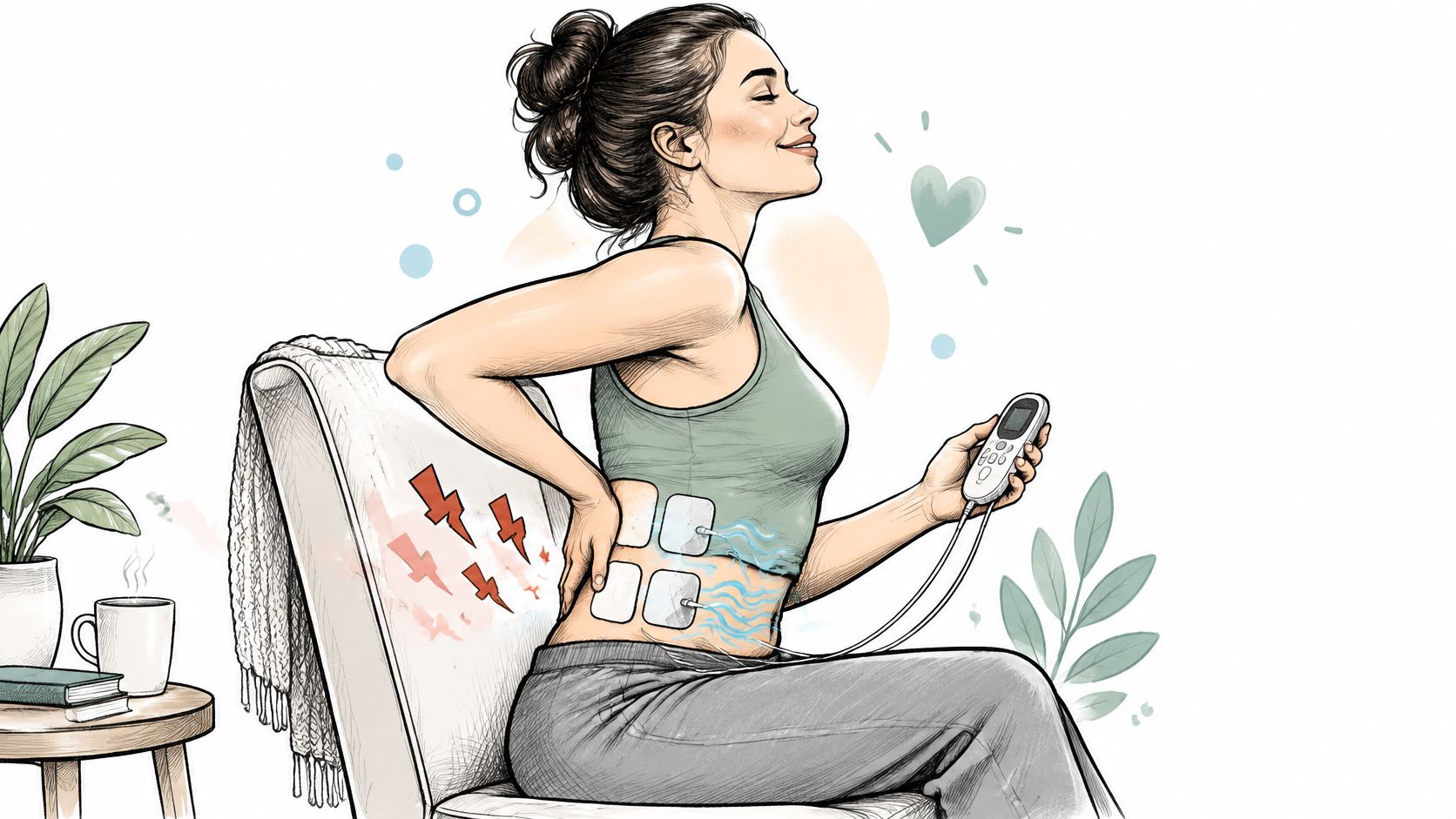
A TENS unit is a small electrical stimulator connected to adhesive pads on the skin. TENS stands for transcutaneous electrical nerve stimulation, meaning nerve stimulation delivered through the skin.
The NHS guide to TENS describes a weak electrical current used for temporary pain relief, with a tingling sensation rather than a painful electrical shock. The intended experience is noticeable buzzing, not a test of how much discomfort you can tolerate.
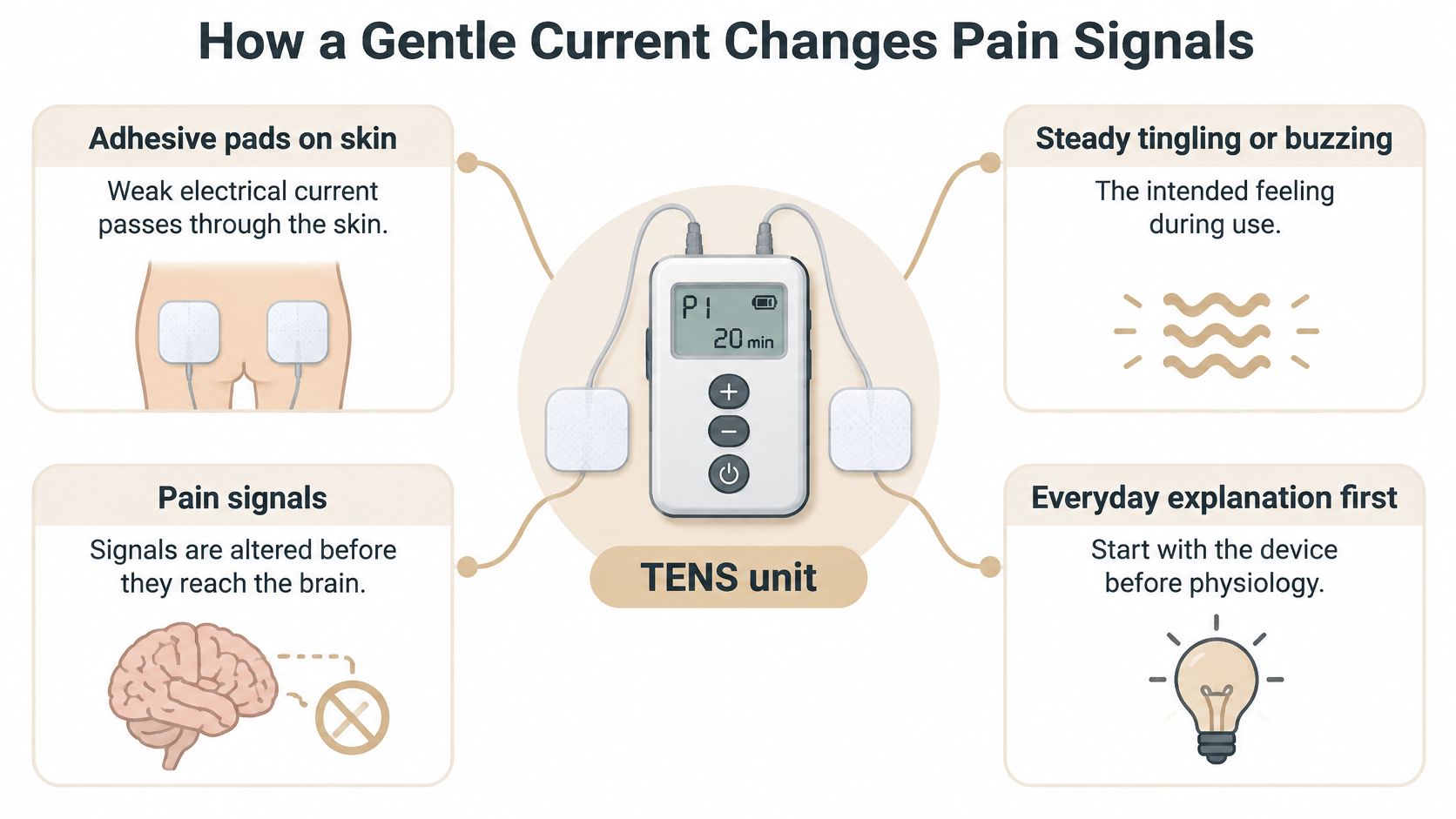
Think of pain transmission as people passing through a busy doorway. Non-painful sensory input can compete with pain-related messages at the spinal cord, changing how much pain information travels onward. That's the everyday explanation of the gate-control mechanism.
A clinical review indexed in PubMed describes stimulation of large-diameter sensory nerve fibers and inhibition of pain transmission in the spinal dorsal horn, alongside possible engagement of descending pain-inhibition pathways. Those descending pathways are the nervous system's own ways of reducing pain, sometimes explained in terms of natural pain-relieving chemicals such as endorphins.
Neither mechanism welds injured tissue back together. The target is pain processing, not structural reconstruction.
Say someone with an evaluated sore lower back places pads around the painful region. The buzzing becomes clearly noticeable, and standing at the sink feels less uncomfortable during the session. Later that evening, the familiar ache returns.
That sequence is consistent with symptom modulation. It isn't proof that the person imagined the benefit, nor does it demonstrate that the back problem healed and then returned.
Several practical differences can change the experience:
A unit that produces only a faint tickle hasn't fairly tested the intended effect. Conversely, a painful current isn't a stronger therapeutic achievement. The useful middle ground is a distinct, tolerable sensation that lets you assess the activity you're trying to improve.
For chronic low-back pain, the central problem isn't whether someone can feel better during a session. It's whether TENS consistently reduces persistent pain and improves the limitations that matter outside treatment.
The Cochrane overview of TENS for chronic pain describes four high-quality placebo-controlled trials involving 585 patients with chronic low-back pain, with conflicting pain-intensity results; more consistently, two trials involving 410 patients found no improvement in back-pain-related disability.
That distinction deserves more attention than a simple works-or-doesn't-work verdict. Someone can report a less intense ache without becoming more able to walk, work, or manage daily tasks. Pain intensity and disability are related outcomes, but they aren't interchangeable.
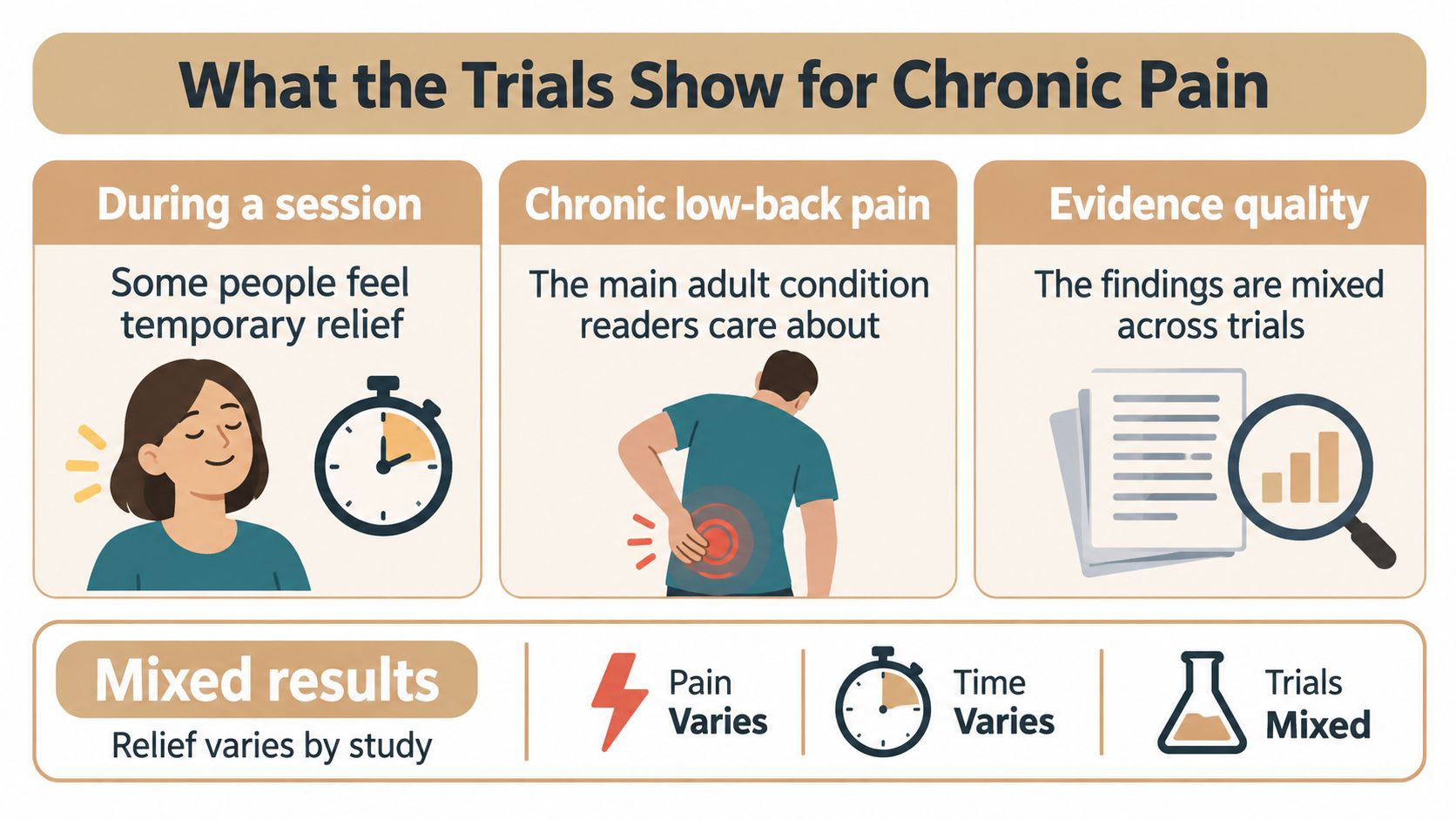
A separate Cochrane evidence summary reports a pooled analysis of five studies involving 207 participants, with pain 1.58 points lower on a 0-to-10 scale versus sham TENS, but rates the overall evidence very low quality.
A numerical benefit doesn't erase weaknesses in the trials that produced it. Small studies, inconsistent treatment methods, and uncertain comparisons can leave reviewers unable to make a confident clinical recommendation even when a pooled result favors treatment.
Across chronic-pain conditions, the broader conclusions remain uncertain for pain control, disability, quality of life, medication use, and overall recovery. NICE's recommendation not to offer TENS for chronic primary pain also concerns a defined indication, not every possible episode of pain.
Chronic primary pain shouldn't be used as a casual synonym for any long-lasting backache. A clinician needs to distinguish that diagnosis from pain attributed to another condition before applying a condition-specific recommendation.
A lower pain score during treatment is a different finding from better walking ability after a course of care.
A short treatment window can be exactly the right outcome in another setting. A 2024 randomized trial of TENS during endometrial biopsy assigned 135 participants, with 67 receiving placebo TENS and 68 receiving active TENS.
That study design asks about procedural pain during a defined event. Its setting doesn't establish whether a home unit improves chronic back disability, and the allocation figures alone don't tell us whether treatment succeeded.
For a reader with persistent back pain, systematic reviews deserve more weight than a glowing account of an individual session. Ask whether the participants resemble you, whether the comparison was credible, and whether investigators measured outcomes after stimulation ended.
For general context alongside a clinical assessment, you can explore lower back pain advice from Vitamin Planet. Keep general education separate from the treatment decision: your work tolerance, sleep disruption, and walking limitations require an individualized assessment rather than a favorable average from an unrelated pain setting.
A useful home trial compares the same task under similar conditions. Keep pad placement, intensity, and activity consistent, then judge both the pain score and what you can do. A temporary change in pain during stimulation is different from improved function that lasts afterward.
A systematic review indexed in PubMed included nine randomized trials involving 655 adults with chronic low-back or neck pain. TENS or interferential current performed better than control during treatment, but not significantly better immediately afterward or at one-to-three-month follow-up. Low study quality and inconsistent reporting of dose and settings limit what the results establish.
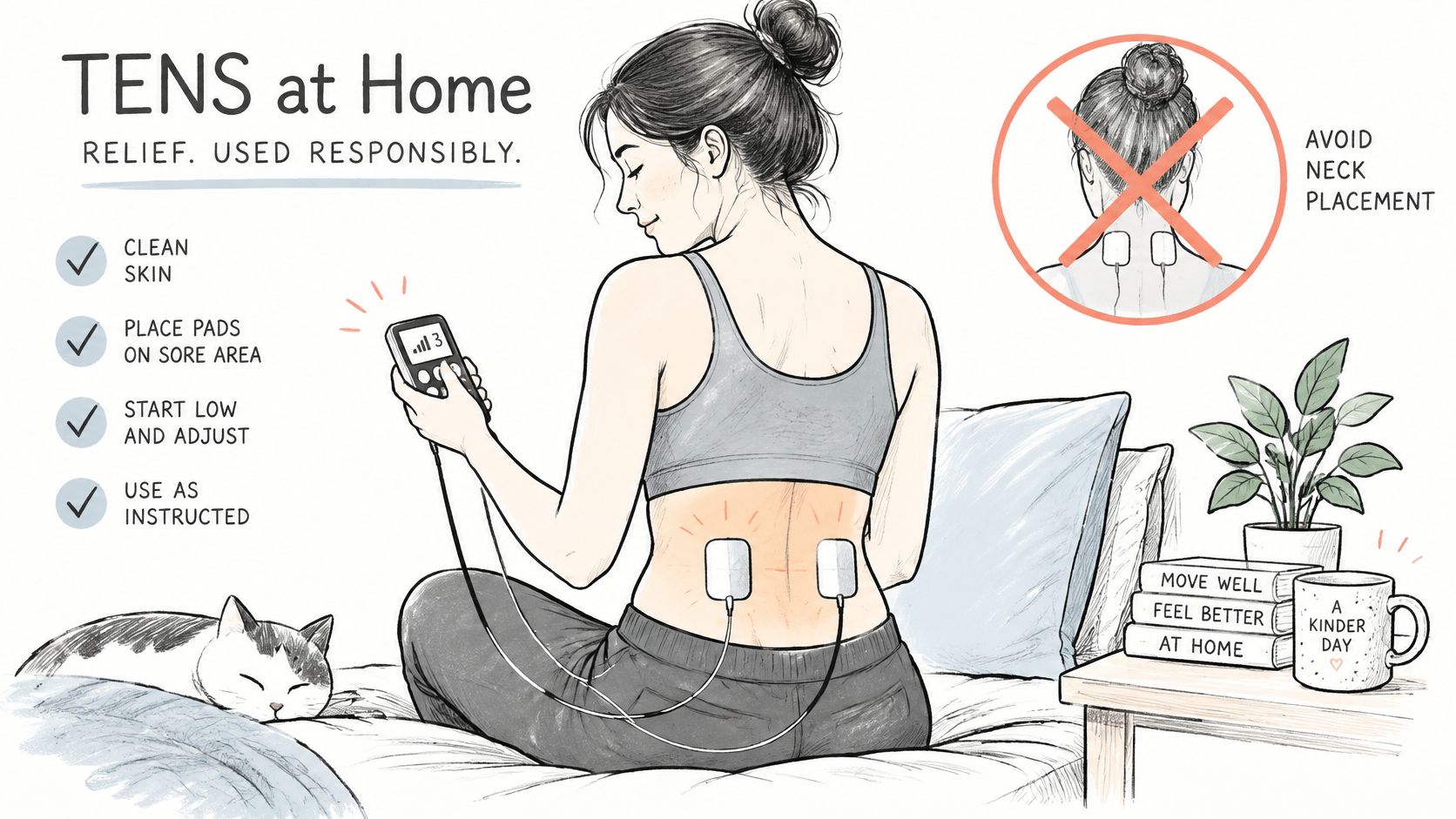
Before buying, check whether the unit has adjustable frequency and pulse width, independently adjustable output channels, pads that fit the target area, and a clear intensity display. A dual-channel device may make pad placement more practical when treating both sides of the low back. These features affect usability, not proof of effectiveness.
Prepare the skin and pads. Turn the unit off before placing pads. Use clean, intact skin around the sore area, not broken or infected skin. Never place pads across the chest or front of the neck.
Increase intensity gradually. Begin at a low setting and raise it to a strong but comfortable tingling. A barely noticeable current makes the trial hard to judge; stinging or painful stimulation is a reason to stop and reassess.
Pair treatment with a valued task. Choose a safe, clinician-approved activity suited to the device, such as standing to prepare a meal. Time the activity during stimulation so you can judge whether it helps while the current is active.
Record symptoms and ability. Note pain before, during, and after treatment, along with what you managed to do. Use this pain scale assessment guide to keep ratings consistent, and add functional notes. Walking, sleep, and exercise can matter more than tingling alone.
Repeat under comparable conditions. Try several sessions on different days without repeatedly changing the task or setup. Keep a program only if benefits recur and your skin remains comfortable.
A PubMed-indexed review found high-frequency stimulation more consistently helpful for low-back pain than low-frequency stimulation. Treat that comparison as evidence about the settings examined, not a universal prescription: a program label on a home unit does not show that its protocol matches those studied.
To assess device claims, evaluate health research with REVETIX, paying attention to the comparison group and when outcomes were measured. If you have an implanted electrical device, get clinical clearance before testing. New weakness, bowel or bladder changes, fever with pain, or pain after significant trauma calls for medical assessment rather than continued self-testing.
Tingling can't mechanically unload a compressed nerve root, restore disc height, or establish why your neck won't turn. If symptoms suggest a disc problem, spinal stenosis, or another mechanical limitation, a pleasant session doesn't settle the diagnosis.
A failed trial also doesn't automatically mean you need a more powerful device. It may mean that pain modulation isn't the missing part of your care, or that the activity you're trying to regain requires a different rehabilitation strategy.
Stop self-treatment and seek appropriate medical care for:
Pregnancy, a seizure disorder, reduced skin sensation, and an implanted pacemaker or stimulator belong in a clinician conversation before the first session. Reduced sensation is particularly important because you may not be able to judge whether the current is excessive.
Skin redness or itching under adhesive pads is a reason to stop, inspect the area, and let irritated skin recover. Don't repeatedly place pads on an inflamed patch or respond to discomfort by increasing intensity.
Safety boundary: Relief should never become a reason to postpone assessment of a new neurological symptom.
TENS is a non-drug option, not permission to stop a prescription or replace a medication review. Discuss changes with the prescribing clinician, especially if pain control currently depends on several treatments.
Set a short, predefined trial rather than continuing indefinitely because the unit feels active. If properly applied sessions never improve walking, sleep preparation, or exercise tolerance, the device isn't contributing enough to remain the main plan.
You don't need to prove that TENS fails for everyone. You need to decide whether it does something worthwhile for you without delaying more appropriate care.
TENS Beside Other Conservative Pain Treatments
These categories describe intended treatment targets and typical sensations, not proof that one option is superior or appropriate for every diagnosis.
| Therapy | Main target | What it feels like | Built to change |
|---|---|---|---|
| Home TENS | Nerve signaling from the skin | Strong but comfortable tingling | Pain during use and possibly briefly afterward |
| Acupuncture | Pain modulation, circulation, and inflammation | Brief needle sensation | Pain processing over a course of visits |
| MLS laser therapy | Local inflammation and tissue recovery | Mild soothing warmth | Pain, swelling, and mobility |
| Chiropractic adjustment | Stiff or restricted spinal joints | Hands-on joint movement | Motion and mechanical pain |
| DRX9000 decompression | Disc-related pressure on nerves | Gentle cyclic traction | Disc and nerve-compression symptoms |
| Therapeutic massage | Guarding in muscles and soft tissue | Pressure on sore muscles | Tightness and local soreness |
Treatment goals need to be matched to an examination, not selected from a device menu. The National Library of Medicine's clinical overview of TENS describes its role in pain management and summarizes immediate analgesic evidence without establishing durable recovery; the large review it discusses reported no serious adverse events, which doesn't guarantee risk-free use for every person.
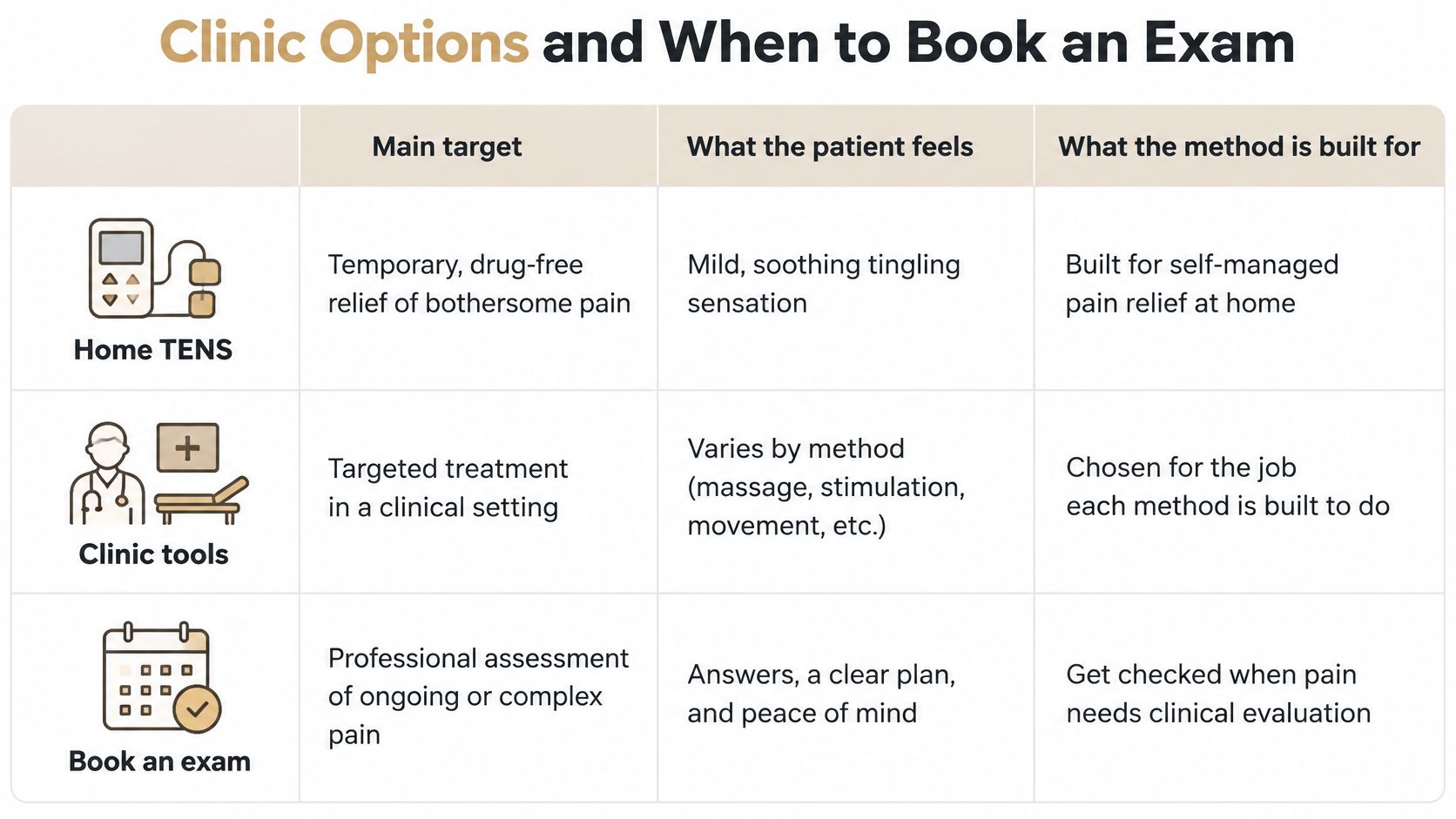
If an evaluated muscular ache eases enough to make walking comfortable, keeping TENS alongside an appropriate activity plan may be reasonable. There's no need to replace a useful self-management tool because a clinic has other equipment.
If pain immediately returns and still prevents work or sleep, arrange reassessment. That doesn't automatically mean hands-on treatment or another device is necessary. It means the current approach isn't meeting your functional needs.
Leg pain suggesting a disc or nerve problem deserves an examination rather than endless experimentation with pad layouts. Diagnosis also matters outside the spine: Pain and Sleep Therapy Center's TMJ guide provides context for condition-specific, non-surgical jaw care, rather than treating all pain as interchangeable.
At Aspen Falls Wellness in Salt Lake City and Sandy, we develop a customized treatment plan based on the diagnosis, which may include chiropractic adjustments, DRX9000 Decompression, and/or MLS Laser Therapy, alongside appropriate exercise. MLS Laser Therapy is safe and FDA-cleared; 85-90% of our MLS Laser Therapy patients experience notable improvement, a practice-specific outcome that isn't a head-to-head comparison with TENS or a guarantee for an individual.
Our multidisciplinary pain management approach explains coordinated care rather than reliance on a single modality. Bring your pad-placement notes, program and intensity settings, and a record of which activities improved.
Book an evaluation when pain persists beyond a short flare, walking or sleep stays limited, or symptoms suggest sciatica or a disc problem. Verify insurance coverage before care begins, and use urgent medical services rather than a routine appointment for emergency warning signs.
Aspen Falls Wellness offers diagnosis-based, non-surgical care, including chiropractic care, DRX9000 spinal decompression, MLS Laser Therapy, and personalized rehabilitation exercise. If your TENS unit provides comfort but hasn't improved daily function, visit Aspen Falls Wellness to arrange an examination in Salt Lake City or Sandy and bring your home-treatment notes.

Stay updated with the latest chiropractic news and exclusive offers.