Does MLS laser therapy work for pain and inflammation? We review clinical evidence, realistic timelines, and integrative care benefits.



MLS laser therapy can reduce pain and inflammation for some musculoskeletal conditions, and one controlled diabetic neuropathy trial found the MLS group's McGill pain index fell 63.2% by day 9 and stayed 56.1% below baseline at 90 days, while the control group improved only 12.7% in the same window (trial PDF). The strongest evidence, though, supports it as a bridge to exercise and manual therapy, not a standalone fix.
The primary question isn't whether light can affect tissue, because it can. The question is whether does MLS laser therapy work in a way that matters to a skeptical patient who wants less pain, better movement, and a realistic timeline. In practice, the answer depends on the condition, the treatment plan, and whether MLS is used to support active rehab rather than replace it.
Can MLS laser therapy make a meaningful difference? Yes, for some musculoskeletal problems, but the result depends on what you expect from it and what happens between appointments. It may reduce pain and irritation, yet it does not restore strength, mobility, or load tolerance by itself. In practice, its most useful role is making walking, exercise, loading, or hands-on care easier to tolerate.
MLS, or Multiwave Locked System, uses synchronized wavelengths in a Class IV laser format. The treatment is intended to influence pain and inflammatory activity together, so clinicians commonly combine it with rehabilitation rather than use it as a replacement. A broader overview of low-level laser approaches is available in LLLT for aesthetic clinics.
Pain may improve before movement does. A patient can feel less discomfort after several sessions while still lacking the strength, range of motion, or activity tolerance needed for lasting improvement. Without a progressive loading plan, early relief may not translate into durable function.
A practical rule is simple: if a session makes movement easier, use that window to move and train. If treatment becomes a substitute for movement, progress often stalls.
The research supports a modest, condition-dependent effect. A meta-analysis of low-level laser therapy in adult musculoskeletal disorders reported a pooled pain reduction of -0.85 on the pain scale, with a 95% CI of -1.22 to -0.48 (meta-analysis summary). That finding supports pain modulation, not a universal cure. Results can vary with the diagnosis, treatment settings, symptom duration, and whether the patient follows an active rehabilitation plan.
A randomized trial involving chronic neck pain found that MLS combined with exercise outperformed exercise alone and exercise plus conventional low-level laser therapy after 6 months (neck pain trial). The study fits the clinical pattern: MLS may add value when it helps a patient participate in rehabilitation consistently.
The honest answer is that MLS can work, especially for short-term symptom control. Durable recovery still requires addressing strength, movement, workload, and the cause of repeated irritation.
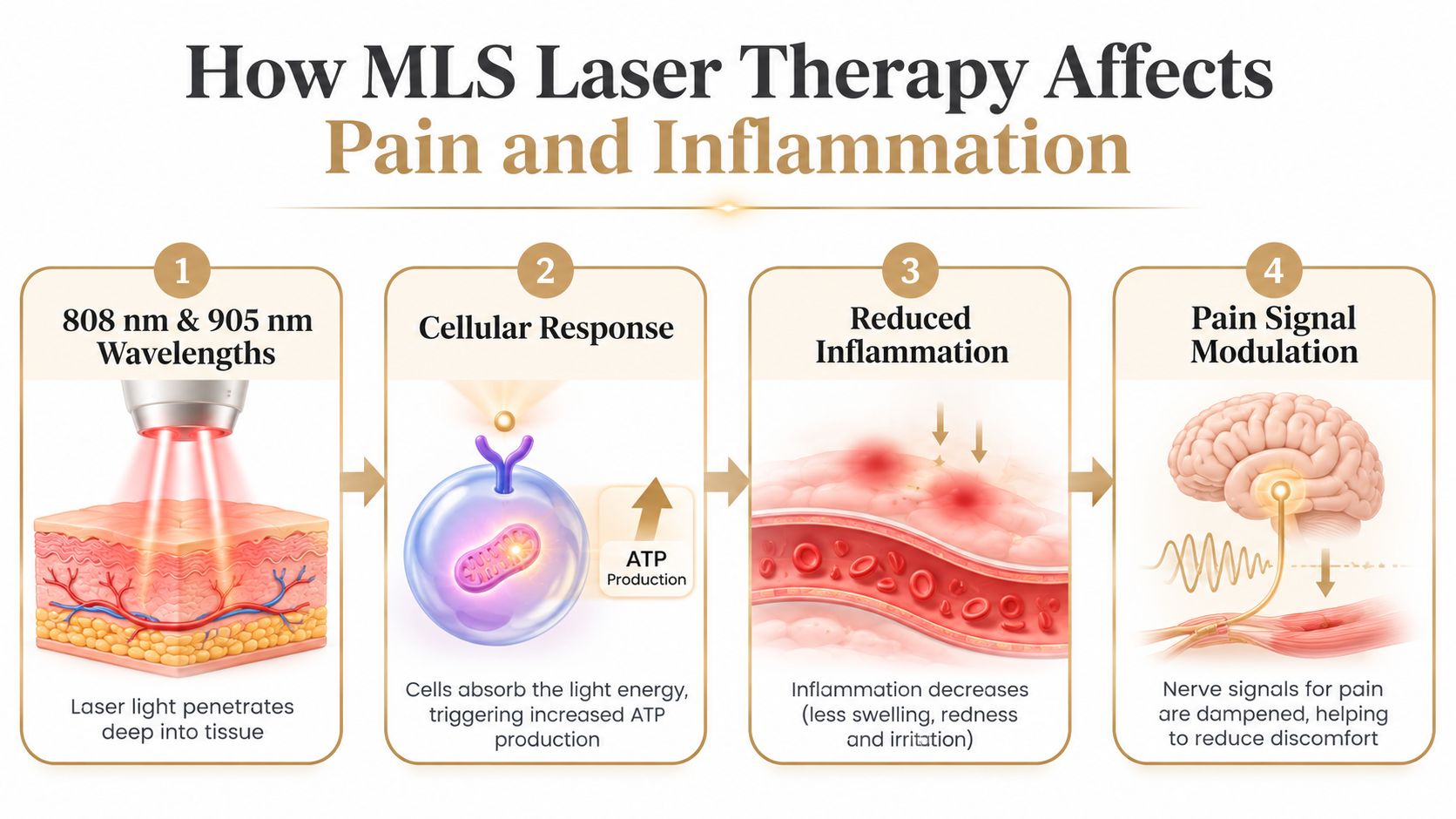
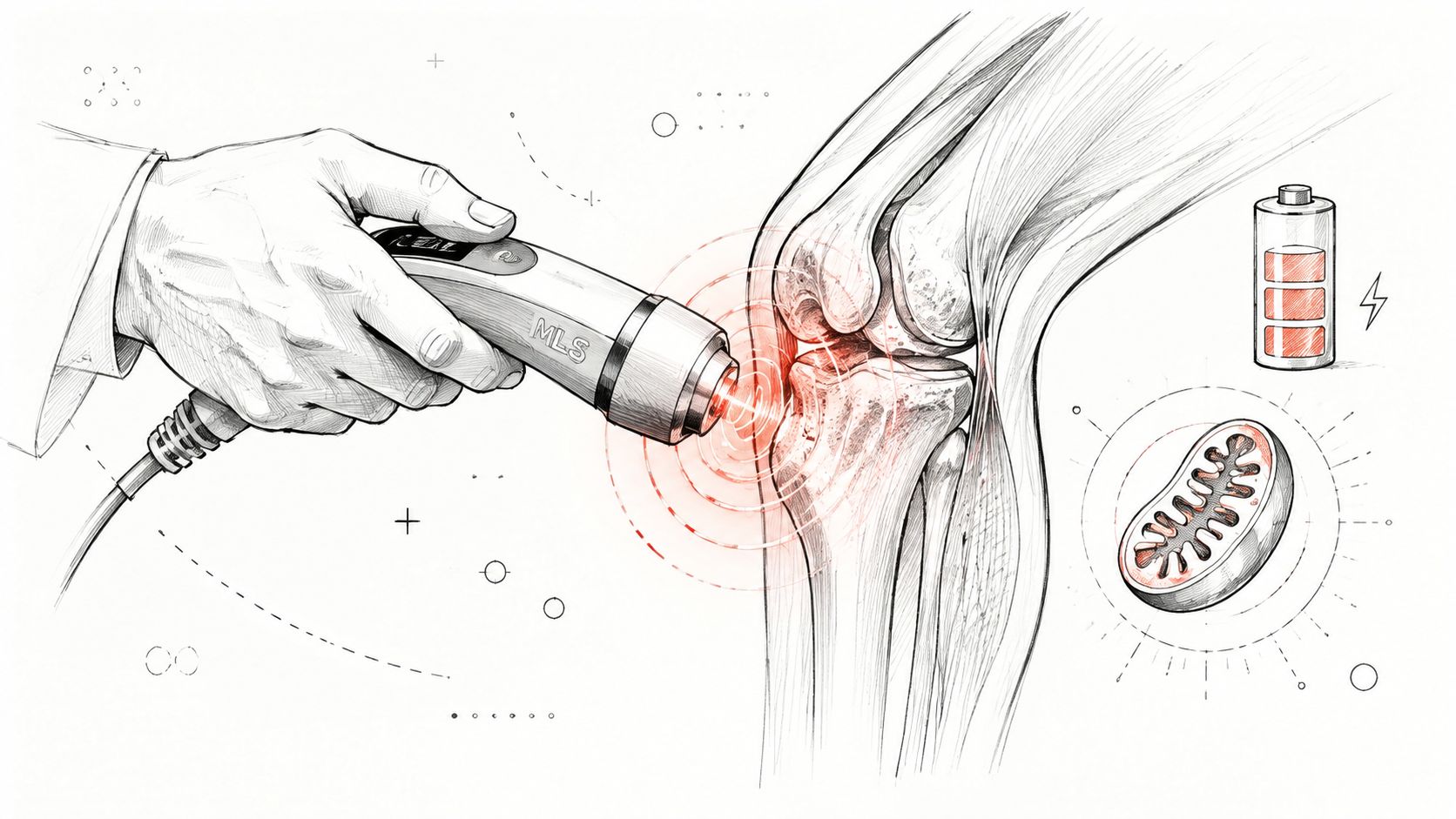
MLS is best understood as photobiomodulation, not heat therapy. Technical descriptions identify synchronized infrared wavelengths in the 600 to 1200 nm therapeutic window. The continuous component is associated with anti-inflammatory and anti-edema effects, while the pulsed component is used to reduce nociceptor activity and afferent nerve conduction (mechanism review). The aim is to influence how stressed tissue functions, rather than burn it or force a mechanical change.
Cells absorb light through mitochondrial pathways, particularly cytochrome c oxidase. This initiates changes in cellular energy handling, often explained clinically as recharging a depleted battery. Irritated tissue does not always need more force. It may benefit from a metabolic environment that supports recovery.
That separates MLS from thermal modalities. The intended result is a lower-inflammatory state that can make movement, mobilization, and manual therapy more tolerable during healing. The practical question is not how the session feels, but what the patient can do afterward. For more detail on the anti-inflammatory mechanisms, see this overview of laser therapy for inflammation.
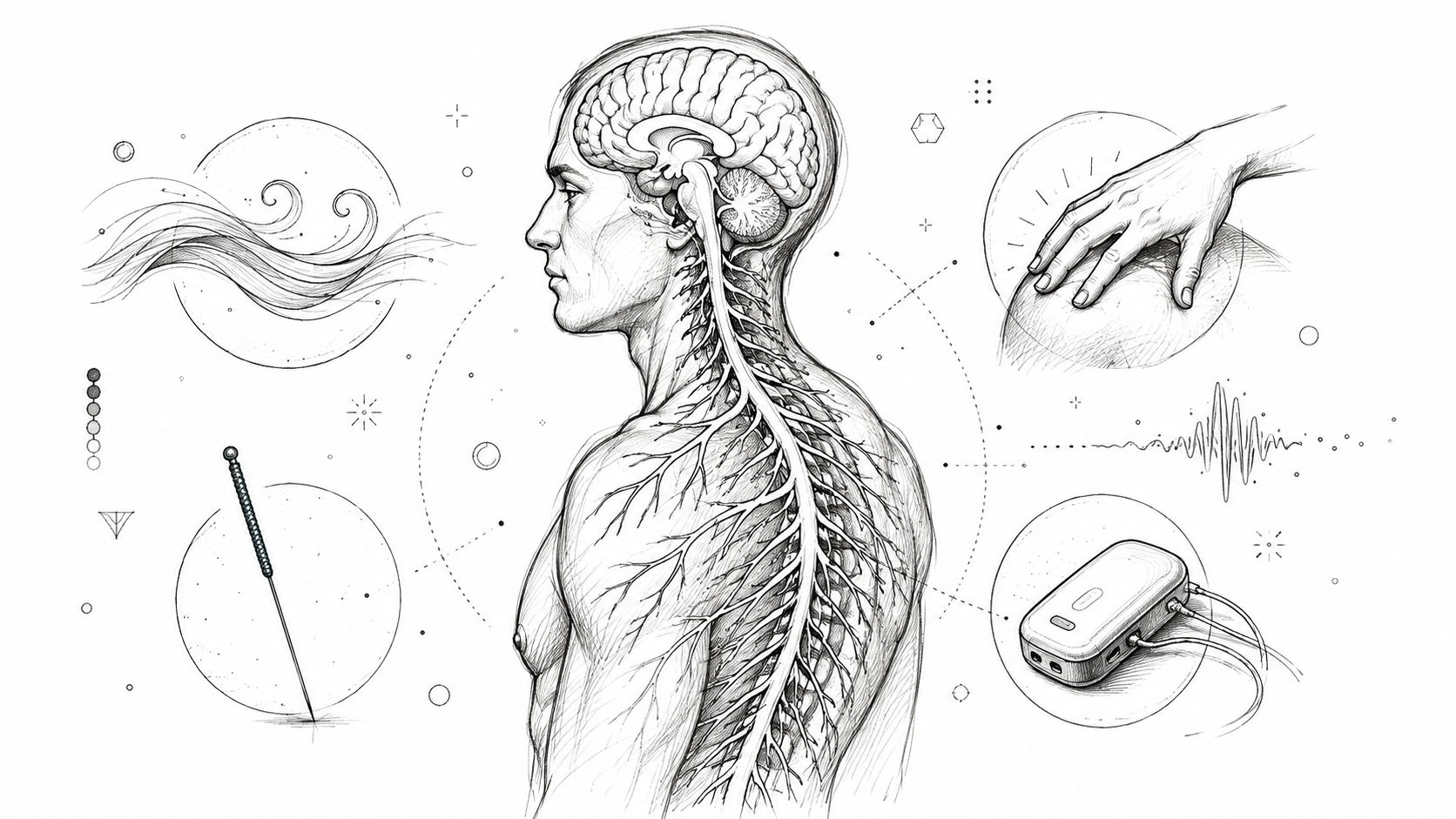
MLS is also described as reducing sensitivity in pain pathways. Its pulsed component may dampen nociceptive signaling, so soreness or guarding can improve before strength, range of motion, or tissue capacity changes. That timing explains why early symptom relief should not be mistaken for complete recovery, and why a patient may need active rehabilitation even when pain is settling.
MLS is most useful when the goal is to make the next rehabilitation step possible.
Inflammation control is the other part of the mechanism. The continuous wavelength component is linked with anti-inflammatory effects, while the pulsed component is linked with changes in pain thresholds (mechanism review). These effects can make irritable soft tissue easier to load, but they do not correct weakness, poor movement control, excessive workload, or an ongoing source of irritation.
Some patients expect laser therapy to resolve the underlying problem without exercise or activity changes. In practice, MLS is more useful as an adjunct. If it reduces symptoms enough to permit controlled loading, mobility work, or strengthening, it may support functional recovery. Used alone, it may provide relief without producing durable change.
Does MLS laser therapy work equally well for every pain problem? The answer depends on the condition, comparison treatment, and follow-up window. A 2025 systematic review examined 211 studies published from 1990 to 2024, including 28 on MLS® laser therapy. Pain control, cellular mechanisms, and wound or bone biostimulation were among the main research themes (systematic review).
Evidence is more supportive in selected conditions than in generalized pain claims. In a randomized study of painful diabetic sensorimotor neuropathy, pain fell substantially during a 9-day treatment course and remained below baseline at 90 days, while the control group improved less (trial PDF). The result supports symptom relief that may continue after treatment, but it does not show that MLS repairs the nerve damage causing neuropathy.
Musculoskeletal findings are encouraging in some settings. As noted in the earlier studies, a meta-analysis found an overall pain benefit across adult musculoskeletal disorders (meta-analysis summary). Research on chronic neck pain also reported better results when MLS was combined with exercise than with exercise alone over 6 months (neck pain trial). That distinction matters clinically. Reduced pain can help a patient tolerate strengthening and movement practice, while exercise remains responsible for rebuilding capacity.
Chronic low back pain shows why treatment timing and study design matter. In a double-blind randomized trial, both MLS and sham treatment reduced pain and disability. MLS showed a clearer difference at one month after treatment rather than during the treatment phase (low back pain trial). This pattern points to a modest, delayed, or protocol-dependent effect, not a reliable immediate cure.
| MLS Laser Therapy Clinical Evidence by Condition | |||
|---|---|---|---|
| Condition | Evidence Strength | Key Outcome | Follow-Up Window |
| Painful diabetic sensorimotor neuropathy | More supportive | Pain reduction persisted after treatment | Short term and 90 days |
| Chronic neck pain | Supportive when paired with exercise | Better pain and disability outcomes with MLS plus exercise | 6 months |
| Chronic nonspecific low back pain | Mixed | Better than sham at later follow-up in one trial | 1 month |
| Adult musculoskeletal disorders | Moderate overall | Statistically significant pooled pain reduction | Varies across studies |
The practical conclusion is condition-specific. MLS works best for selected problems where lowering irritability allows active rehabilitation to begin or continue. It may improve pain before strength, mobility, and tissue tolerance recover. A durable functional result still depends on loading, movement retraining, activity changes, and treatment of the underlying driver.
Does MLS laser therapy replace exercise, or does it make rehabilitation easier to tolerate? In practice, it is more useful as an adjunct. MLS may reduce early pain and irritability, while exercise still builds the strength, mobility, tissue capacity, and confidence needed for lasting function.
As discussed in the clinical evidence section above, MLS produced better outcomes than exercise alone for chronic neck pain in one study. In chronic low back pain, the clearest advantage over sham treatment appeared later in follow-up, while both groups improved. These findings support a measured conclusion: MLS can contribute to care, but it is not a replacement for movement-based treatment.
Exercise changes physical capacity. MLS may lower symptom irritability. Used together, they can create a more workable rehabilitation window. A patient who cannot tolerate squatting, walking, rotating, or loading the affected area may perform those tasks more effectively after pain has settled enough to permit practice. The principles of therapeutic exercise explain why that active work remains central.
A therapy is worth paying for when it changes the next decision in the care plan.
The practical question is not whether laser feels helpful during a visit. It is whether the improvement allows a patient to complete progressive exercises, resume needed activities, or tolerate a better loading plan. If the answer is yes, MLS may have a useful role. If the patient remains passive between sessions, short-term comfort may not translate into recovery.
MLS may add little when symptoms are already calm. It also cannot correct deconditioning, poor movement strategy, fear of motion, or a structural problem that requires a different mechanical or medical plan. Those issues need targeted rehabilitation, activity changes, or appropriate clinical evaluation.
Cost and time matter. MLS offers better value when it helps shorten the path to active rehabilitation. Used only as a passive comfort measure, without a clear transition to exercise and functional loading, its benefit is usually more limited.
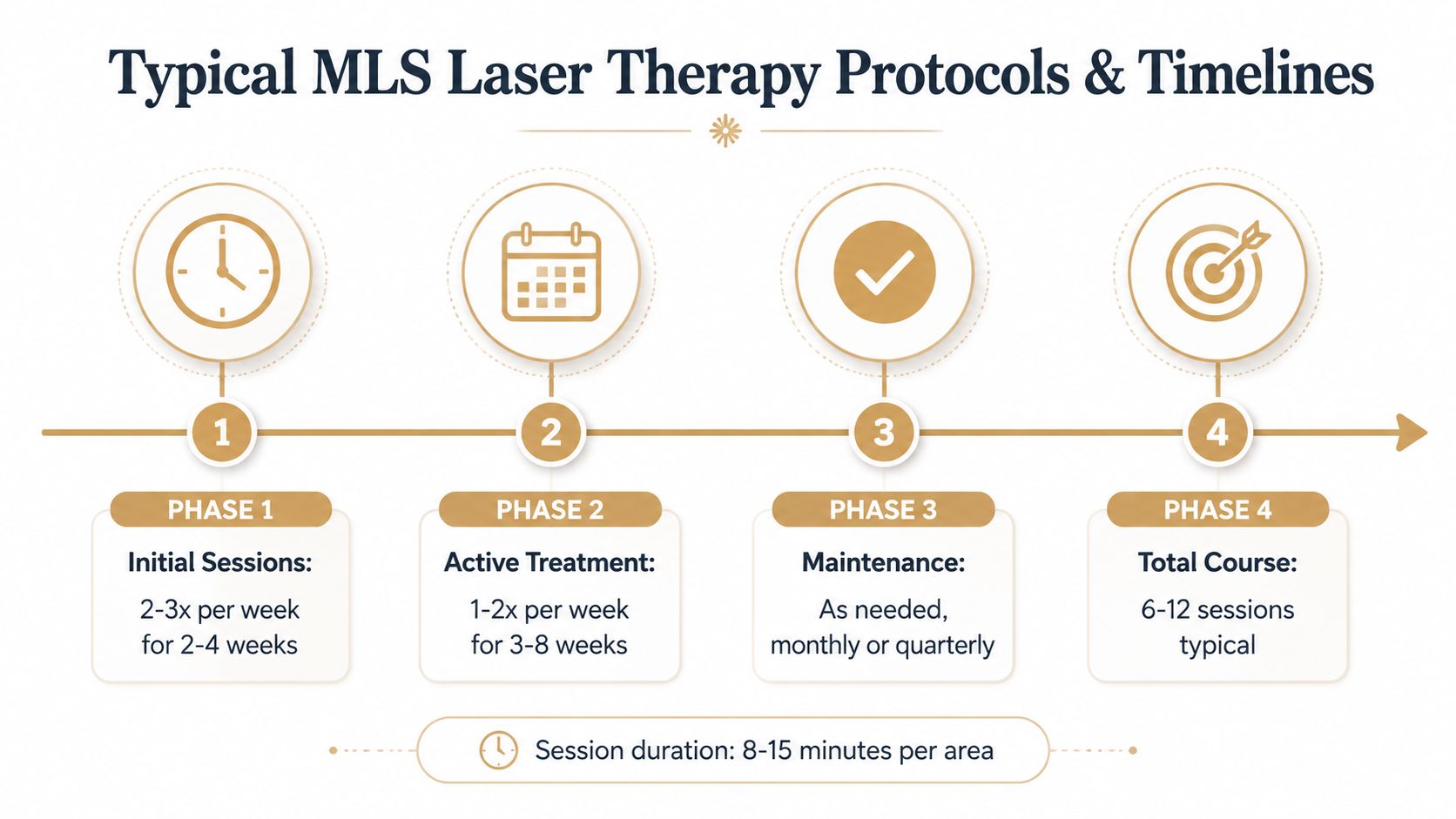
A typical MLS session is usually brief, often 8 to 15 minutes per area, with treatment commonly delivered 2 to 3 times per week at the start and a course that often runs 6 to 12 sessions depending on the condition and irritability. Those are practical clinic patterns, not guarantees, because tissue type and chronicity change the pace of response. Shorter, more acute cases can respond faster, while long-standing pain usually needs more time and more structure.
A weekend athlete with Achilles irritation may notice that walking feels easier after a few visits, but that doesn't mean the tendon is ready for sprinting. A desk worker with chronic cervical pain may feel less guarded in the neck first, then gain better rotation and endurance later once exercise catches up. The order matters because pain relief often arrives before the movement system fully recalibrates.
Acute problems can sometimes show noticeable change within 3 to 5 sessions. Chronic problems, including persistent plantar fascia irritation or degenerative joint pain, often need the full course before the improvement feels meaningful. Stopping the plan too early is one reason symptoms creep back.
If treatment is working, three things usually happen in sequence.
That sequence is why a single session rarely tells the whole story. One session can change pain perception, but it can't fully retrain tissue tolerance or restore lost capacity. Patients who understand that difference usually make better decisions about whether to continue.
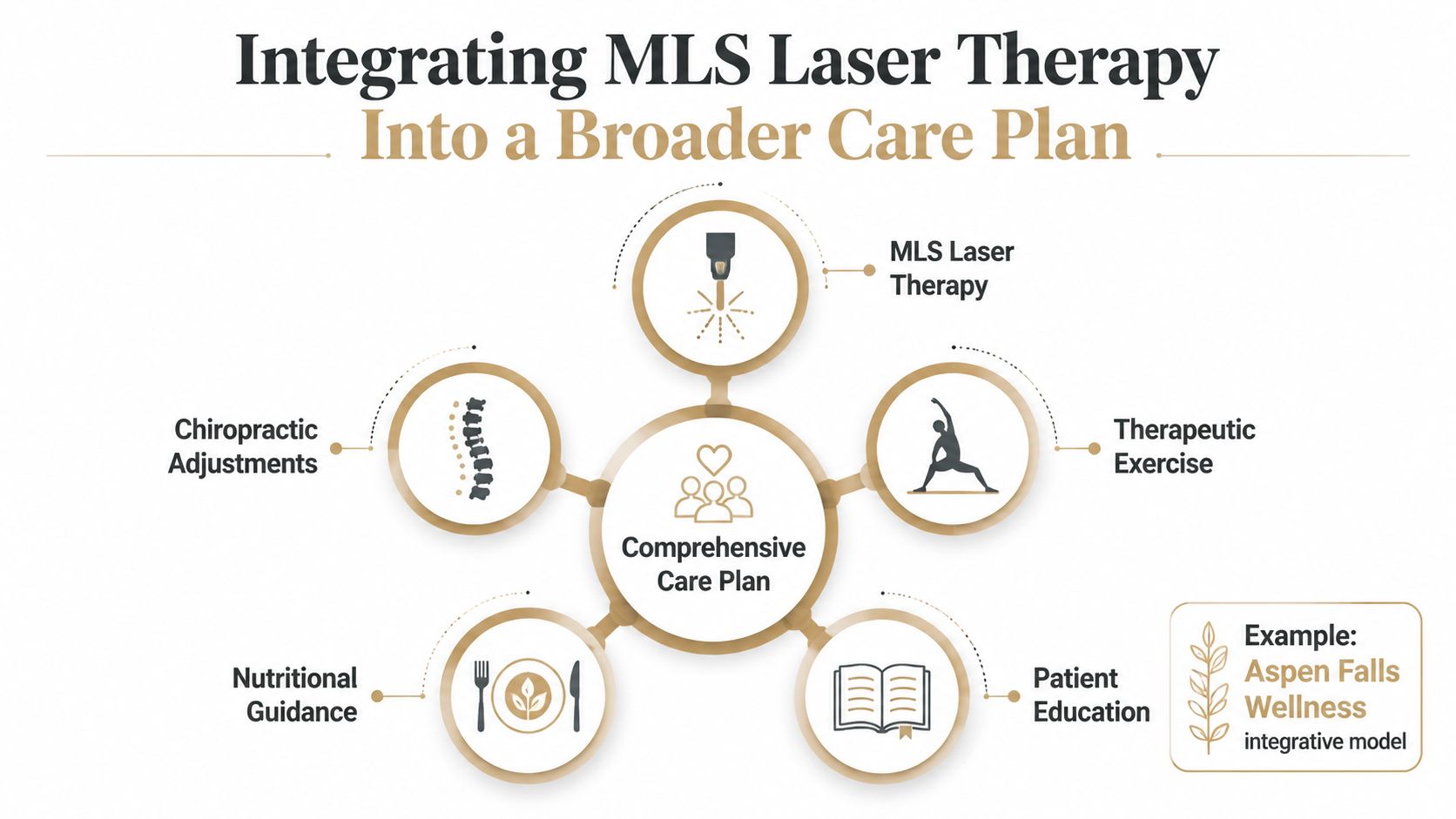
Does MLS laser therapy work better when it is part of a larger rehabilitation plan? In practice, it usually does. At Aspen Falls Wellness, care begins by identifying whether symptoms appear inflammatory, related to soft tissue, or mechanically aggravated. MLS can then be added to adjustments, soft-tissue work, mobility care, and progressive exercise when those options fit the patient's findings.
Early treatment may focus on reducing irritability so movement becomes easier. That short-term change can make exercise, loading, and movement retraining more tolerable. As symptoms settle, the plan should place greater emphasis on strength, control, and the daily habits that reduce the chance of recurrence.
MLS should therefore have a defined role and endpoint. A clinician should explain why it was selected, what response to monitor, and which active treatments will carry recovery forward. The Premiere Education chronic pain course reflects the broader reasoning needed for chronic pain care, where treatment choices should match the suspected pain drivers rather than center on one device.
A useful plan combines symptom management with movement retraining, education, and gradual return to normal loading. Personalized treatment plans matter because patients with the same diagnosis may differ in irritability, strength, work demands, and tolerance for exercise.
MLS may serve as a short bridge during an acute flare or as an adjunct while rehabilitation progresses. It may reduce pain enough to participate more fully, but it does not replace diagnosis, load management, or progressive exercise. The clinic should show how each treatment supports the recovery roadmap, rather than present laser therapy as a stand-alone package. Durable functional recovery depends on restoring capacity, not only lowering symptoms.
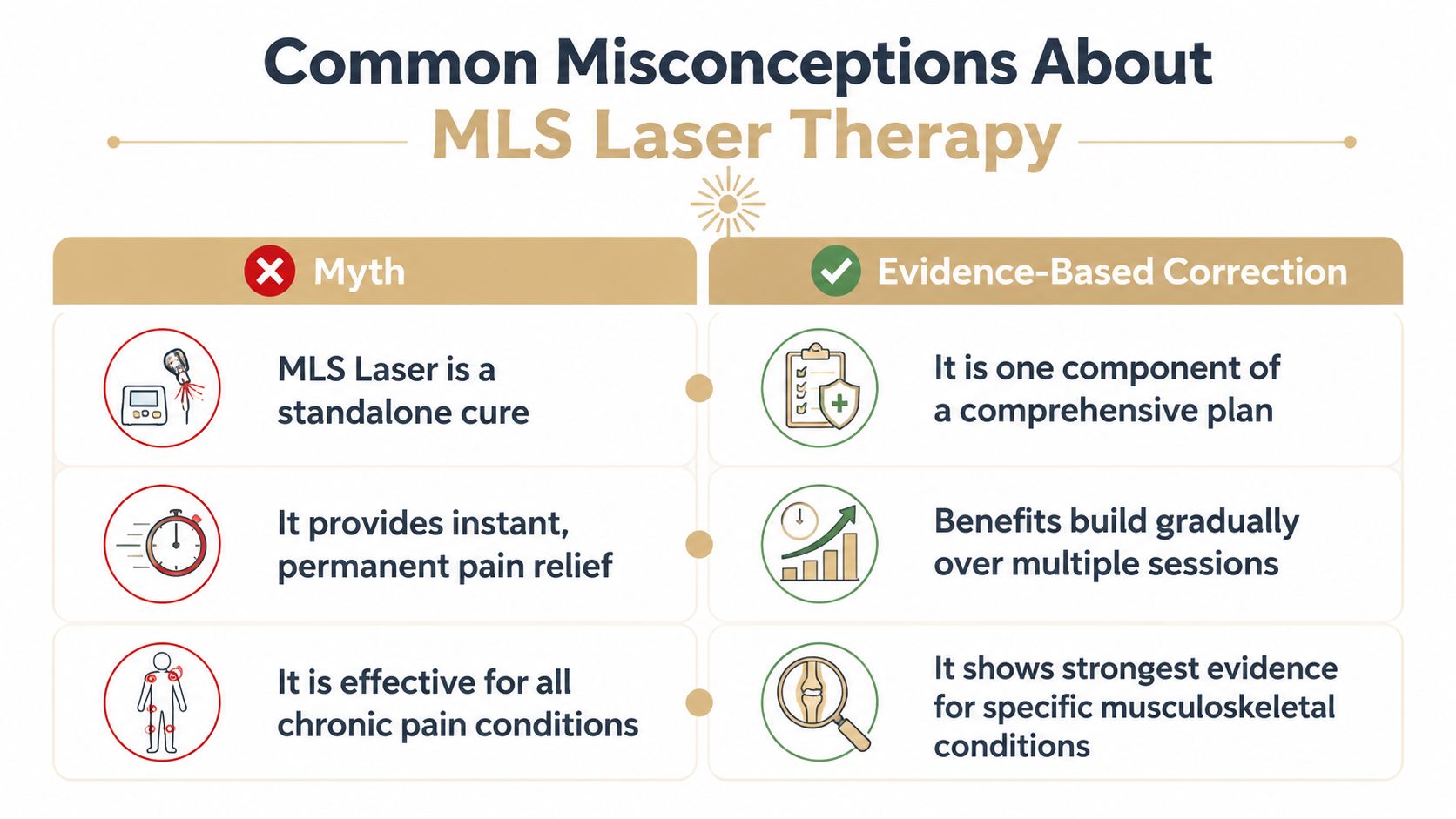
MLS is not a cure by itself. Its most defensible role is pain modulation, which may create a short window for movement and exercise. Durable functional recovery still depends on an accurate diagnosis, load management, and active rehabilitation. It is more likely to help when pain involves irritated soft tissue or inflammation than when advanced structural damage or another medical pathway drives the symptoms.
More sessions do not automatically produce better results. Laser dosing follows a biphasic response. Too little may have no noticeable effect, while too much may reduce the benefit. Patients should also distinguish immediate symptom relief from tissue recovery. Feeling better after treatment can support activity, but it does not prove that the underlying tissue has healed.
MLS is a non-destructive photobiomodulation treatment, not a cutting laser or a procedure intended to burn tissue. Its purpose is to support recovery without replacing the work that restores strength, control, and tolerance. The best candidates are generally willing to continue rehabilitation after symptoms ease.
Aspen Falls Wellness can help determine whether your pain pattern fits MLS and how it may combine with chiropractic care, exercise, and other conservative options. Visit Aspen Falls Wellness to discuss a plan based on your diagnosis, goals, and timeline.

Stay updated with the latest chiropractic news and exclusive offers.