Low back pain chiropractic adjustment explained: what the research shows, expected relief, risks, red flags, and care options in Salt Lake City and Sandy.
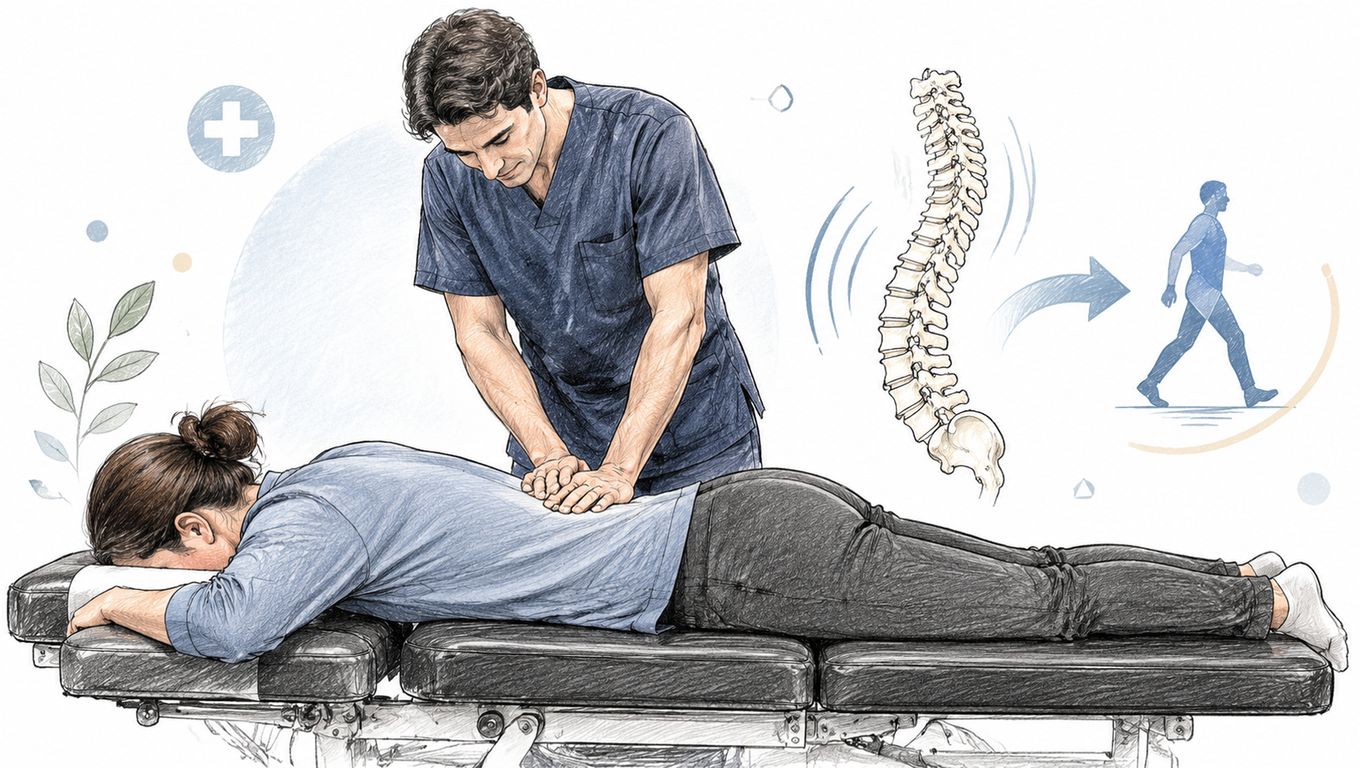
If you left your last adjustment still sore, does that mean it failed? That question exposes a common gap. Say you booked a low back pain chiropractic adjustment expecting one visit to erase the pain completely. When some soreness lingers afterward, it can feel like the treatment didn't work, even if it helped. Real results usually sit between two extremes: total relief and total failure. An adjustment can reduce pain and improve movement for some people, especially in the short term, yet the average benefit is modest and it doesn't replace screening, exercise, or reassessment.
Understanding that middle ground helps you make better decisions. You'll know what improvement might feel like, when a symptom should stop routine care and prompt medical review, and how to judge progress by what you can do, not only by a pain score. Duration matters too. Pain that started last week needs a different plan from pain that's limited your walking, sitting, and sleep for months.
For nonspecific low back pain, a chiropractic adjustment is one conservative care option. Research suggests it can produce a modest average improvement, particularly in the short term. That average can matter in daily life, even if it does not mean pain disappears.
A 2017 systematic review and meta-analysis of spinal manipulative therapy for acute low back pain included 15 trials with 1,699 participants reporting pain outcomes and 12 trials with 1,381 participants reporting function outcomes. At follow-up periods of up to six weeks, the pooled pain improvement was 9.95 points on a 100-mm scale, with a 95% confidence interval of 4.3 to 15.6 points. The pooled effect size for function was -0.39, with a 95% confidence interval of -0.71 to -0.07.
A 9.95-point average change on a 100-point pain scale is roughly like a score moving from 60 to 50. That may make turning in bed, sitting through a meal, or walking with less guarding easier. It does not predict what any one person will experience, and it does not mean pain will be gone.
For chronic low back pain, a 2018 systematic review and meta-analysis of manipulation and mobilization found a standardized mean difference of -0.28 for pain across nine trials with 1,176 participants. Seven trials with 923 participants reported a disability difference of -0.33. These average effects are small to moderate, so changes in everyday function matter alongside pain scores.
| Population | Outcome | Pooled result |
|---|---|---|
| Acute, up to 6 weeks | Pain (0-100 mm scale) | 9.95-point improvement, 95% CI 4.3 to 15.6. 2017 review |
| Acute, up to 6 weeks | Function | Effect size -0.39, 95% CI -0.71 to -0.07. 2017 review |
| Chronic | Pain | Standardized mean difference -0.28, 95% CI -0.47 to -0.09, p = .004. 2018 review |
| Chronic | Disability | Standardized mean difference -0.33, 95% CI -0.63 to -0.03, p = .03. 2018 review |
The reviews describe the overall evidence as moderate quality. An average result is a guide for setting expectations, not a forecast for an individual. Track whether specific tasks become easier over time, such as walking, sitting, or getting dressed.
Duration shapes the plan before technique does. Acute pain has lasted under about six weeks, subacute pain runs roughly six to twelve weeks, and chronic pain persists beyond about twelve weeks. Those time frames aren't labels for severity. A recent strain can hurt intensely, while long standing stiffness may be milder but more disabling because it changes how you move every day.
| Time frame | Typical plan | What to measure |
|---|---|---|
| Acute, under about 6 weeks | Adjustment with activity guidance and early reassessment | Short-term pain relief within weeks |
| Subacute, about 6 to 12 weeks | Adjustment combined with exercise and activity guidance | Pain and function at reassessment |
| Chronic, beyond about 12 weeks | Exercise as the core, adjustment as one option | Disability, walking, sitting, sleep and work |
Say a warehouse worker strains the lower back lifting a pallet last week. There's no leg weakness, fever, or major trauma, and bending is painful but improving slightly. Adjustment paired with activity guidance and early reassessment can aim for short term relief within weeks. Imaging isn't routinely needed unless warning signs appear or symptoms persist past about six weeks.
Compare that with an office worker who's had stiffness for eight months. Sitting tolerance is poor, sleep is broken, and fear of bending has reduced activity. Here you should expect smaller, slower gains and judge them mainly by disability. Exercise becomes central because lasting capacity, not a single manual treatment, determines whether work and walking improve.
Car accident patients need a slightly different emphasis from the first visit. Soft tissue injury should be examined and documented, then monitored over time, because stiffness and radiating symptoms can evolve after the initial impact.
Before you book, answer three questions in writing.
Those answers give any clinician a starting point. They also prevent a vague plan based only on where it hurts today.
Avoiding routine imaging for nonspecific low back pain can be evidence based. Delaying medical evaluation when warning signs are present isn't safe. The StatPearls guidance on low back pain evaluation supports deferring routine imaging without red flags because early imaging does not improve outcomes and may lead to incidental findings and unnecessary invasive care, while imaging becomes more appropriate when symptoms persist despite roughly six weeks of conservative management or when red flags suggest serious pathology.
An initial examination separates likely mechanical pain from possible fracture, infection, malignancy, or serious nerve compression. The clinician asks about trauma, cancer history, fever, weight loss, steroid use, and bladder or bowel changes. Strength, reflexes, sensation, and nerve tension signs then help decide whether adjustment is appropriate today or medical review comes first. If you're sorting post accident symptoms, a plain language guide to recognizing back injury red flags can help you describe what changed and when.
| Red flag | Why it matters | Action |
|---|---|---|
| Cancer history or unexplained weight loss | May indicate serious underlying pathology | Medical evaluation before any adjustment |
| Fever or infection risk | May indicate infection near the spine | Urgent medical evaluation |
| Significant trauma | May indicate fracture or serious injury | Emergency evaluation |
| Osteoporosis or prolonged steroid use | Raises fracture risk | Medical review and imaging decision before adjustment |
| Progressive neurologic weakness | Suggests worsening nerve compression | Prompt specialist referral |
| Saddle anesthesia or bowel/bladder dysfunction | Possible cauda equina compression | Emergency care the same day |
| No improvement after about six weeks | Conservative care may be insufficient | Imaging and reassessment |
| Pain radiating with nerve signs | May involve nerve root compression | Neurological exam before continuing adjustment |
A normal scan doesn't prove nothing hurts, and an abnormal scan doesn't automatically prove the finding causes your pain. Disc bulges and age related changes can appear in people without symptoms, while severe pain can occur without a dramatic image. Treatment should follow the combined clinical picture, including history, examination, function, and response to care.
Older adults, post accident patients, and people with radiating pain need extra screening because fracture, nerve involvement, and other conditions become more important to exclude. Our overview of symptoms that should change the order of care explains that triage step in more detail.
Ask one direct question at the first visit. Which symptoms would make adjustment inappropriate today, and who coordinates the next step if they appear?
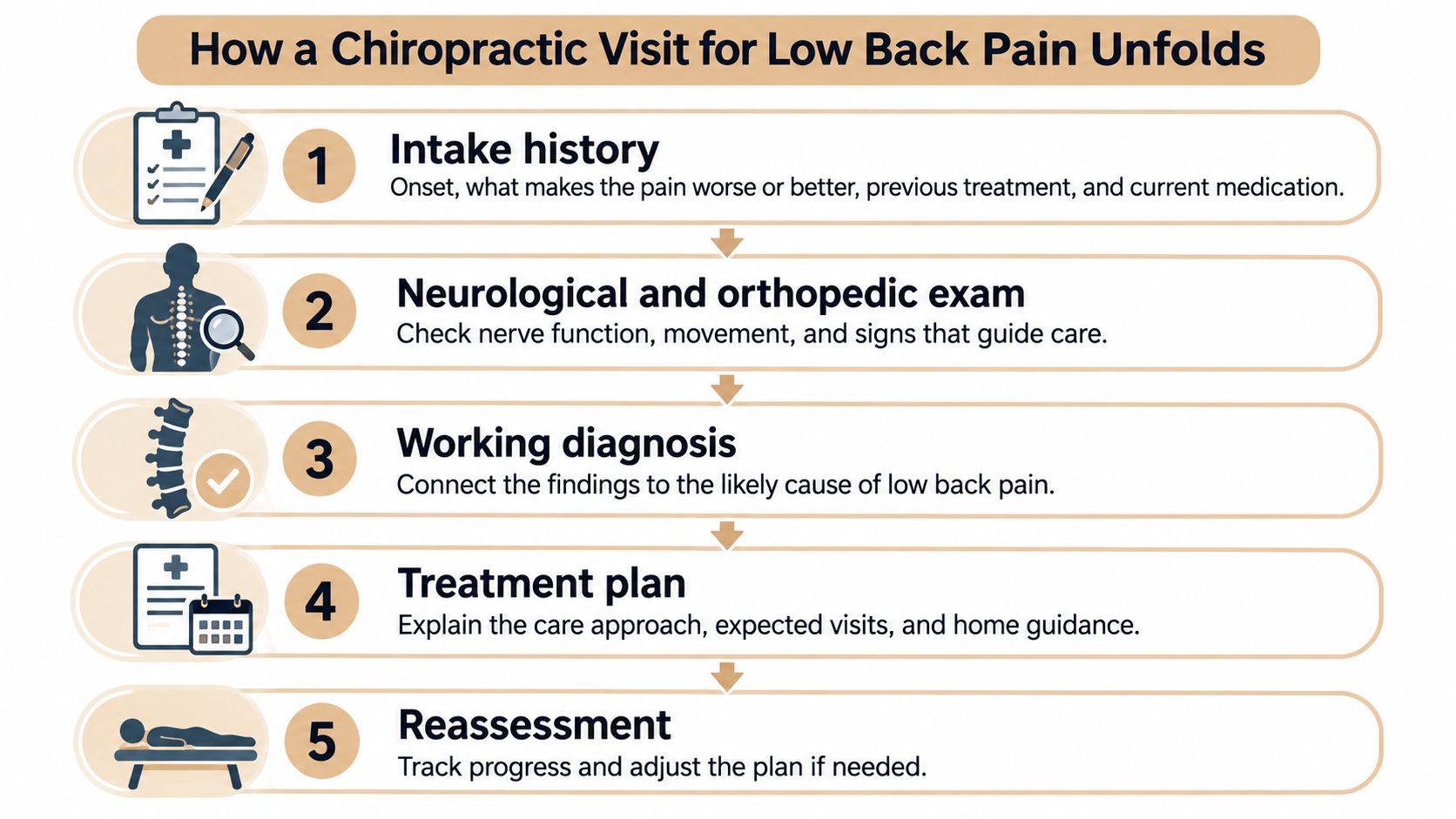
The first visit is an evaluation that comes before any treatment. Each step answers a specific question, and the adjustment only makes sense after those answers point to a condition that can be managed conservatively. Treating first and asking questions later works like prescribing before diagnosing: the technique may be sound, yet aimed at the wrong problem.
This order does real work for you. A diagnosis with a written plan and reassessment points is what turns a modest average benefit into something you can measure in your own case, and it gives you a clear moment to change course if the response is flat.
Gather prior imaging reports if you have them, list medications and relevant conditions, and write down the activities that hurt most. Note whether pain travels below the knee, whether numbness or weakness is present, and what you have already tried. If you want a visit by visit preview, read what happens at a first chiropractic appointment before you schedule.
Bring specific dates, since when symptoms started, changed, or spread often matters as much as where they hurt.
A full plan, including exercise and reassessment, is what moves function. Adjustment can open a window by restoring motion, and the rest of the plan teaches your body to use that motion while lifting, sitting, walking, and sleeping. If care stays passive while the same daily limits remain, the plan needs a new target rather than more of the same visits.
The 2025 psychological practice guideline summary on spinal manipulation found some evidence for spinal manipulation over usual care, while recommending exercise for short-term chronic low-back-pain management and psychological therapy for broader short, intermediate, and long term outcomes. Read that realistically: an adjustment may help enough to make movement easier, and the average benefit is usually modest, so progress should show up in ordinary tasks.
Temporary local ache, stiffness, or fatigue can follow treatment as irritated joints and guarding muscles respond to new movement, similar to soreness after unfamiliar exercise. Keep the response boring and consistent: gentle walking, normal hydration, sleep, and the role of whole foods for muscle recovery when you're rebuilding activity. Escalating symptoms matter more than the odds; they need prompt review.
Call promptly for new or worsening leg weakness, saddle numbness, bladder or bowel changes, fever, or severe pain that's steadily escalating. Those symptoms change the plan immediately, whether they began after an adjustment or on their own.
Chiropractic treatment often requires multiple visits, and Aspen Falls Wellness keeps you informed about the recommended extent and duration of treatment. That only helps if each phase has a target. Track practical measures you can verify at home or work.
Stopping rule: If function doesn't improve by the agreed reassessment point, change the plan rather than continuing the same passive visits.
Shared decision making means you know why adjustment is being used, what benefit is realistic, when exercise should take the lead, and what happens if relief is short lived. Progress is evaluated with each adjustment, and treatment is adapted to stay on track toward optimal spine health.
Adjustment can help restore joint motion. Exercise builds the capacity to use that motion under real loads, such as lifting a child, climbing stairs, or sitting through a workday. That's why exercise shouldn't be treated as an optional handout after the main treatment.
The Cochrane review of exercise treatment for chronic low back pain covered 249 studies and 24,486 participants and found exercise therapy improved pain by an average of 15 points and disability by 7 points on 0-to-100 scales three months after treatment began, compared with no treatment, usual care, or placebo. The pain difference was reported as clinically important, while the functional improvement was smaller and did not meet the review's threshold for a minimal clinically important difference. In plain terms, exercise helps, but it also requires patience and progression.
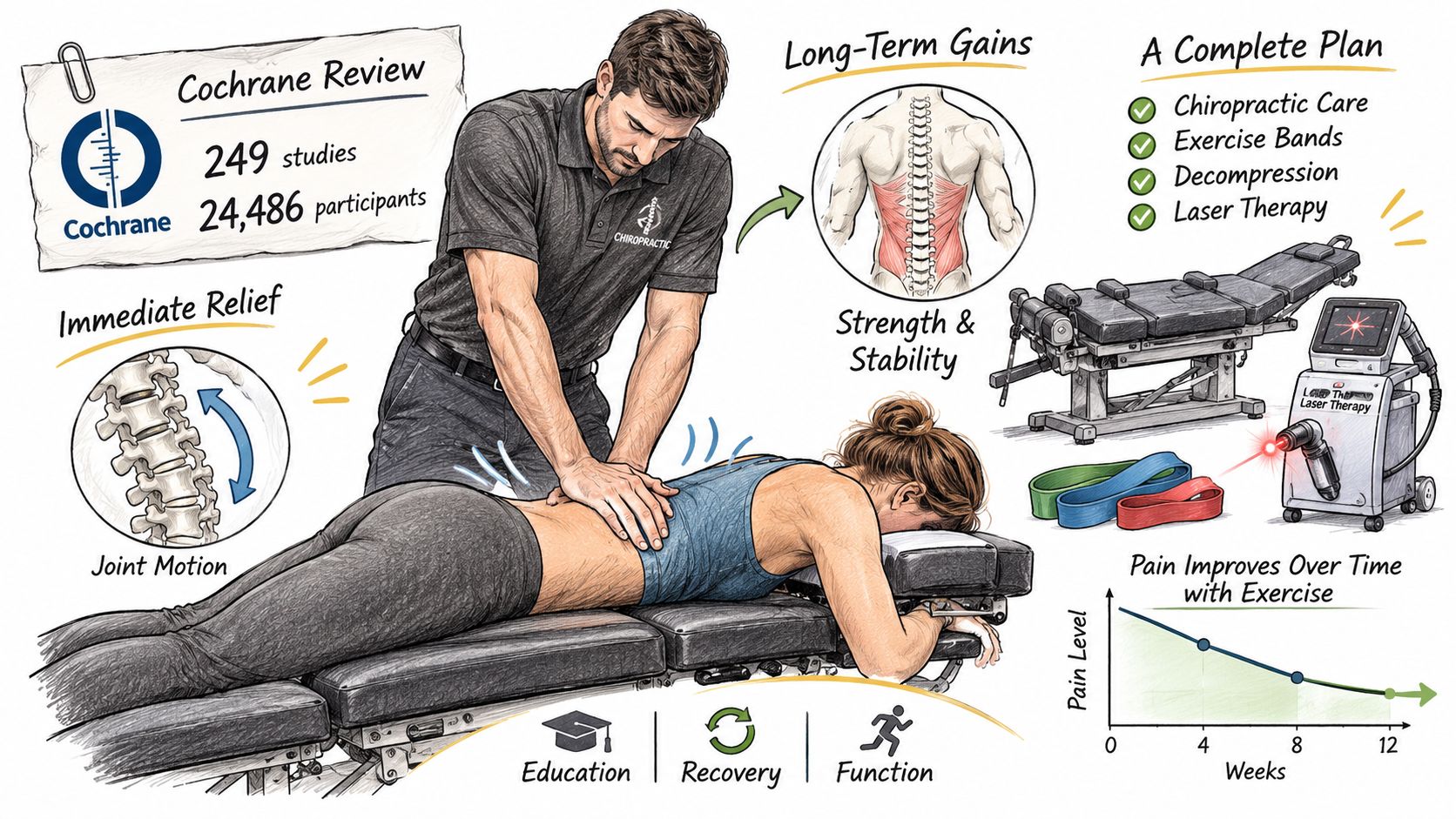
Our treatment approach includes custom chiropractic adjustments, decompression, take home mobility exercises, laser therapy, massage, and acupuncture. Each option has a different job, and combining everything at once makes it hard to know what's helping.
| Option | Role in the plan |
|---|---|
| Rehabilitation exercise | Core of long-term care |
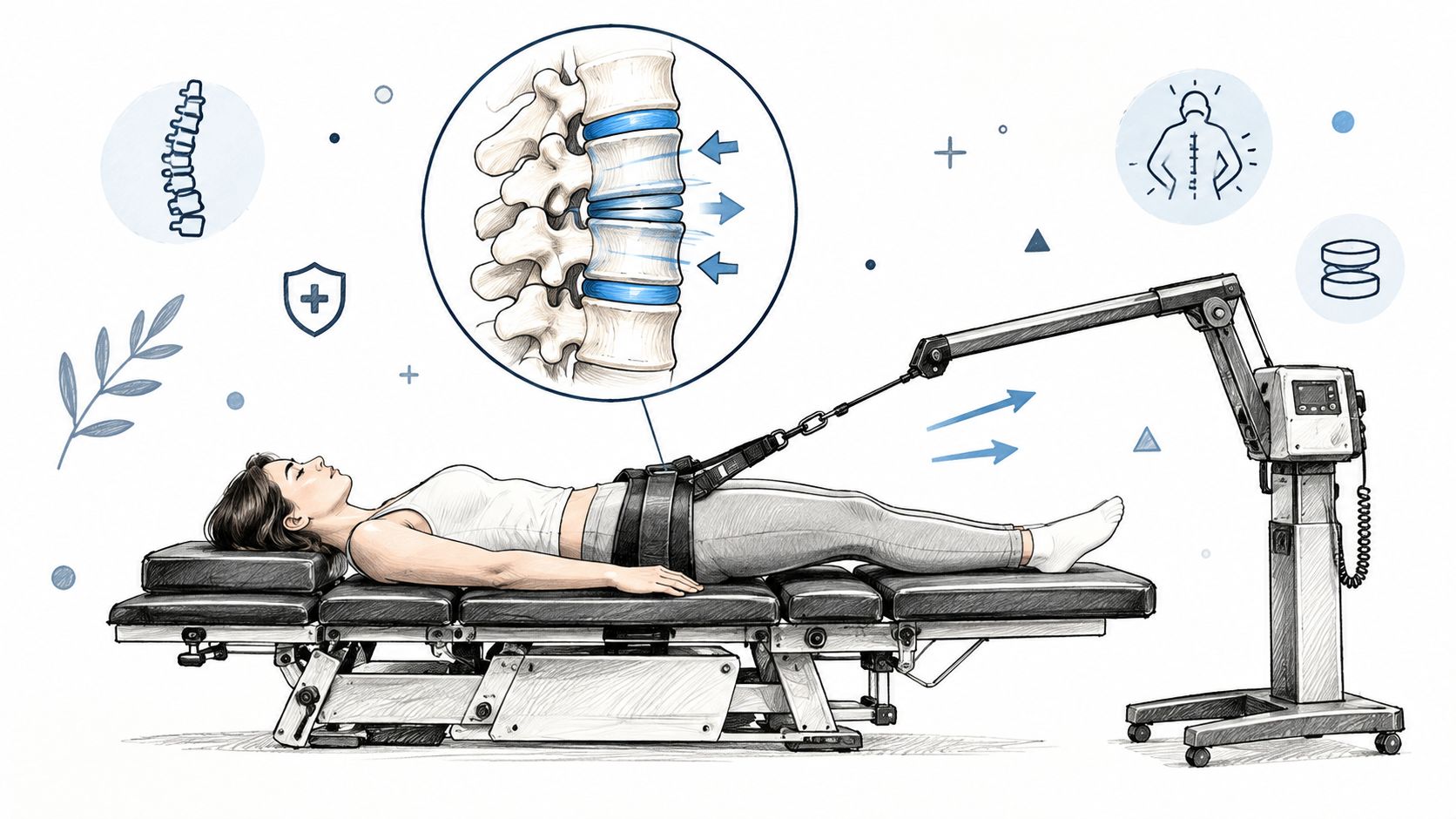
| Spinal decompression (DRX9000) | Non-surgical option to discuss for disc-related pain |
| MLS Laser Therapy | Supports tissue recovery and inflammation control |
| Massage therapy | Treats muscle and soft-tissue dysfunction |
| Acupuncture | Pain modulation alongside or apart from adjustment |
Start with the most useful, least invasive options for your diagnosis. Add or change one variable at a time, then reassess pain and function. For example, a person with chronic stiffness might pair adjustment with a personal exercise plan and mobility therapy first. Someone with disc related leg pain might discuss non surgical spinal decompression, while massage may be more relevant when muscle guarding dominates.
Be clear about evidence limits. The research summarized here supports exercise strongly and adjustment modestly, but it doesn't establish decompression or MLS laser therapy as proven cures for low back pain. Present them as options to discuss, with goals and review dates, not guarantees.
Home exercise needs the same specificity as in clinic care. These lower back stretches and movement basics can help you understand technique, but your clinician should adapt dosage to your symptoms.
Before adding any device based therapy, ask what condition it's meant to address, what improvement would count as success, how many sessions are proposed before reassessment, what it costs, and what alternative you'd try instead. If those answers are vague, pause.
The right clinic won't promise that adjustment fixes every cause of back pain. It'll examine first, explain uncertainty, set measurable goals, and refer when your presentation falls outside conservative care. That approach fits current guideline direction. The World Health Organization 2023 guideline for chronic primary low back pain recommends education and self care, structured exercise programs, and selected physical therapies including spinal manipulative therapy, which it characterizes as a conditional recommendation supported by very-low-certainty evidence. Care should therefore be individualized and periodically reassessed.
Use the same checklist with any Salt Lake City or Sandy clinic.
At Aspen Falls Wellness, chiropractors tailor each adjustment to the specific health needs of each patient. Chiropractors, massage therapists, mobility specialists, acupuncturists, pain management specialists, and nutritional coaches collaboratively design integrative treatment plans. Patients typically begin to experience back pain relief within weeks, but your plan should still state the reassessment point and criteria for change.
If red flags are present, seek medical care now rather than booking a routine adjustment. Emergency symptoms, especially saddle numbness, bladder or bowel dysfunction, significant trauma, fever, or progressive weakness, shouldn't wait for a convenient appointment.
If mechanical pain has lasted several weeks, hasn't improved, keeps returning, or limits walking, sitting, work, or sleep, book a full chiropractic evaluation. Bring symptom start dates, medications, prior imaging reports, and a short record of activities that worsen or ease pain. Ask the clinic to explain proposed visit frequency, reassessment dates, home exercise expectations, and criteria for changing or stopping the plan. Verify insurance coverage directly with the clinic before treatment begins.
A trustworthy plan has an exit and referral path, not only a schedule of future visits.
That standard protects you twice. It gives conservative care a fair, measurable trial, and it ensures serious or non responding problems move to the right clinician without unnecessary delay.
If low back pain is limiting your walking, sitting, work, or sleep, Aspen Falls Wellness offers individualized chiropractic evaluations and conservative care plans that may combine adjustment with exercise, decompression, laser therapy, massage, or acupuncture when appropriate. We'll explain your findings, expected visit frequency, and reassessment criteria before care begins, and we'll refer you for medical review when symptoms require it. Visit Aspen Falls Wellness to book your evaluation in Salt Lake City or Sandy.

Stay updated with the latest chiropractic news and exclusive offers.