Salt Lake Sports Chiropractic explained for Salt Lake City and Sandy athletes: matching injuries to care, imaging rules, and return-to-play criteria.
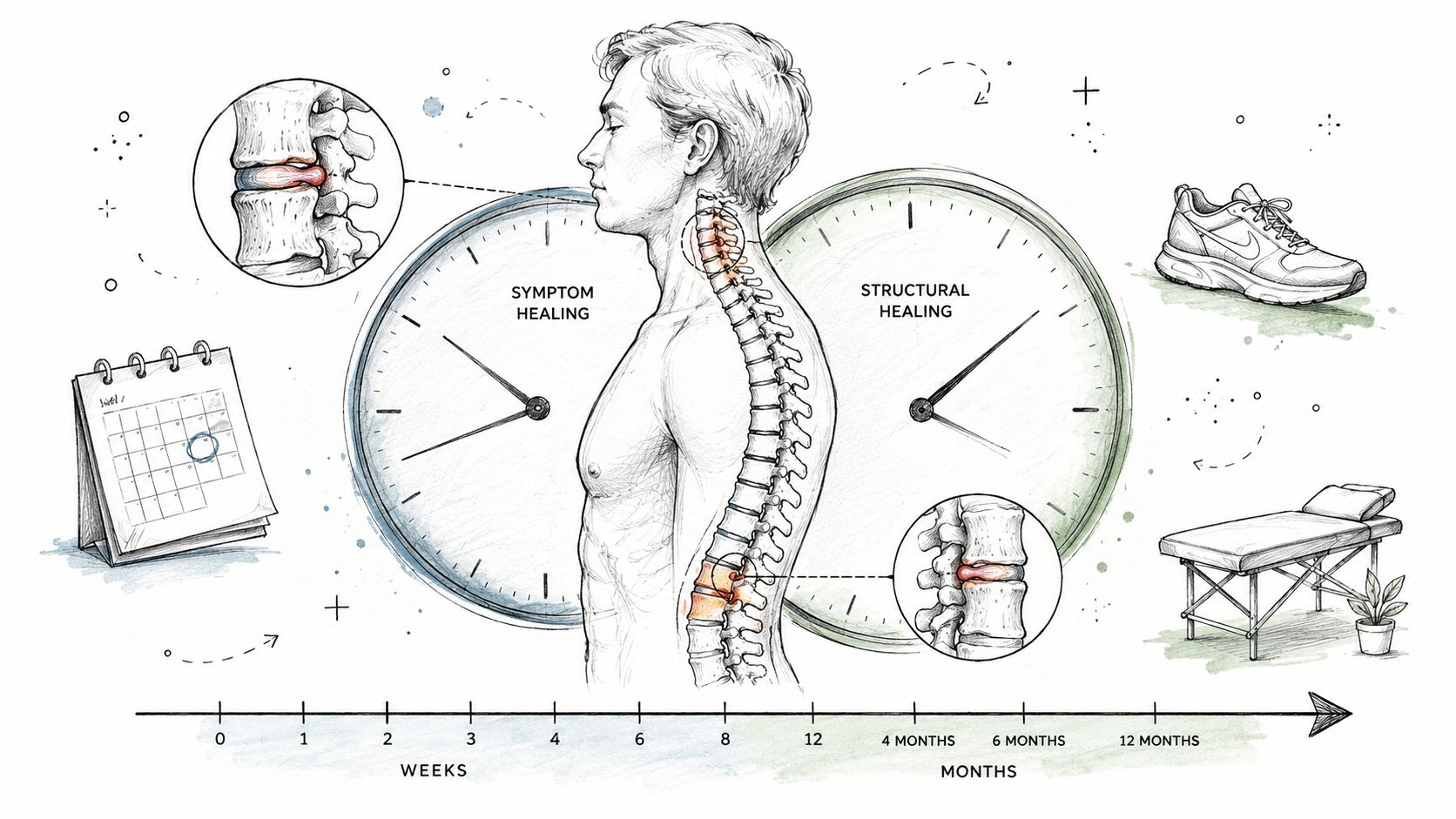
Rest until it stops hurting is the most common advice athletes get about a cranky back, a tight hamstring or an aching shoulder. It's also the advice most likely to cost you a season. Symptoms often settle on their own, and when they do, athletes read that as readiness, go back to full training, and land in the same place three weeks later.
The second popular script, a fixed package of visits that ends on a calendar date, has the same flaw. Neither a pain score nor a visit count tells you whether the tissue can handle the forces your sport demands. What tells you that is a set of measured criteria: strength compared with the other side, range of motion under load, tolerance of sport-specific drills, and how your symptoms behave the next morning.
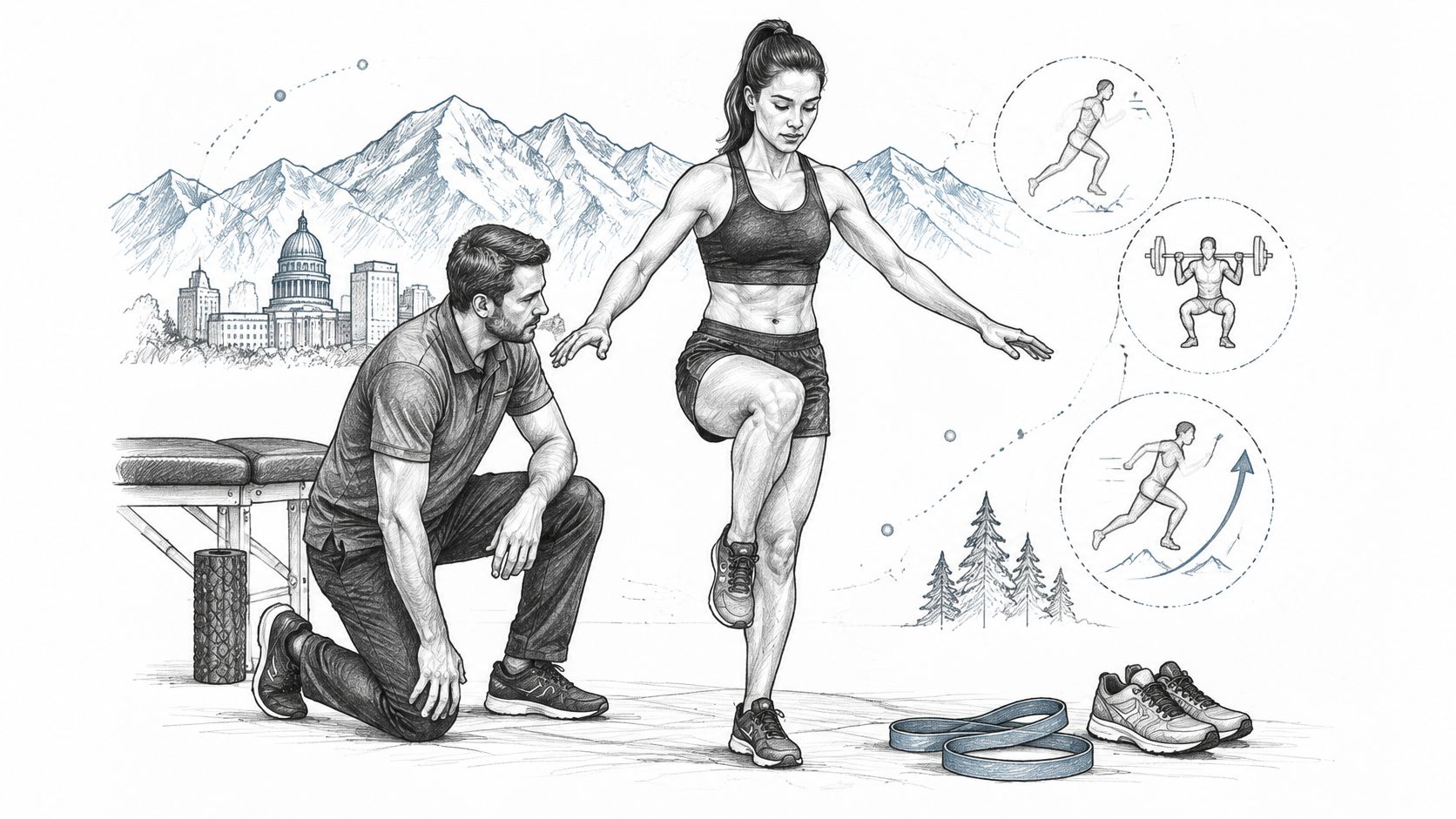
Sports chiropractic in Salt Lake City and Sandy works when it's built that way. Hands-on care to calm symptoms, progressive exercise to rebuild capacity, and re-testing at set intervals instead of renewing a plan out of habit.
Sports chiropractic pairs hands-on treatment with rehabilitation exercise, and the right mix depends on three things: the tissue involved, the demands of your sport, and how long the problem has been running. A golfer with a stiff mid-back and a runner with a grumbling Achilles need different tools, different timelines and different measures of success. Use the table as the opening for a conversation at your first visit, not as a diagnosis you make in your kitchen.
| Athlete need | Typical care components | How progress is measured |
|---|---|---|
| Low back pain after lifting or heavy training | Adjustments, mobility work, progressive exercise | Pain-related disability and training load tolerance |
| Sciatica or radiating leg pain | Neurological screen, decompression, targeted adjustments, home exercise | Leg symptoms and neurological findings; referral if not improving |
| Muscle strain or overuse injury | Rehab exercise, mobility therapy, laser or massage | Range of motion and sport-specific strength |
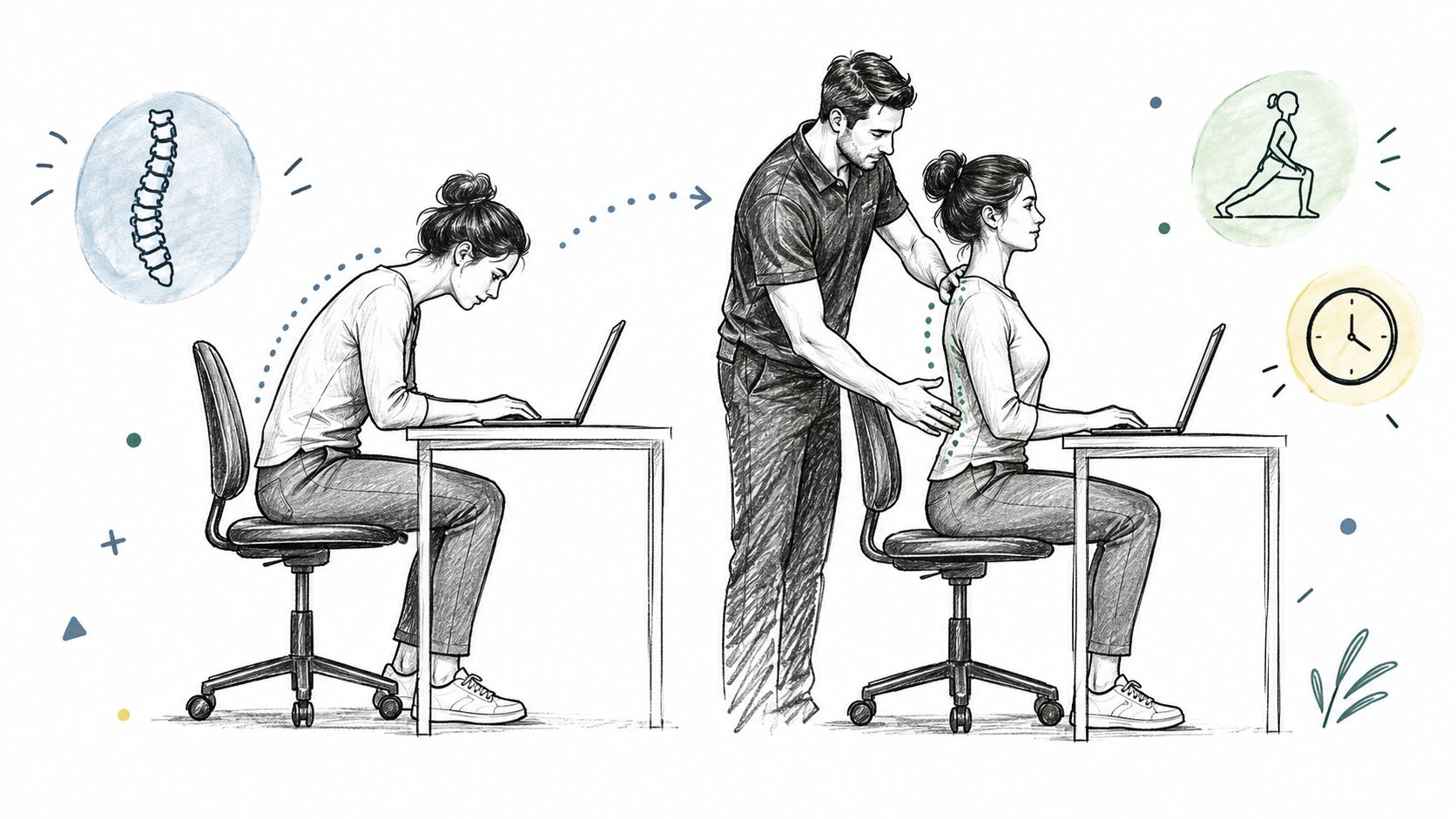
| Neck pain or headaches from posture | Cervical care, soft-tissue work, posture training | Headache frequency and neck mobility |
| Golf-related back or shoulder pain | Golf movement screening, mobility therapy, rehab exercise | Swing mechanics and tolerance to practice volume |
| Whiplash after a car accident | Structured evaluation, documentation, conservative care | Pain, stiffness and documented progress over time |
Low back pain after heavy lifts or a long training block usually needs three things at once: an adjustment to restore movement, mobility work for the hips and trunk, and loading the back again on purpose. Progress is judged by pain-related disability and by how much training volume the back tolerates, not by how you feel sitting still.
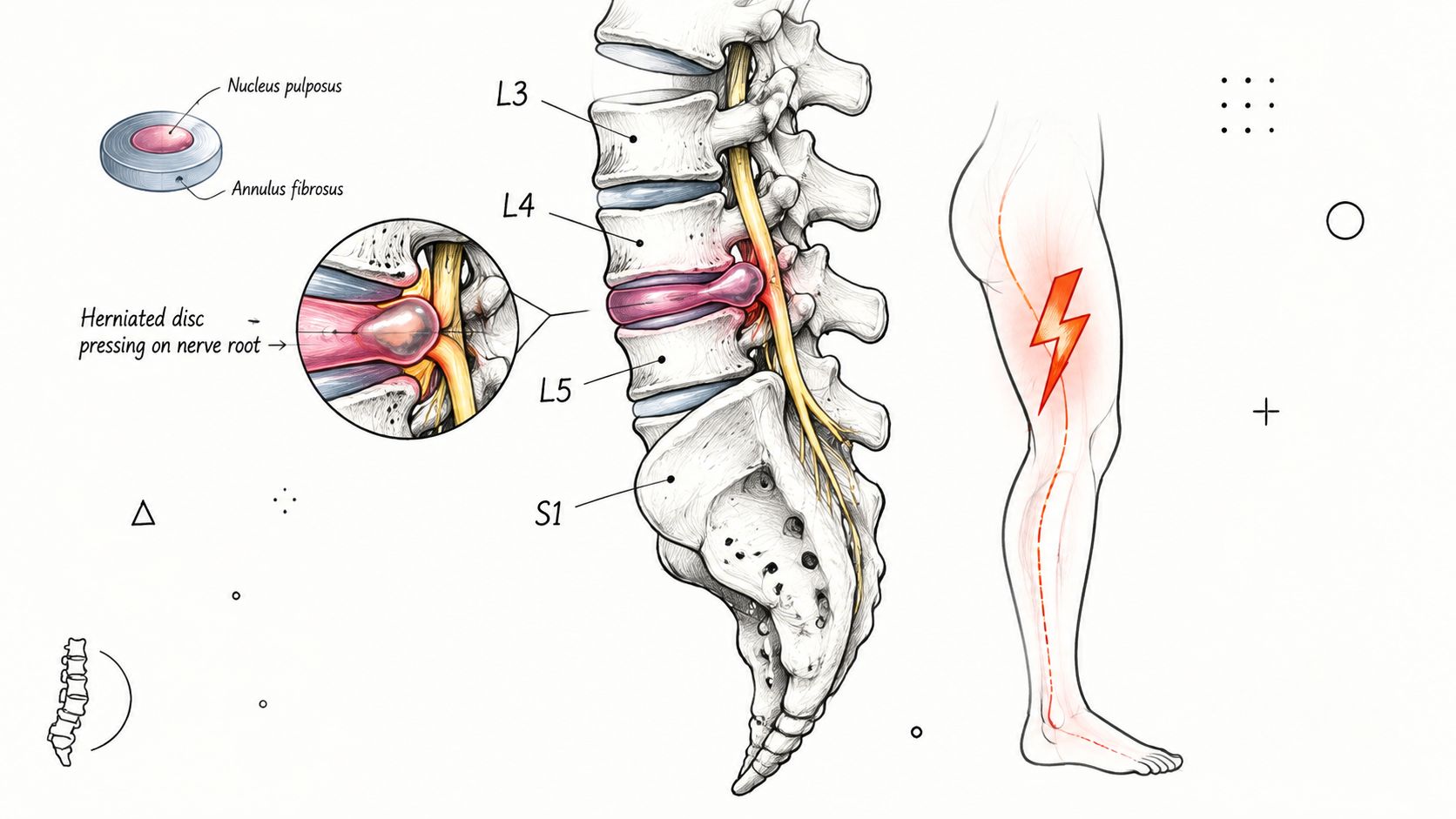
Radiating leg pain is different. It starts with a neurological screen, because reflexes, sensation and strength decide whether conservative care is appropriate. If those hold up, decompression, targeted adjustments and a home program can run in parallel, with a clear plan to refer if the leg symptoms don't move in the right direction.
Strains and overuse injuries are the norm in amateur sport. A 2025 study of 222 amateur football players in Greece found that 70.7% reported at least one injury, with 220 injuries recorded (Journal of Sports Sciences). Golf is not the low-risk alternative many assume either: in 2024, a study of 140 golf athletes in Portugal found that 50% reported sports injuries, 133 in total (Cureus, via PubMed Central). That's the reason a swing screen comes before treatment for a golfer, since the mechanics tell you which tissue is taking the load.
Neck pain and postural headaches respond to cervical care, soft-tissue work and posture retraining, tracked by headache frequency and how freely the neck rotates. Whiplash after a collision follows a different path: structured evaluation, careful documentation and conservative care, with progress measured over weeks rather than days. For a plain-language overview of how different sports injuries are staged, Thermo Recovery Wear's sports injury guide is a useful read before your first appointment. Pick the row closest to your problem and note the measure in the right-hand column, because that measure is what you'll track weekly.
The first visit is mostly information gathering, and the treatment that follows depends entirely on what that information shows. Nothing gets adjusted before the examination explains why.
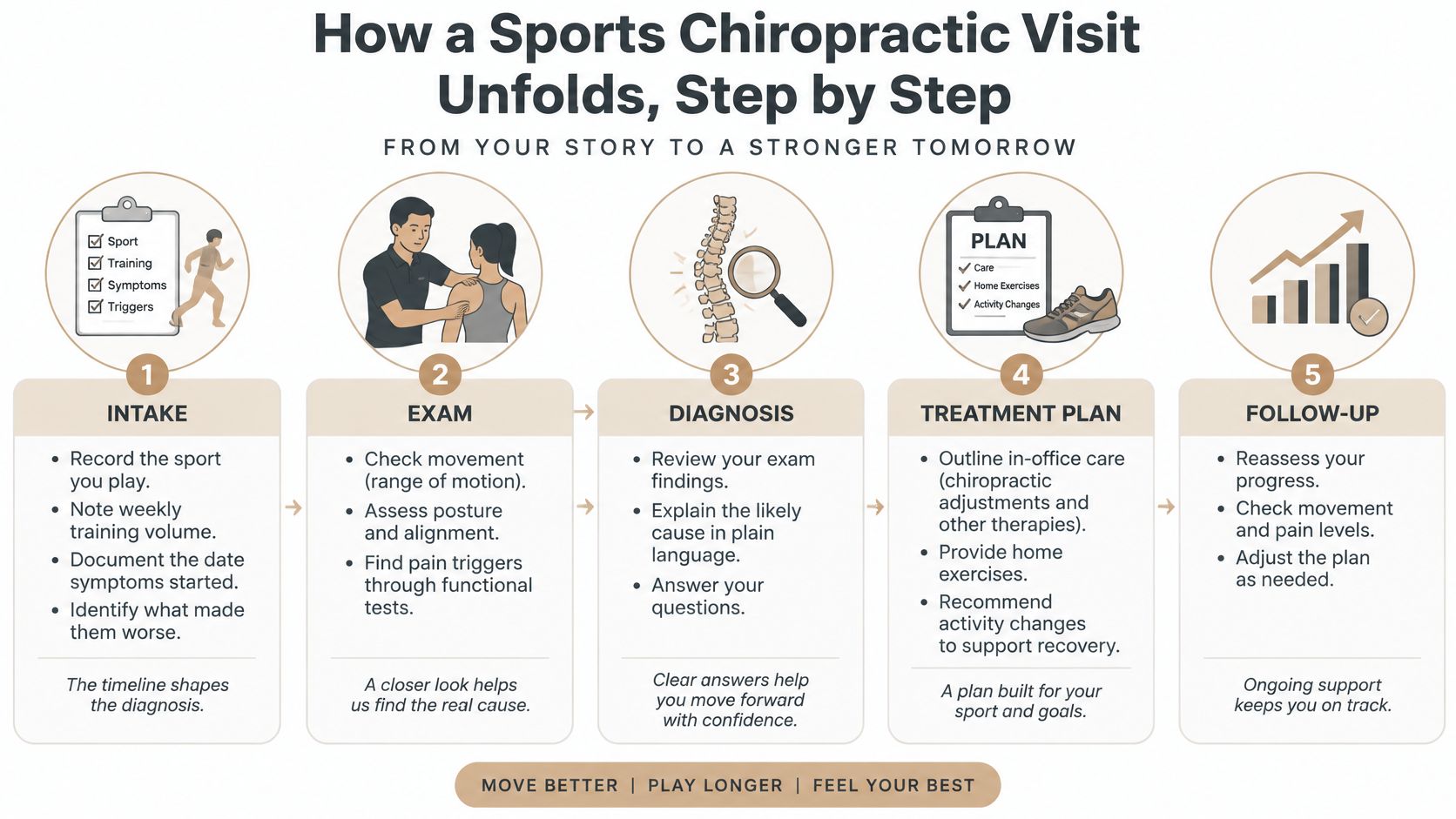
If you want to know what to bring and how the first appointment is structured, our walkthrough of what to expect at your first chiropractic visit covers the details. Plans here are designed collaboratively by chiropractors, massage therapists, acupuncturists, pain management specialists and nutritional coaches, which matters when the answer isn't a single modality.
Pain is the easiest thing to measure and the worst thing to base a return decision on. A hamstring that feels fine at rest can fail the first time you sprint at full speed, and a back that hurts on one bad morning can still handle a full week of training.
Expert consensus treats return to sport as graded risk management, not a calendar date or a single pain threshold. The consensus statement on return to sport published in JOSPT recommends progressively increasing exposure to the forces, speeds, ranges of motion and decision-making demands of the sport, while assessing sport-specific capacity and symptom response. Abrupt jumps in training demand contribute to reinjury, so the path runs from controlled drills toward unrestricted practice at competition volume.

| Criterion | What to test | Advance when |
|---|---|---|
| Pain and irritability | Symptoms during and 24 hours after graded drills | Symptoms settle without a flare-up |
| Active range of motion | Sport-specific joint movement compared with the uninjured side | Movement meets the sport's demands without compensation |
| Strength and power | Single-leg or sport-specific strength and power tests | Strength is symmetrical with the uninjured side |
| Kinetic chain function | Hip, trunk and shoulder control during movement | Movement stays stable under load |
| Endurance and workload | Running, cutting or swing volume across sessions | Practice volume matches competition demands |
| Sport-specific reactive test | Drills that mimic play or competition | Completed without symptoms or compensation |
| Psychological readiness | Confidence and fear of reinjury, reported by the athlete | Athlete and coach agree to advance |
Do a graded session slightly above what you handled last week, then note your symptoms at the same time the next day. Symptoms that settle within a day suggest the load was right. A flare that lasts two days, or wakes you at night, means the progression was too fast.
The rule I use: advance the load when the 24-hour response is clean, hold it when symptoms linger, and drop it back when a flare lasts more than a day.
No single test predicts reinjury on its own. A 2025 international consensus of elite-sport clinicians concluded that no single test reliably predicts return to sport or reinjury risk, and recommended shared decisions among the athlete, clinician and coach using clinical, objective and sport-specific measures (London International Consensus and Delphi study). That's why your coach belongs in the conversation.
In practice this looks like a runner moving from straight-line running to cutting drills, a golfer progressing from half swings to full practice volume, and a lifter climbing from bodyweight hinges back to heavy compound lifts. Escalate for help rather than pushing through if weakness persists, pain radiates into a leg, or symptoms return every time load increases.
Start this week with three habits: record your baseline tests, log symptoms the next morning, and advance only when capacity improves. Our athlete injury recovery guide walks through the same progression from the patient side.
A scan feels like certainty. It rarely is. Imaging has one job, which is to answer a question the examination has already raised, and it doesn't identify the pain generator on its own.
A 2025 emergency-medicine review states that imaging is not routinely indicated for nonspecific acute low back pain without red flags, because most episodes recover quickly, and that MRI is generally considered after about six weeks of failed conservative management for persistent symptoms (ACEP sports medicine review). The question worth asking before any scan is simple: what will the result change?
| Situation | Imaging typically | Next step |
|---|---|---|
| Acute low back pain without red flags | Not routinely indicated | Conservative care and reassessment |
| Persistent pain without red flags | MRI considered after about six weeks of conservative care | Image only if the result would change treatment |
| Radiating leg symptoms that do not improve | Imaging that matches examination findings | Correlate the scan with the exam before decompression or referral |
| Bowel or bladder dysfunction, saddle anesthesia or progressive weakness | Urgent imaging | Urgent medical care, not a conservative plan |
| Fever, cancer history, unexplained weight loss or infection risk | Urgent imaging | Same-day medical review |
Normal imaging doesn't necessarily explain pain, and an abnormal scan doesn't automatically identify the source or mean surgery. Many athletes train at a high level with disc findings that never caused their symptoms. That's why examination and neurological screening come first, and why suspected fracture after a fall points toward X-ray while suspected disc involvement with persistent nerve symptoms points toward MRI.
If findings fall outside what conservative care can address, the next step is a referral to the right specialist, sent with the imaging report and the examination findings together so the receiving clinician isn't guessing. Bring prior imaging reports and the date your symptoms began to the first visit. Our comparison of MRI versus X-ray for back pain explains which one answers which question.
Decompression on the DRX 9000 is the treatment athletes ask about most, and it deserves a straight answer grounded in the research.
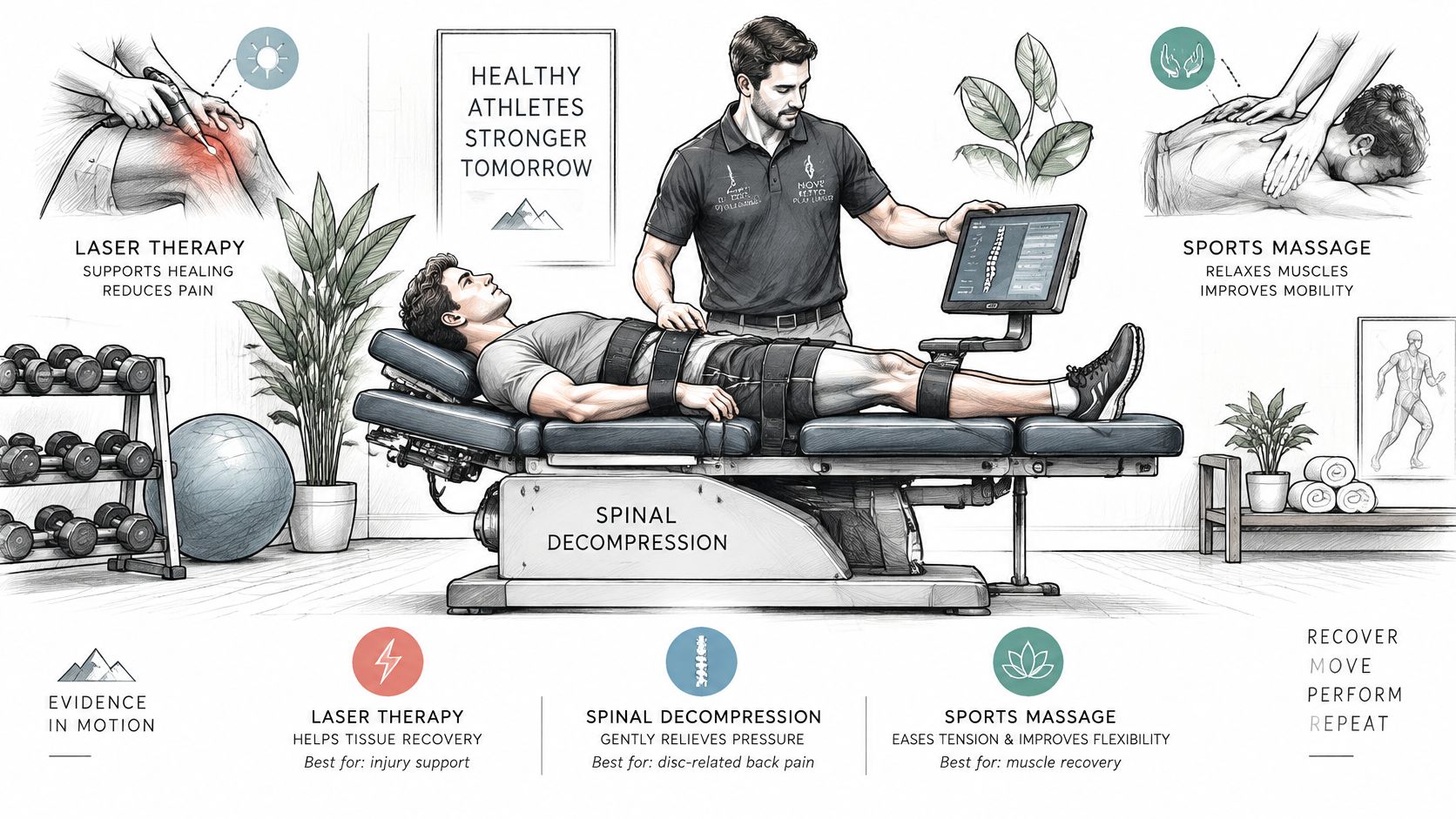
The strongest evidence on motorized spinal decompression for chronic discogenic low back pain is a systematic review covering 10 studies: seven randomized trials averaging 121 participants and ranging from 27 to 292, plus three uncontrolled studies that reported 77% to 86% pain reductions (review of motorized spinal decompression). Six of the seven randomized studies found no difference between motorized decompression and comparison treatment, and the seventh reported reduced pain without reduced disability. Without a control group, the uncontrolled studies can't separate the treatment from natural recovery. The reviewers judged effectiveness unproven, citing heterogeneous patient groups, difficulty blinding participants to traction, and inconsistent methods.
A 2023 systematic review and meta-analysis of lumbar traction for low back pain with radiculopathy pooled five of its 16 studies and found no statistically significant difference among traction modalities at short-term follow-up, including between mechanical traction and decompression (lumbar traction meta-analysis). Both high and low force traction showed clinically significant pain improvement in evidence rated very low to low quality. Parameters alone don't establish superiority. Patient selection and reassessment do.
NICE recommends against routine traction for low back pain or sciatica and against acupuncture for these conditions, allows spinal decompression only when sciatica hasn't improved with non-surgical treatment and imaging findings match the symptoms, and supports massage only inside a package that includes exercise (NICE guidance on low back pain and sciatica). That is how decompression earns its place in a plan: a monitored non-surgical option, judged by whether function improves and whether symptoms stay settled in the 24 hours after each session.
Laser therapy, massage, SoftWave therapy and muscle stimulation get the same test. Each can reduce pain and improve tolerance to movement, and none replaces loading tissue. In practice that means every modality is trialed against a measured target, and it gets dropped when it stops moving one. Four questions to ask before you agree to any course of care:
For background on how clinicians are discussing laser therapy and where its limits sit, the episode where Peak Performance interviews Dr. Brandon Crawford is worth a listen.
Exercise is what carries the outcome. Hands-on care can quiet symptoms and restore movement in a session or two, but the strength and control that keep an athlete training come from load applied over weeks.
The American College of Physicians recommends nonpharmacologic care first for chronic low back pain, listing exercise, multidisciplinary rehabilitation, acupuncture, motor-control exercise, low-level laser therapy, cognitive behavioral therapy and spinal manipulation among the options (ACP guideline in Annals of Internal Medicine). The World Health Organization goes a step further and recommends a coordinated, person-centered package for chronic primary low back pain that may include education, structured exercise, spinal manipulative therapy and massage rather than a single passive treatment (WHO guidelines on chronic low back pain).
The soccer player with recurring hamstring pain. Graded loading of the posterior chain, eccentric work twice a week, and mobility for the hip flexors that keep pulling the pelvis forward. Return to sprinting comes after strength symmetry, not after a pain-free jog.
The golfer with low back pain. A golf movement screening comes first, because the swing phases that load the spine differ between a sway and a reverse spine angle. Trunk control and hip rotation work follow, measured by tolerance to practice volume rather than swing speed alone.
The swimmer with shoulder pain. Range of motion through the thoracic spine and shoulder, then progressive strength work for the cuff and scapular muscles. Nutrition coaching earns a place here too, since recovery stalls when training load climbs and intake hasn't kept up.
A useful plan fits on one page: four to six exercises, sets and reps, weekly frequency, and a written rule for when to add load, such as adding a set once the current one is completed without symptom increase the next morning. That progression-first thinking is what our practice brought from Kansas City, where Dr. Hedstrom worked with professional athletes in spinal rehabilitation before moving to Utah.
Track four things across weeks: pain-related disability, sport-specific movement capacity, range of motion, and tolerance to higher training loads. Pain scores alone will mislead you, because they move for reasons that have nothing to do with tissue capacity.
Cost follows frequency more than anything else. A 2023 analysis of U.S. Medical Expenditure Panel Survey data reported mean annual chiropractic spending of $2,555 for adults who met the study's treatment-frequency threshold and $434 for those who did not (Medical Expenditure Panel Survey analysis). These are national figures; confirm local rates at booking before you commit to a schedule.
Visit count follows the goal set at the first visit, planned in phases tied to milestones. An acute phase ends when its criteria are met: the 24-hour response check passes after a loading session, range of motion is restored, or the sport-specific test is cleared. A longer-standing problem gets re-tests spaced further apart as capacity improves. Maintenance drops to periodic screens rather than regular treatment. Each phase carries its own visit estimate, reviewed against the measured milestones at every re-test.
Ask for a written plan that lists the re-test interval, the criteria that would end or change care, and the expected number of visits per phase. That lets you budget against milestones instead of an open-ended schedule, and it keeps the decision to continue a clinical one rather than a habit. Coverage varies by insurer and plan, so verify benefits before the first visit rather than after the third.
Bring three things and the first appointment gets twice as useful: a timeline of when symptoms started and what changed, the demands of your sport in weekly training hours, and any prior imaging reports along with your current medications. Add a training log and a list of the movements that hurt. A clinician who can see your actual training load can tell you which parts of it to keep, which to modify and which to pause while treatment runs.
Aspen Falls Wellness has two clinics. The Salt Lake City office is at 466 E. 500 S., Salt Lake City, UT 84111, phone (801) 363-0060, open Monday, Wednesday and Friday 7:30 a.m. to 5:00 p.m., Tuesday and Thursday 10:00 a.m. to 6:00 p.m., and Saturday 8:00 a.m. to 12:00 p.m., closed Sunday. The Sandy office is at 8191 South 700 East, Sandy, UT 84070, phone (385) 308-4355. Choose the clinic nearest your training site or your commute.
At the first visit, ask two questions that settle whether the plan deserves your season: what training you can keep doing while care runs, and how the clinic checks your response in the 24 hours after each new load before progressing you further. Also ask what would prompt a referral to another specialist. If pain hasn't improved after a reasonable trial of care, or red flags appear, get a medical assessment.
Aspen Falls Wellness offers sports chiropractic care in Salt Lake City and Sandy that combines chiropractic adjustments, DRX9000 spinal decompression, MLS laser therapy, massage, acupuncture, SoftWave therapy and progressive rehabilitation exercise, all built around measured return-to-sport criteria that set visit frequency and progression. If you're an athlete with back, neck, hamstring, shoulder or golf-related pain and you want a plan you can track, book an assessment and bring your training log and imaging reports. Visit Aspen Falls Wellness to schedule at the Salt Lake City or Sandy clinic.

Stay updated with the latest chiropractic news and exclusive offers.