Wondering what does a chiropractor treat? Learn the full scope of chiropractic care, from back pain to sciatica and sports injuries.
You may be searching for a chiropractor after waking up with a stiff neck, struggling to sit through the workday, or feeling pain travel from your lower back into your leg. The question sounds simple, but what a chiropractor treats depends on the source of your symptoms, your examination findings, and whether conservative care is appropriate. A responsible plan isn't built around adjusting everyone. It starts by identifying mechanical pain, restoring useful movement, and recognizing when another type of medical care is needed.
A patient may arrive saying, “My back is out,” while describing leg weakness, fever, or pain after a serious fall. Another may have ordinary mechanical low-back pain that worsens with lifting and improves with movement. Those two people shouldn't receive the same examination or treatment.
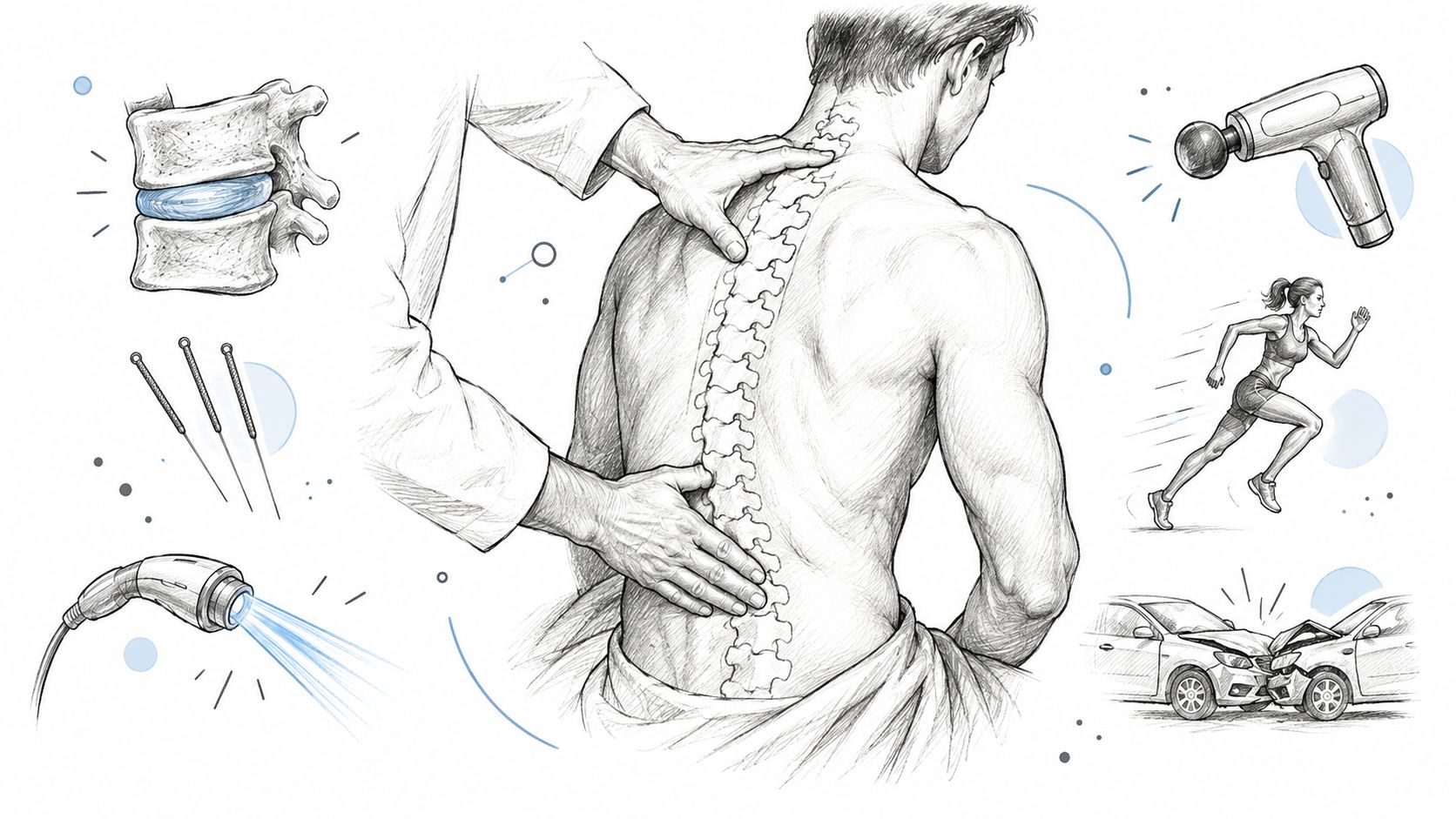
Chiropractors primarily evaluate and manage musculoskeletal problems, including conditions involving the spine, joints, muscles, and related movement limitations. Common examples include low-back pain, neck pain, joint dysfunction, sports strains, and soft-tissue problems after a motor vehicle collision. Care usually relies on non-drug methods such as spinal manipulation, mobilization, exercise, education, massage, and coordinated rehabilitation.
Low-back pain is a particularly important example. The World Health Organization's overview of low-back pain reports that 619 million people experienced low-back pain worldwide in 2020, approximately 1 in 13 people globally. WHO also reports that this total represented a 60% increase from 1990 and projects 843 million cases by 2050, largely because populations are growing and aging. Those figures show the scale of the problem, not that every patient needs chiropractic treatment or that every technique suits every condition.
A conservative plan may include:
A useful resource on presenting chiropractic services clearly is this chiropractic ad platform, particularly for practices explaining their scope without promising treatment for unrelated systemic disease. The same principle applies in the clinic: the goal isn't to treat more conditions. It's to choose appropriate care for the right patient.
The most useful way to understand chiropractic treatment is to connect each condition with its clinical aim. An adjustment isn't valuable because a joint makes a sound. It may be useful when an examination identifies restricted movement and the technique helps the patient move, exercise, or function more comfortably.
For mechanical low-back pain, care may combine Chiropractic Adjustment, mobilization, mobility therapy, and rehabilitation exercise. If symptoms extend into the leg, the examination must consider nerve irritation, strength, sensation, reflexes, and functional limitations. Patients exploring disc-related symptoms can review this explanation of disc herniation and sciatica, but no scan alone determines whether manipulation or decompression is appropriate.
Sciatica isn't a diagnosis that automatically calls for adjustment. A plan may include exercise, education, activity modification, and selected manual techniques, while progressive weakness or serious neurologic findings require referral.
Neck care may target restricted cervical movement, muscle tension, posture, and reduced tolerance for work or driving. Treatment can include gentle mobilization, carefully selected cervical techniques, soft-tissue work, and posture retraining rather than a forceful adjustment for every patient.
A systematic review of spinal manipulative therapy for acute neck pain reported a pooled effect size of -1.37, with a 95% confidence interval of -2.41 to -0.34, favoring treatment over controls, as summarized in this review of cervical spinal manipulation. Reported adverse effects were generally mild and temporary, although neck symptoms still require screening for neurologic or non-musculoskeletal causes.
Shoulder, hip, and other joint complaints may involve stiffness, altered loading, muscle weakness, or an injury that needs a different form of care. The practitioner may use manual therapy alongside Personal Exercise Plans, strength work, and movement retraining. Treatment should be judged by practical changes, such as improved walking, lifting, reaching, sleeping, or returning to a chosen activity.
Athletes often need more than symptom reduction. Golf Movement Screening, mobility therapy, muscle stimulation, and rehabilitation exercise can help identify limitations in rotation, balance, control, or load tolerance. The aim is a safe return to activity, not just feeling better while the underlying capacity remains limited.
After a collision, stiffness and soft-tissue pain can affect the neck, back, shoulders, or hips. Car Accident Treatment should begin with structured history-taking and examination, followed by documentation, symptom monitoring, and a graded plan. Treatment may include massage therapy, mobility work, adjustment, and home exercise when appropriate.
Practical rule: The condition name doesn't choose the treatment. The examination findings, irritability, function, and safety screening do.
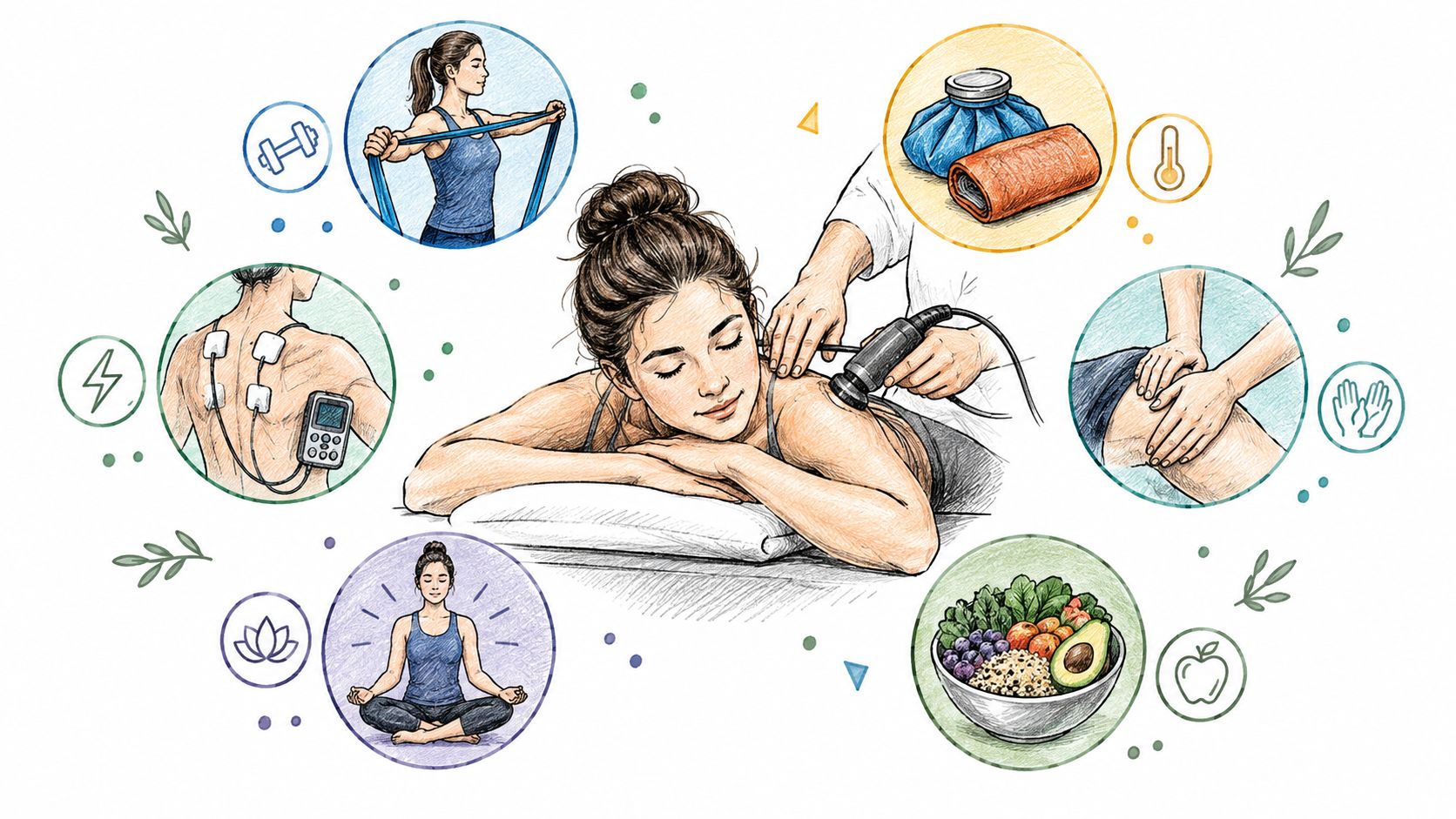
Modern chiropractic care isn't limited to a quick adjustment. Different tools address different barriers to recovery, and some patients need no manipulation at all. The clinician should match the modality to the examination, tolerance, goals, and response over time.
Spinal Decompression with the DRX 9000 is a non-surgical service used in some practices for selected disc-related presentations. It applies controlled cycles of traction intended to reduce spinal loading during treatment. Claims about creating negative pressure and promoting disc healing should be treated cautiously, because a device isn't a substitute for diagnosis, exercise, or reassessment.
A clinician may combine decompression with mobility therapy, education, and strengthening rather than presenting it as a stand-alone cure. You can read more about the clinical context of spinal decompression therapy, including why patient selection matters.
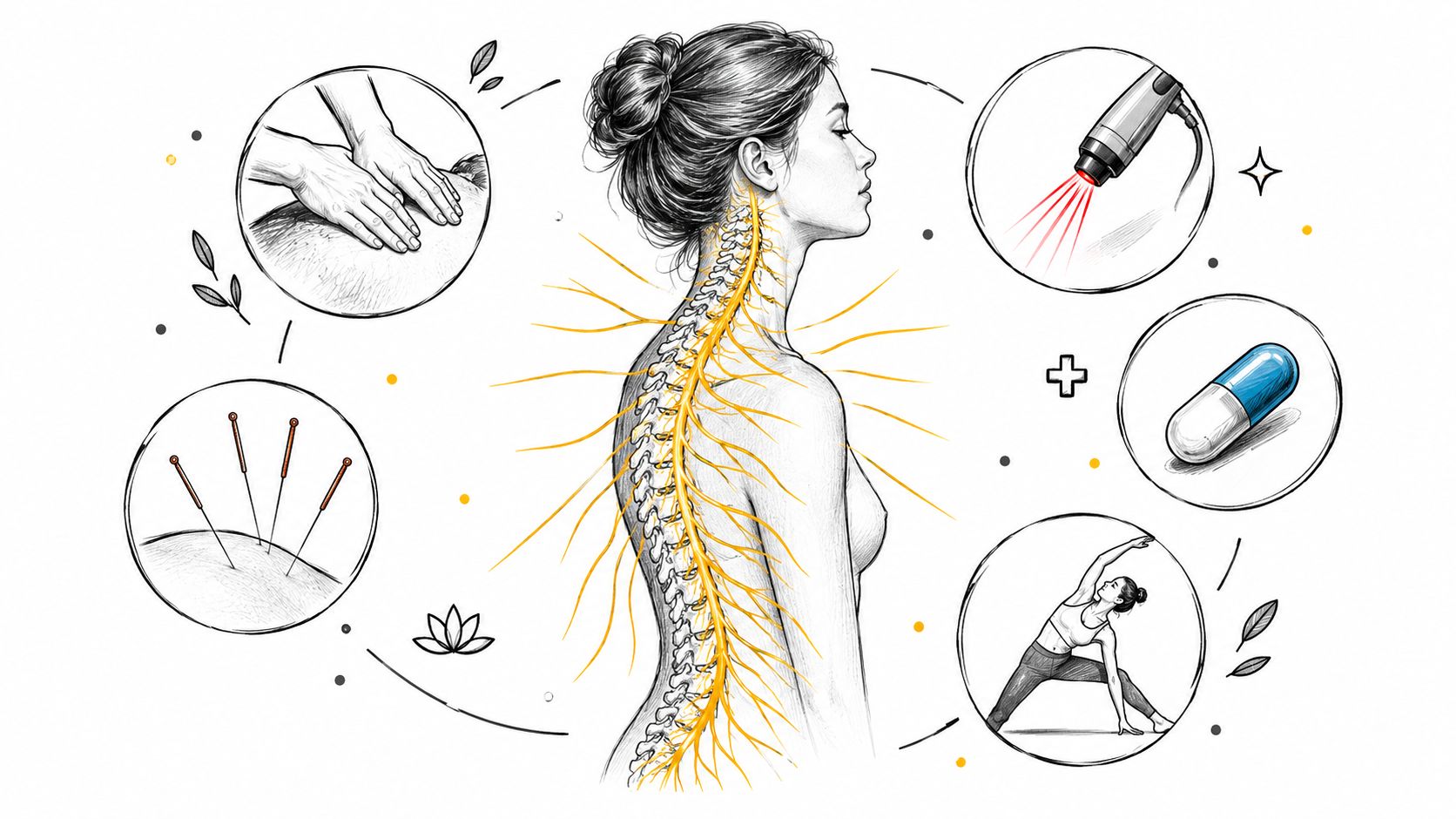
MLS Laser Therapy may be used as a supportive modality for pain and inflammation, while SoftWave Therapy provides another form of tissue stimulation within an integrated plan. These tools may help a patient tolerate movement or rehabilitation, but the meaningful outcome remains improved function. A passive treatment that produces temporary comfort without improving capacity may have limited long-term value.
Massage Therapy can address muscle guarding and soft-tissue sensitivity. It may be particularly useful when stiffness prevents exercise, but massage alone doesn't diagnose nerve compromise or build lasting strength. Muscle Stimulation can support activation in selected situations, though it also works best when paired with active movement.
Acupuncture may be considered for pain modulation and function in selected patients. Guidance differs by condition: the World Health Organization conditionally allows needling therapies for chronic primary low-back pain based on low-certainty evidence, while guidance from NICE advises against acupuncture for low-back pain with or without sciatica. That disagreement makes informed consent and individualized decision-making essential.
A coordinated plan may include Realignment, chiropractic adjustment, decompression, massage, acupuncture, nutrition counseling, and rehabilitation exercise. Aspen Falls Wellness offers these types of chiropractic and integrative musculoskeletal services in Salt Lake City and Sandy, with care plans that can include manual treatment, device-based modalities, and home exercise. The appropriate combination depends on findings, not on collecting as many services as possible.
Clinical guidelines generally support conservative care for appropriate musculoskeletal pain, but they place important conditions on manual treatment. The American College of Physicians guideline lists non-drug options for acute, subacute, and chronic low-back pain. For chronic primary low-back pain, the World Health Organization recommendations support a holistic, person-centred plan that may include exercise, education, massage, and spinal manipulative therapy.
| Treatment Type | American College of Physicians | NICE Guidelines |
|---|---|---|
| Exercise | Listed among initial options for chronic low-back pain, including multidisciplinary rehabilitation and motor-control exercise. | Exercise should be selected for the patient's needs, preferences, and capabilities. |
| Spinal manipulation | Included among non-drug options for selected acute, subacute, and chronic low-back pain. | Manual therapy, including manipulation or mobilization, should be used only within a package that includes exercise. |
| Massage | Listed as an option for acute or subacute low-back pain. | Soft-tissue techniques, including massage, may be included with manual therapy and exercise. |
| Education and self-management | Supports non-drug care and patient participation in treatment decisions. | Encourages care that supports activity and considers individual needs. |
| Acupuncture | Included among some non-drug options for chronic low-back pain. | Should not be offered for low-back pain with or without sciatica. |
The comparison shows why “adjustment versus no adjustment” is too narrow. Exercise, education, activity guidance, and reassessment often determine whether passive treatment translates into durable function. Patients interested in the role of a chiropractic adjustment should ask what functional problem the technique is intended to address and how progress will be measured.
The CDC reports that chronic pain affected 20.5% to 21.8% of U.S. adults during 2019–2021, while high-impact chronic pain affected 6.9% to 7.8%, as summarized in the verified clinical background. Those figures reinforce the need for accessible conservative options, but they don't justify a universal protocol.
Not every back or neck complaint is a chiropractic problem. A patient may describe familiar pain, yet the history or examination can reveal a condition that needs urgent medical assessment. Continuing routine adjustment in that situation can delay appropriate care.
Seek urgent medical evaluation for symptoms such as:
The clinical guidance on non-emergent low-back pain and referral decisions emphasizes history-taking, physical examination, and selective escalation when red flags appear. A chiropractor can screen for musculoskeletal patterns and warning signs, but screening isn't the same as treating suspected fracture, infection, malignancy, spinal cord compression, or cauda equina syndrome.
A responsible chiropractor's value includes knowing when treatment should stop, when it should never begin, and who needs coordinated medical care.
Imaging isn't automatically required either. NICE advises against routine imaging for nonspecific low-back pain in the absence of red flags, while imaging becomes more relevant when results are likely to change management, symptoms persist or worsen, or objective neurologic deficits appear.
An initial visit should feel like a clinical evaluation, not a sales presentation or an automatic adjustment. The practitioner needs enough information to decide whether chiropractic care fits your problem and whether another professional should be involved.
Expect questions about:
A physical examination may include orthopedic testing, neurologic screening, movement assessment, strength testing, and evaluation of the spine and related joints. The clinician should explain what the findings mean in plain language and identify measurable goals, such as improved walking tolerance, lifting ability, sleep, range of motion, or disability.
An examination doesn't automatically mean an X-ray or MRI. Routine imaging isn't recommended for uncomplicated nonspecific low-back pain without warning signs because scan findings may not identify the actual pain source. Imaging or external referral becomes more important when serious disease is suspected, symptoms worsen, neurologic deficits are present, or the result could change management.
The NICE guidance on low-back pain and sciatica assessment supports selective imaging rather than automatic scanning. The same principle protects patients from both unnecessary testing and dismissing symptoms that need further investigation.
A plan might include chiropractic adjustment, massage, decompression, MLS Laser Therapy, SoftWave Therapy, acupuncture, mobility therapy, or rehabilitation exercise. It may also include nutrition counseling, work modifications, or referral. Discuss expected visit frequency, reassessment points, insurance participation, out-of-pocket costs, and what would trigger a change in plan.
The answer to what does a chiropractor treat becomes clearer when the pathway is viewed as a sequence: identify the likely source, screen for danger, choose the least invasive suitable options, and measure whether function improves. Chiropractic care can address mechanical low-back pain, neck pain, joint restrictions, selected disc-related symptoms, sports injuries, and post-accident soft-tissue complaints. It isn't a universal treatment for systemic disease, serious trauma, or progressive neurologic compromise.
A thoughtful plan may combine Chiropractic Care, adjustment, spinal decompression with the DRX 9000, massage therapy, MLS Laser Therapy, SoftWave Therapy, acupuncture, muscle stimulation, mobility therapy, and rehabilitation exercise. The combination should serve a clear purpose. For example, temporary pain relief may make exercise possible, while a personal exercise plan helps develop the strength and movement tolerance that passive care alone can't provide.
The best measure isn't how forceful the adjustment feels or how many services appear on a menu. Ask whether you can walk farther, lift more safely, sleep better, move your neck, return to golf, or resume daily activities. Patients and practices can also use 2026 care plan templates as a general organizational resource, while keeping clinical decisions individualized and subject to reassessment.
Aspen Falls Wellness provides evidence-based, non-surgical chiropractic and integrative musculoskeletal care in Salt Lake City and Sandy, including examination, personalized treatment planning, spinal decompression, manual care, rehabilitation, and referral when needed. If your pain appears mechanical but keeps limiting your work, sleep, sport, or daily movement, schedule an evaluation through Aspen Falls Wellness to discuss whether conservative care is appropriate.
Visit Aspen Falls Wellness for a thorough evaluation of back pain, neck pain, sciatica, joint restrictions, sports injuries, or post-accident symptoms. The team can discuss chiropractic adjustment, DRX 9000 spinal decompression, massage, laser and SoftWave therapies, acupuncture, and personalized rehabilitation based on your findings and goals.

Stay updated with the latest chiropractic news and exclusive offers.